Mideast conflict
12 Bangladeshis killed in Mideast conflict, 4 die in Russia after alleged deployment to war: Minister
Expatriates' Welfare and Overseas Employment Minister Ariful Haque Choudhury on Thursday said 12 Bangladeshis have so far died in the Middle East conflict, while four Bangladeshi workers sent to Russia under employment contracts have died after reportedly being forced into war-related activities.
The government has repatriated 186 Bangladeshis, including 12 women and eight children, from Iran amid the ongoing conflict in the Middle East, with financial support from the Wage Earners' Welfare Board, he said.
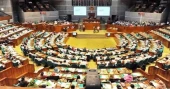
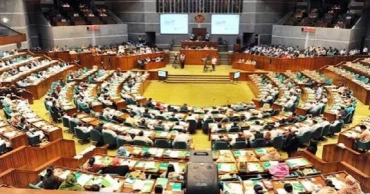
The minister disclosed the information while responding to a question from BNP reserved-seat MP Nilufar Chowdhury Moni during the question-answer session in Parliament.
According to him, five Bangladeshis died in Lebanon, three in Saudi Arabia, two in the United Arab Emirates, and one each in Iraq and Bahrain.
Of them, one was buried in the country of death, while the bodies of nine others were brought back to Bangladesh.
Ariful said the families of the deceased whose bodies were repatriated received Tk 35,000 each at the airport to cover burial expenses and an additional special grant of Tk 50,000.
He said the government has also repatriated Bangladeshi migrant workers from different countries at various times in response to natural disasters and conflict situations.
The minister also informed Parliament that four of the 30 Bangladeshi workers sent to Russia under employment contracts have died after reportedly being forced into war-related activities.
He said the workers were sent to Russia on April 24 through three recruiting agencies after obtaining manpower clearance from Bureau of Manpower, Employment and Training (BMET).
After receiving reports that the workers were being compelled to undergo military preparation and sent to the battlefield, the government instructed the Bangladesh Embassy in Moscow on June 15 to take necessary diplomatic steps to rescue and repatriate them, Ariful said.
The government remains hopeful that the remaining workers will be brought back through continued engagement with the Russian authorities, he added.
On labour migration to Malaysia, the minister said Bangladesh and Malaysia held bilateral discussions at the senior official level in April to facilitate the resumption of worker recruitment.
He said Prime Minister Tarique Rahman recently visited Malaysia, while a Malaysian delegation is scheduled to visit Bangladesh later this month, expressing optimism that the process of sending Bangladeshi workers to the country will resume soon.
Ariful also said the government is working to diversify overseas employment markets in view of the instability in the Middle East.
He said initiatives have been taken to reopen the Malaysian labour market and expand employment opportunities in Thailand, South Korea and Japan. The final draft of a worker recruitment agreement has already been sent to the Thai government.
In addition, Bangladeshi missions abroad have been instructed to assess labour demand in their respective host countries and submit specific action plans to increase manpower exports, the minister said.
Replying to another question, he said according to the BMET, a total of 1,09,18,009 Bangladeshis went to various Middle Eastern countries for employment between 2004 and June 30 this year.
However, Ariful said a significant number of them have since returned home, making it impossible to determine the exact number of Bangladeshis currently working in the region due to the absence of a comprehensive database on returnees.
To address the issue, BMET has signed a memorandum of understanding with the Special Branch (SB) of police to facilitate the exchange of information on returning migrant workers, he said.
3 months ago
Iran war deal closer than ever, says Pakistan
Momentum for a deal to end the Iran war appeared to grow Saturday as key mediator Pakistan said an agreement was closer than “ever before” and Iran made some of its most optimistic statements yet.
U.S. President Donald Trump said on social media the deal was “scheduled to get signed tomorrow,” and that the Strait of Hormuz would open immediately. Iran foreign ministry spokesperson Esmail Baghaei, however, said “although it will not happen tomorrow, the possibility that it could take place in the coming days cannot be ruled out."
Each side was expected to sign electronically.
Meanwhile, Trump was expected to discuss demining the Strait of Hormuz during the Group of Seven summit that starts Monday. And Iran’s state-run television said funeral ceremonies for former Supreme Leader Ayatollah Ali Khamenei, killed in the war's opening attack, will take place in July.
A senior U.S. official, who briefed journalists on condition of anonymity under rules set by the White House, said Trump planned to meet on the G7 sidelines with the leaders of Egypt, Qatar and United Arab Emirates to discuss efforts to wind down the war.
G7 members Britain and France have expressed interest in assisting with demining once the conflict is paused. It was not clear how many mines are in the strait that Iran has effectively controlled since shortly after the war began, virtually shutting down oil and natural gas shipments from the Persian Gulf. The U.S. has blockaded Iranian ports in response.
A tenuous ceasefire has been in place since April 7.
Pakistan says a deal to end the war is imminent
Pakistani Prime Minister Shehbaz Sharif said a deal aimed at ending the war was expected to be finalized within 24 hours. Pakistan's foreign ministry said the electronic signing ceremony was scheduled for Sunday, but did not provide details.
Sharif told his Qatari counterpart “a peace deal was ready for signatures by the relevant parties very shortly,” another statement said.
Iran signaled optimism but indicated more time was needed. Baghaei said in a statement carried by state TV that "the likelihood of finalizing the memorandum of understanding in the coming days is high.”
Iran has long expressed wariness in negotiations, pointing out that previous talks with the U.S. last year and early this year ended with attacks by the U.S. and Israel.
Baghaei said the memorandum under discussion was focused on ending the war and "at this stage, it has been decided that there will be no discussion of the nuclear issue.”
Iran's nuclear program and highly enriched uranium have long been at the center of tensions with the U.S. and Israel and an international source of concern.
Trump on social media asserted that “when all is calm,” the U.S. would go in and “downblend and destroy” the enriched uranium in Iran or in the U.S.
The apparent breakthrough came after Iran exchanged fire with the U.S. and Israel earlier in the week, threatening to rupture the ceasefire and push the Middle East back into full-scale war.
Iranian Foreign Minister Abbas Araghchi posted on X on Friday that an agreement “has never been closer.” Trump, who has asserted multiple times in recent weeks the countries were on the cusp of a deal, shared Araghchi’s post on social media.
Trump on Thursday claimed significant progress in negotiations, hours after he threatened to seize Iran’s oil industry.
Khamenei to be buried at the holiest of Shiite shrines
The funeral, burial and farewell events for Khamenei will occur between July 4 and 9 during Muharram, a traditional period of mourning in the Shiite Muslim calendar.
Khamenei is succeeded by his son, Mojtaba, who is considered less compromising and has not been seen publicly since the war began.
Funeral ceremonies are expected to begin in Tehran and move to Qom, a stronghold of many senior Shiite clerics, then to Mashhad, Khamenei's birthplace. He’ll be buried there at the Imam Reza Shrine, considered the holiest place among Shiite devotees.
Khamenei remolded the Islamic Republic following the death in 1989 of Ayatollah Ruhollah Khomeini, the fiery, charismatic ideologue who led the overthrow of the shah and installed rule by Shiite Muslim clerics.
Khamenei ruled far longer than Khomeini. He greatly expanded the Shiite clerical class and built the paramilitary Revolutionary Guard into the most important body underpinning his rule. The Guard became a military and business behemoth, the country’s most elite force and head of its ballistic missile arsenal — a key target for Israel and the U.S. in the war.
3 months ago

100 days on, Mideast conflict raises economic alarms
The Middle East conflict is approaching its 100-day mark, with U.S.-Iran talks still seesawing and the outlook for shipping through the Strait of Hormuz remaining uncertain.
Since fighting broke out in late February, the war has spilled far beyond the region, disrupting energy supplies, reigniting inflationary pressures and unsettling financial markets. International institutions are now warning that the conflict is becoming a growing drag on the global economy.
The Organization for Economic Cooperation and Development (OECD) and other bodies have recently lowered their forecasts for global growth, citing the prolonged conflict as a major source of uncertainty. What began as market concern over a short-term spike in oil prices has evolved into broader anxiety over weaker growth, higher inflation and longer-lasting damage to supply chains.
ENERGY SUPPLY SHOCK
The most immediate impact has come through energy supplies. The blockage of the Strait of Hormuz has triggered what the International Energy Agency (IEA) has described as the largest supply disruption in the history of the global oil market, pushing up oil and gas prices as well as shipping costs.
According to a recent IEA report, global oil supply losses since February have reached 12.8 million barrels per day. Gulf producers affected by the closure of the strait are producing 14.4 million barrels per day less than before the war. Based on the daily shortfall of 12.8 million barrels, more than 1.2 billion barrels of supply have been affected since the conflict began, underscoring the strain on global energy inventories and transport capacity.
The IEA expects global oil supply in 2026 to remain, on average, 3.9 million barrels per day lower, even if shipping through the strait gradually resumes.
In a joint statement, the IEA and other bodies warned that if shipping fails to return to normal and global oil inventories continue to fall rapidly, global economic resilience could face serious risks.
The shock is not limited to oil. The World Bank expects global energy prices to rise 24 percent in 2026 because of the conflict. Overall commodity prices are projected to increase 16 percent, driven mainly by energy, fertilizer and some metals.
John Roper, chief executive for the Middle East at German energy company Uniper, said the strait's closure and damage to facilities took most of the gas supply growth between 2025 and 2026 off the market, warning that the pain from the supply shortfall could last at least until 2030.
INFLATION PRESSURES RETURN
The International Monetary Fund (IMF) said in a recent report that even under a scenario involving a short-lived conflict and moderate increases in energy and commodity prices, global inflation would reach 4.4 percent in 2026, significantly deviating from the recent disinflation trend.
Signs of renewed inflationary pressure have already appeared in Europe and the United States. U.S. gasoline prices in April were more than 50 percent higher than before the war, while real disposable personal income fell for a third consecutive month. In the eurozone, inflation in France, Italy, Spain and Germany has stayed above the European Central Bank's 2 percent target for three months in a row, with higher energy costs spreading into food and services prices.
"The longer the disruptions last, the larger the economic and social costs become," OECD Secretary-General Mathias Cormann said.
Developing economies face a heavier burden. The World Bank expects inflation in developing economies to average 5.1 percent in 2026, 1 percentage point higher than prewar forecasts.
"The poorest people, who spend the highest share of their income on food and fuels, will be hit the hardest, as will developing economies already struggling under heavy debt burdens," World Bank chief economist Indermit Gill said. "All of this is a reminder of a stark truth: war is development in reverse."
GROWTH OUTLOOK DARKENS
The conflict is also clouding the growth outlook.
The OECD expects global growth to slow from 3.4 percent in 2025 to 2.8 percent in 2026, down 0.1 percentage point from its March forecast. If disruptions to Gulf energy production and exports persist into 2027, global growth in 2026 could fall further to 2.1 percent.
The IMF has listed the Middle East conflict as a major test for the global economy, projecting growth to slow to 3.1 percent in 2026, down from its January forecast of 3.3 percent. The United Nations expects global growth of 2.5 percent, 0.2 percentage point lower than its January projection.
The war is weighing on growth through inflation, consumption and investment. Higher energy and raw material costs squeeze corporate profits and dampen investment appetite. Rising prices erode real incomes and curb consumer spending. Higher financing costs add pressure on companies and governments already carrying heavy debt burdens.
That leaves major economies facing a sharper policy dilemma. Slower growth, weaker consumption and higher business costs call for policy support, but rising energy prices and renewed inflation limit the scope for monetary easing. After the pandemic and years of high interest rates, many governments have less capacity to offset the energy shock through subsidies or tax cuts.
4 months ago