budget fiscal year 2026-27
Govt to overhaul public finance architecture to reduce debt pressure: Khosru
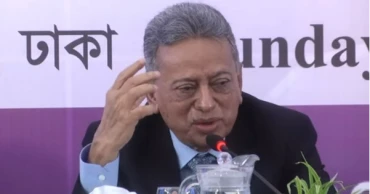
Finance Minister Amir Khosru Mahmud Chowdhury on Sunday said the government will overhaul its public finance architecture to fund the proposed budget for the fiscal year 2026-27 while minimising debt burden on the economy.
“We cannot keep looking towards the World Bank, International Monetary Fund (IMF) and Asian Development Bank (ADB). We need to restructure our own public financing,” he said while speaking at the “CPD Budget Dialogue 2026” organised by the Centre for Policy Dialogue (CPD) at a city hotel.
The minister said the government is working to develop alternative financing channels and will introduce market-based financing mechanisms for budget funding.
He noted that the gap between multilateral financing rates and market interest rates is narrowing, making borrowing costs considerably higher and leaving little option but to rely on market-based instruments.
Announcing a phased withdrawal from local bank borrowing, Khosru said local banks are charging 12-14 percent interest, a burden that even the private sector struggles to bear. “It is simply not feasible for the government to sustain such borrowing costs.”
On broader economic challenges, he highlighted that the Middle East labour market, worth $4 billion, is facing headwinds, and that the government inherited hundreds of crores of taka in outstanding bills across every sector upon taking office.
The minister also noted the government got only one and a half months to prepare a budget that normally takes six months.
He said the government inherited 1,300 projects from the previous administration, many conceived to serve personal interests, and that a number of schemes have since been cancelled or repurposed. Projects that were 80 percent complete were being finished despite uncertain returns.
To ensure accountability, Khosru announced that an ADP dashboard will go live in the first week of July, allowing real-time tracking of project progress and implementation status.
On trade facilitation, he said Bangladesh will gradually move away from the letter of credit (LC) system towards direct payment mechanisms for import-export, in line with global practice, allowing credible businesses to trade internationally without opening LCs.
About education, the minister said the allocation will be raised to 5 percent of the ADP by the end of the government's current term, up from the current 2 percent.
He stressed that vocational training will receive the strongest emphasis this year, citing China's model, where 60 percent of students pursue vocational education after secondary school. “Bangladesh's certificates hold little value in the job market because skills are absent. Vocational training is how we bridge that gap.”
On health, Khosru said the government is working towards establishing universal healthcare, with preventive healthcare as the first priority.
Addressing questions over the Family Card programme, he said 72,000 people have already received cards under a pilot project, which he described as the largest social protection initiative in Bangladesh's history.
The minister said the selection process has been deliberately kept free of political interference, with a new formula developed to ensure fairness at both local and central levels.
He acknowledged a roughly 1-1.5 percent error rate and said the government is actively working to identify and resolve the causes.
Khosru reaffirmed the government's commitment to carrying out all necessary economic reforms during its tenure.
3 months ago

Proposed budget slashes taxes on EVs, medicine, hi-tech goods, some essentials to ease cost of living
Finance Minister Amir Khosru Mahmud Chowdhury on Thursday unveiled sweeping tax, VAT and duty relief measures in the Tk 9,38,000 crore national budget for fiscal year 2026-27, targeting everything from daily staples and life-saving medicines to electric vehicles and semiconductors, in what the government described as a pro-people, investment-driven overhaul of the country's fiscal architecture.
Presenting the budget in the Jatiya Sangsad, the minister said the reliefs were aimed at reducing the burden on ordinary citizens still reeling from years of high inflation, while simultaneously creating an environment conducive to private investment and employment generation.
In the most sweeping consumer-facing measure, the government proposed reducing withholding (source) tax on 60 essential commodities, including rice, wheat, potatoes, onions, garlic, ginger, salt, sugar, edible oil, pulses, poultry, fish and dairy, from existing rates of 5%, 2% or 1% down to a flat 0.5%.
The minister said unrelenting price hikes of basic goods in recent years had caused severe hardship and that the new government's electoral pledge demanded decisive action. He also proposed full withdrawal of the 5% regulatory duty on all types of spices and on date imports, which are widely consumed across the country.
Healthcare
For kidney patients, the budget proposes a complete waiver of the existing 15% VAT and 5% advance income tax on dialysis filters, which the government said would reduce the cost of each dialysis session by approximately Tk 800. Similarly, the 7.5% advance tax on blood tubing sets used in haemodialysis has been fully withdrawn.
For cardiac and ophthalmic patients, the 10% VAT applied at the supplier level on imported heart rings or stents and intraocular lenses has been removed, a measure expected to reduce the price of each stent by around Tk 20,000 and each intraocular lens by approximately Tk 5,000.
All taxes: customs duty, regulatory duty, supplementary duty and advance tax were proposed to be fully waived on 21 categories of special assistive devices for persons with disabilities, including mobility aids. The minister said the measure would improve quality of life and reduce financial burden on families.
Import duty on mortuary chambers was proposed to be reduced sharply from 25% to 1%.
Electric Vehicles
In what the minister framed as a landmark push for environment-friendly transport, the budget proposed dramatically reducing the total tax incidence on imported electric vehicles (EVs). The aggregate tax burden on EVs currently at 93% is proposed to be cut to 64% for vehicles valued up to $25,000 and to 80% for those valued up to $50,000. All duties and taxes on imported EV chargers and charging stations were proposed to be fully withdrawn.
For locally manufactured EVs, including four-wheelers, three-wheelers, electric buses and trucks, raw material and component imports would attract only a 3% customs duty, with all other levies waived through FY2030-31.
Advance income tax on EV registration was also slashed dramatically, from a flat Tk 2 lakh to a tiered structure based on power capacity: Tk 25,000 for up to 200 KW, Tk 50,000 for up to 300 KW, Tk 75,000 for up to 400 KW, and Tk 1 lakh beyond that.
Electric buses and trucks used for transporting students in educational institutions were proposed to be fully exempt from all duties and taxes until June 30, 2030.
To incentivise solar power, a zero-tax rate was proposed for the solar electricity sector until 2035, with a 5% tax rebate for consumers paying solar power bills.
Pharmaceuticals
The budget proposed full withdrawal of import duties on 51 new raw materials used in manufacturing Active Pharmaceutical Ingredients (APIs), with the list expanded significantly to deepen Bangladesh's pharmaceutical self-sufficiency.
A further 17 new basic raw materials for the pharmaceutical industry were added to the concessionary duty list at zero percent, to sustain the country's growing export performance in global medicine markets.
Nine additional inputs used in manufacturing cancer drugs were included in the existing concessionary scheme under zero customs and VAT, aimed at making anti-cancer medicines more affordable domestically.
The government also proposed continued tax support for the pharmaceutical sector as Bangladesh graduates from Least Developed Country (LDC) status, acknowledging competitive pressure in international markets.
Technology
In a major push to digitise the economy and make computing accessible, the budget proposed complete removal of all customs duty, regulatory duty, supplementary duty and VAT on laptops, desktop computers, servers, computer printers and computer monitors. SSD drives would have all levies waived except a 5% customs duty.
Advance income tax on computer monitors, portable automatic data processing machines, flash memory and computer printers was proposed to be reduced from 5% to 2%.
The government said these measures were intended to expand IT-sector employment and fulfil its commitment of raising the ICT sector's share of GDP to 10% within the next five years.
The Tk 300 per SIM card tax, in force for years, was proposed to be fully scrapped, with the government estimating a Tk 1,200 crore revenue impact but noting that the existing roughly 50% effective tax rate on the telecom sector was far above global norms and was constraining digital inclusion.
Mobile network service withholding tax was also cut from 12% to 10%.
To attract investment into the high-value semiconductor design, testing and packaging sector, the budget proposed that all imports used in this industry be subjected to no more than 1% customs duty, with regulatory duty, supplementary duty, VAT and advance tax fully waived through June 30, 2031.
Small and Medium Enterprises
For small and medium enterprises, the budget proposed a complete turnover tax exemption on turnovers up to Tk 50 lakh, with the ceiling raised to Tk 70 lakh for women and persons with disabilities.
All content creation income, from freelancing, digital content, and creative work, was proposed to be made fully VAT-exempt. Startup companies would also receive full 15% VAT exemption on their local services, imported services and premises rent until June 30, 2035.
Turnover tax was proposed to be set at zero for startups, innovative ventures and technology-based businesses.
Agriculture
VAT at the trader level on all types of fertilisers used in agriculture was proposed to be fully waived. The 7.5% advance tax on pesticide imports at the import stage was also withdrawn entirely.
Customs duty on zinc ash, the primary raw material for zinc sulphate fertiliser production was proposed to be reduced to zero, to enable local self-sufficiency in micronutrient fertiliser manufacturing.
For poultry, dairy and fisheries feed manufacturers, three additional raw materials were added to the zero-rate concessionary list. Equipment and machinery for the poultry sector would also enjoy zero import duty on components.
Import duty on infant food preparation materials was cut from 15% to 10%, with the government saying the move would make baby food more affordable for ordinary families.
The concessionary duty regime for the shipbuilding and dredger industry was extended to June 30, 2030, to keep Bangladesh competitive in global maritime markets.
Concessionary duty facilities on lithium-ion battery manufacturing, sodium-ion battery production and battery pack assembly were extended through FY2029-30.
EV battery components and mounting brackets were included in the concessionary scheme until June 2028.
To support the country's creative industries, the budget proposed removing the 5% regulatory duty on musical instruments including guitars, pianos and violins.
Import duty on cinematographic cameras was cut from 15% to 5%, with all levies removed on camera and projector components to enable the production of internationally competitive films and content.
Tobacco: Higher Prices
The budget raised the minimum retail prices of cigarettes across all four tiers, to Tk 62, Tk 92, Tk 160 and Tk 210 per packet of 10 sticks respectively, with corresponding supplementary duty adjustments.
New products including Nicotine Pouches (minimum retail price Tk 500 per 10 grams, 40% supplementary duty) and Heated Tobacco (Tk 210 per 10 sticks, 67% supplementary duty) were brought under a new tax regime. A Track and Trace system was proposed to monitor production and supply and curb illicit trade.
Income Tax Relief
The tax-free income threshold for individual taxpayers was raised from the existing Tk 3,50,000 to Tk 3,75,000 for FY2026-27 and FY2027-28, with a further step to Tk 4,00,000 in FY2028-29, and Tk 4,50,000 in FY2030-31.
For women and senior citizens above 65, the ceiling would be higher still, reaching Tk 5,00,000 by FY2030-31.
The minister also announced that a new progressive five-year income tax rate roadmap was being published to allow taxpayers to plan their finances with greater predictability.
The minister said the cumulative effect of these reliefs would reduce production costs, lower consumer prices, attract fresh investment, and create new avenues of employment, particularly for young Bangladeshis.
"Our tax policy is not merely a tool of revenue collection," Khosru said. "It is also an instrument of food security, energy security and environmental protection and above all, an expression of this government's commitment to a democratic, humane and inclusive economy."
4 months ago