FIFA 2026
World Cup 2026: Novelty, controversy and farewell
This was a World Cup that looked different from the outset. FIFA had already committed to an expanded 48-team format before it even chose a host, and when the joint bid from Canada, Mexico and the United States won that vote in 2018, the 2026 World Cup became the first to be staged in three countries.
Football's governing body later confirmed three other changes: an automatic red card for players who cover their mouths, mandatory hydration breaks in every match, and the awarding of corners to attacking teams when goalkeepers hold the ball too long.
STYLE IN CONTRAST
The larger tournament showcased a wide array of footballing philosophies and cultures. Structured, possession-based sides built around positional discipline were pitted against bold, higher-pressing teams willing to gamble on pace and flamboyance.
Europe itself split into two visibly different schools. France leaned heavily on its phalanx of attackers led by Kylian Mbappe, Ousmane Dembele and Michael Olise.
In contrast, Spain built its game plan on patience and containment. Its defense broke the World Cup record for consecutive clean sheets, reaching six in a row - a run that began in the 2022 World Cup - and goalkeeper Unai Simon's shutout streak extended to 609 minutes following the round of 16 win over Portugal.
Morocco headed Africa's hopes with its own model that combined positional awareness with speed and audacity, quicker to close down opponents than the deeper defensive block that characterized its run to the semifinals in 2022.
South American sides, meanwhile, showed moments of brilliance, even if several former winners from the region - namely Brazil and Uruguay - fell short of expectations.
NEW STARS EMERGE, VETERANS BOW OUT
The tournament served as a fertile testing ground for emerging players. A case in point was Morocco's Ayyoub Bouaddi. The 18-year-old, who plays for French Ligue 1 club Lille, represented France at youth level and only became available for the Atlas Lions in May when FIFA approved his allegiance switch.
He showed poise beyond his years with performances that have sparked the interest of Manchester City and Arsenal, among other clubs.
Cote d'Ivoire's Yan Diomande, 19, entered the tournament with big hopes and justified the hype as the African side reached the knockout rounds before falling to Norway via a late Erling Haaland goal.
Colombia's Gustavo Puerta was one of the quieter achievers. The Racing Santander midfielder's creativity and vast passing range proved crucial as Colombia progressed to the round of 16 before losing to Switzerland on penalties.
These arrivals were accompanied by some high-profile departures, with modern-day greats Cristiano Ronaldo, Luka Modric and Neymar all bidding farewell to football's biggest stage.
CONTROVERSY ON AND OFF THE PITCH
One of FIFA's newest laws made headlines in the group stage. Paraguay's Miguel Almiron became the first player sent off under a rule barring players from concealing their mouths during on-field confrontations.
The incident involving Türkiye defender Mert Muldur also earned the Atlanta United winger a one-match suspension that FIFA said was not subject to appeal, ruling him out of Paraguay's final group match against Australia.
An even more bizarre episode was the controversy surrounding Folarin Balogun. The United States forward was sent off for stepping on the ankle of an opponent during his team's last-32 win over Bosnia-Herzegovina, an event that triggered an automatic one-match suspension.
Days later, FIFA's disciplinary committee provisionally lifted the ban, fining Balogun 40,000 U.S. dollars and clearing him to face Belgium.
The Belgium federation duly contested the decision, but FIFA's appeals committee dismissed the challenge less than eight hours before kickoff. UEFA said the move "crossed a red line," calling it "unprecedented, incomprehensible and unjustifiable." Balogun himself later said he knew the reversal "would cause a lot of controversy."
CHINESE ELEMENTS: The BREAKFAST SHOW
For Chinese football fans, mornings became prime-time viewing. With most matches played in China's early hours, breakfast shops, cinemas and coffee chains turned the inconvenience into an opportunity.
In Wuhan, one noodle-shop owner brought forward opening hours to 4 a.m., selling up to 200 extra bowls of hot dry noodles a day as customers viewed matches on an oversized screen.
Searches for morning-tea restaurants - a Cantonese breakfast tradition - surged nearly ninefold year-on-year in Guangdong province while cinema chains staged more than 28,000 World Cup screenings nationwide to fill their normally quiet matinal slots.
The commercial ripple reached manufacturing too: Yiwu's wholesale markets, which supplied an estimated 70 percent of the world's World Cup merchandise, saw exporters shift from generic flag-printed jerseys to patented, team-licensed designs commanding a premium. Twelve time zones away, football had changed how a country starts its day.
Chinese companies and products had a visible presence throughout the competition.
Lenovo, FIFA's official technology partner, was ubiquitous with artificial intelligence increasingly integrated into areas ranging from match analysis to fan engagement. FIFA has said Lenovo's infrastructure and support services helped underpin key aspects of tournament operations.
Hisense also featured prominently through its longstanding partnership with FIFA. The Chinese electronics giant provided display technology for broadcast and officiating systems, highlighting the leading role of Chinese companies in major international sporting events.
The tournament crowned a golden generation of attacking players. Mbappe finished with 10 goals while eight-time Ballon d'Or winner Lionel Messi, playing in his sixth and likely last World Cup, scored eight times. Erling Haaland, Jude Bellingham, Harry Kane and Mikel Oyarzabal also vied for the Golden Boot award. Between them, they redefined what fans should expect from a forward at a major tournament.
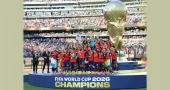
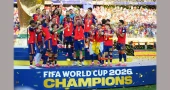
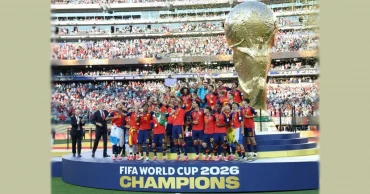
On Sunday, Spain achieved something even more transcendent. It denied Messi one last glorious chapter in an astonishing career and claimed the tournament's lasting story for itself.
2 months ago
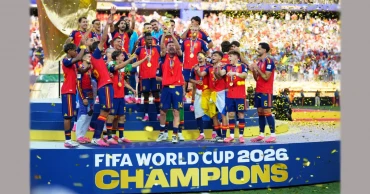
Spain claim 2nd World Cup title after beating Argentina
This is how good Spain was at the World Cup: Not even Lionel Messi had any answers.
And when it was over, Spain walked off with the trophy. Messi simply walked off in tears.
Spain is back atop the soccer world for a second time, after Ferran Torres’ first goal of this year's World Cup — unquestionably the goal of his life — gave his country a 1-0 win over now-dethroned champion Argentina in the final on Sunday.
“It was a goal scored by 47 million people,” Torres said, referring to Spain’s population.
Maybe not by them — but certainly for them.
The goal came with Argentina down to 10 men after Enzo Fernandez was sent off late in regulation following a reckless tackle. Tempers flared then, and flared again after the final whistle with Argentina coach Lionel Scaloni and players from both sides engaging in what appeared to be some pushing and shoving.
In the end, Spain denied Messi a second straight title in what he has indicated was his final World Cup match. Torres, a second-half substitute, pounced on a bouncing ball in the box and used his left foot to bury a shot just under the crossbar in the 106th minute.
From there, the airtight defense that dominated opponents throughout the tournament came through one final time. Spain — which also won the title in 2010 — allowed only one goal in eight matches in this World Cup run, setting a record for fewest goals allowed by a champion.
“I feel pride, to be honest,” said Spain coach Luis de la Fuente, who at 65 is now the oldest man to lead a team to a World Cup title. "Accompanying them on this journey is an honor.”
Spain gets a World Cup 1st
This title, combined with the Women's World Cup won by Spain in 2023, makes the European nation the first to hold both the men’s and women’s titles simultaneously. And in the streets of Madrid — probably many other places in Spain as well — countless people spilled into the streets, celebrating Sunday's victory long into the wee hours of Monday morning.
The score indicates this match was close, but only one team was in command.
Spain took the game’s first 20 shots on goal before Argentina — desperate for an equalizer — got its first attempt off in the second half of extra time. Spain took nine of the game’s first 10 corner kicks, and only a World Cup final-record 12 saves by Argentina goalkeeper Emiliano Martinez gave the 2022 champions a shot at going back-to-back.
“Dibu was nothing short of exceptional,” de la Fuente said, referring to Argentina's keeper by his nickname.
Spain is now unbeaten in its last 38 matches — 29 wins, nine draws — and is the outright holder of the longest such streak by any European men's team ever. Italy went 37 matches (28 wins, nine draws) from October 2018 through September 2021, before Spain ended that streak.
And for the last two-plus years, nobody has beaten Spain. Not even Messi. An Argentina team that was the kings of the late-game rally in this tournament had no answer this time.
“We lost the game, and we accept that,” Scaloni said. “That doesn’t mean that we will forget everything we’ve done so far, so I’d like to thank my people, my players and the country. I can tell them that we played our hearts out.”
Spain survives a late push
Messi took a corner kick with about four minutes left before the final whistle and the ball took a fortunate skip toward substitute Giuliano Simeone — who sent it high and over the crossbar, holding his head in disbelief afterward.
“When you have Messi on the other side, well, you are nervous,” Torres said. "At the end of the day, we always depended on us. We always come up with our football, and we showed it again.”
After the post-match scuffles, they also paid tribute to the former champions. Spain's players lined up to form an honor guard of sorts for Argentina's squad to walk through on its way to the stage for the runner-up medals from President Donald Trump and FIFA President Gianni Infantino.
“I think now I'm in a cloud,” said Spain midfielder Rodri, the Golden Ball winner as the tournament's best player.
Argentina was forced to finish the match down a man after Fernandez was sent off in second-half stoppage time after getting his second yellow card. Fernandez was whistled for a collision that sent Spain defender Pau Cubarsi cartwheeling into the air, and the card came out immediately.
Defense led Spain to a title
It was the 104th and last match of the biggest World Cup ever, a 48-team event that played out over the U.S., Canada and Mexico. Because there were more matches than any previous World Cup, it was no surprise that there were more goals than all other editions — more than 300, nearly three per match.
Except, of course, when Spain was involved. Spain's plan was simple and flawless: Hold the ball as much as possible, denying opponents any hint of chances.
It worked, all the way to the end.
Messi is 39 and the math certainly suggests that the Inter Miami star is at the end of his international career. There have been hints — such as Messi himself declaring that a home World Cup qualifying match against Venezuela last year would be his final competitive contest for Argentina on his nation’s soil.
“I experienced a lot of things on this pitch, good and not so good,” Messi said that night. “I’ll take the good with me.”
He retired from the national team after losing a Copa America final to Chile — in the same stadium he played in Sunday — a decade ago, then came back a few weeks later after changing his mind.
Good thing he did, because in that decade he went from superstar to absolute icon.
There was the World Cup title in 2022. There were two Copa America titles, the first in 2021 and the second in 2024. He won Argentina’s player of the year award 16 times in a span of 19 years, first winning it as a teenager and continuing to win it all the way into his late 30s.
He's a legend within the game and on all corners of the globe. But Spain was better Sunday.
“I spoke to my players, and they said: ‘Look, we’ve won everything, coach. We’ve won everything,'” de la Fuente said. “And that is beautiful.”
A final unlike any other
The spectacle was not limited to simply soccer.
Madonna, Justin Bieber, BTS and Shakira were all part of a halftime show that also featured Burna Boy, Jason Sudeikis in character as “Ted Lasso” and even some of the Muppets. Jennifer Hudson, Post Malone and Tom Cruise had roles in the closing ceremony, which actually preceded the match.
A slew of actors, athletes and other celebrities were there: Spain’s Javier Bardem left happy, Luciana Barroso Damon — the wife of actor Matt Damon — probably did not, considering she was wearing the colors of her native Argentina.
They all came to see a show. So did 80,000 other people, not to mention perhaps as many as 2 billion watching around the globe.
Spain didn't disappoint. No team has won back-to-back men's World Cups since Brazil in 1958 and 1962, and Spain kept Argentina from pulling off that repeat.
“As I told the lads before the game, we have to go for the game, we need to face them, we have to look to their eyes and say we want this game,” Rodri said. “And then, life gives you the World Cup or not.”
Spain took it instead.
2 months ago
Salah adds to list of accolades in World Cup against New Zealand
While Mohamed Salah's club career is still undecided, he's building his legacy with Egypt.
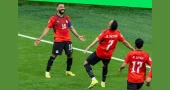
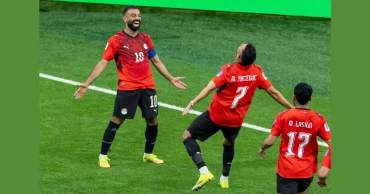
Salah scored his 68th goal in international play, a total now just one goal shy of current Egypt coach Hossam Hassan’s career record for the Pharaohs, in a 3-1 World Cup victory Sunday night over New Zealand.
It was his third World Cup goal after he netted two at the 2018 tournament in Russia. Three goals at the World Cup gives the 34-year-old Salah the most ever for an Egyptian player.
Salah played for Liverpool for nine seasons, winning two Premier League titles and becoming the league's leading foreign goal scorer. But he had a dip in form this season and amid tensions, announced his contract with the squad would be ended a year early.
His departure from Anfield sparked discussion as to where the striker would be going next. For now, he plays for Egypt with his future plans still uncertain.
While between clubs, Mo Salah has etched his name further into the history books as the captain of the first Egyptian team to win a World Cup match.
“What happened today is history for us as Egyptians,” Salah said. “We see a lot of teams win games, but for us as Egyptian, it doesn’t happen often, first time in history.”
Fans would have to wait to see the Salah they grew to expect at Liverpool. He started slow in the first half, missing wide left on a direct free kick and watching New Zealand take an early lead, but he would not be denied for long.
Salah scored Sunday on a pass from Mostafa Ziko in the 67th minute. The ball slid underneath a defender and past New Zealand goalkeeper Max Crocombe to give the Pharaohs a 2-1 lead.
Salah wasn’t done adding to his resume quite yet, getting an assist in the 82nd minute on the Pharaohs’ final goal, his second assist of this game. He also had an assist on Egypt’s lone goal in its 1-1 draw against Belgium earlier in the tournament.
“He’s a good player,” New Zealand captain Chris Wood said. “You have to keep an eye on him.”
The four-time Premier League Golden Boot winner scored nine goals in 10 matches to qualify the Pharaohs for this World Cup. Salah became the career scoring leader in African World Cup qualifying history.
Salah should have his share of clubs interested in his talents after a strong start to the World Cup.
“Salah worked hard on the pitch,” Egypt manager Hossam Hassan said. “I am sure we are going to see more from him.”
3 months ago
Netherlands rout Sweden 5-1 as Brobbey and Gakpo net doubles
Brian Brobbey and Cody Gakpo scored two goals apiece to power Netherlands to a 5-1 win over Sweden on Saturday in the World Cup to bounce back after a disappointing draw in its opener and move atop the Group F standings.
Brobbey’s goals came in the first half, helping the Netherlands get off to a great start and roll to the big win after playing Japan to a 2-2 draw Sunday.
The victory gives Netherlands a group-leading four points. Sweden has three points, with Japan and Tunisia scheduled to play later Saturday.
Gakpo, who also had an assist, extended the lead to 3-0 just after halftime, scoring in the 47th minute off a cross from Denzel Dumfries. He matched Brobbey when he scored on a right-footed shot from the left box in the 54th minute.
Sweden couldn’t build on its strong performance in a 5-1 walloping of Tunisia in its first match. The loss to the Dutch was its biggest World Cup defeat since losing 7-1 to Brazil in 1950.
The Dutch gameplan to play out wide to open up Sweden and cross to Brobbey worked perfectly early. He put the Netherlands on top in the fifth minute when Gakpo crossed into the middle of the box and Brobbey one-timed it with his right foot before tumbling forward to the grass.
His second goal came when he took a cross from Dumfries while sliding and just got his right foot on the ball, scoring inside the far post in the 17th minute.
Anthony Elanga’s left-footed goal cut the lead to 4-1 in the 59th minute and allowed Sweden to avoid the shutout.
Sweden had plenty of chances to score before that, but Netherlands’ goalkeeper Bart Verbruggen was brilliant in the first half with four saves.
Sweden appeared to have cut the lead to 2-1 on a header by Gustaf Lagerbielke in the 44th minute, but he was ruled offside. Lagerbielke is a baron from a noble family in Sweden. His father and grandfather are counts.
But he wasn’t the only royalty in the stadium Saturday as the Netherlands had two very special guests cheering them on with King Willem-Alexander and Queen Máxima watching from a luxury suite.
The crowd of 68,777 was largely made up of fans of the Netherlands, many of whom made their Oranje Fanwalk 2 1/2 miles from Rice University to Houston Stadium on Saturday morning.
Crysencio Summerville, who assisted on Gakpo's second goal, tacked on a goal for Netherlands in the 89th minute and celebrated with NBA star Steph Curry's “night night” gesture.
Sweden finishes group play Thursday night against Japan at Dallas Stadium, and Netherlands meets Tunisia that night in Kansas City.
3 months ago
Sweden dominate Tunisia 5-1 to move top of Group F
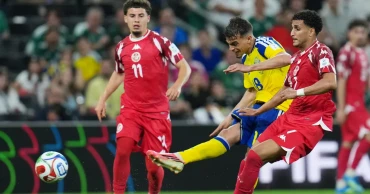
Yasin Ayari scored twice and Sweden showed it belonged at the 2026 World Cup, pounding Tunisia 5-1 on Sunday night to move atop Group F.
Alexander Isak and Viktor Gyökeres each had a goal and an assist, and Mattias Svanberg also scored for Sweden, which entered ranked 39th in the world and missed the 2022 World Cup after reaching the quarterfinals eight years ago in Russia.
Omar Rekik scored for 45th-ranked Tunisia, which is playing in its seventh World Cup but has never advanced beyond the group stage.
3 months ago
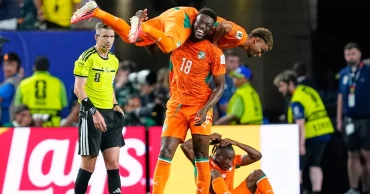
Diallo’s 90th-minute goal lifts Ivory Coast past Ecuador 1-0 in World Cup
Ivory Coast did not make the knockout round in three previous World Cups. Les Éléphant came to the United States set on changing that — and they are off to a great start.
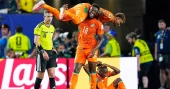
Amad Diallo scored in the 90th minute to lift Ivory Coast to a 1-0 victory over Ecuador in its first World Cup appearance in a dozen years.
“We came here with ambitions and high hopes,” coach Emerse Faé said through an interpreter. “Everything is going well.”
The teams combined to hit the crossbar three times before Diallo — the Manchester United winger who entered as a substitute in the 56th minute — broke through with a left-footed shot from just inside the penalty area that beat diving goalkeeper Hernán Galíndez. Wilfried Singo set up the goal with a strong run down the right side.
“This was a fantastic goal,” Faé said. “(Singo) delivered a wonderful assist to Diallo, and he finished well. Very happy to see just what we worked on.”
Ecuador saw its 19-game unbeaten streak end with its first loss since a 1-0 decision against Brazil on Sept. 6, 2024.
“It hurts,” Ecuador coach Sebastián Beccacece said through an interpreter. “This is a very painful situation. It needs to make you stronger for the future.”
Elye Wahi hit the crossbar in the 52nd minute for Ivory Coast after Ecuador’s John Yeboah and Nilson Angulo did the same in the opening half.
Ecuador, making its fifth World Cup appearance and looking to reach the knockout round for the second time, was playing a virtual home game at Lincoln Financial Field, with most of the capacity crowd of 68,274 wearing the yellow jerseys of La Tri.
“I am very sorry we did not give our fans the joy they came to seek,” Beccacece said.
Ecuador looked strong before Diallo’s goal. Its best chance after halftime came in the 68th minute on Gonzalo Plata’s hard shot from about 25 yards out that was parried away by goalkeeper Yahia Fofana.
“We’re leaving with a loss, but we’re keeping our heads held high knowing that this is just the beginning and there’s still a tournament ahead of us,” Ecuador captain Enner Valencia said.
Ivory Coast was bolstered by the forward play of Yan Diomande. The Leipzig attacker created several scoring chances, particularly down the right side. That included Wahi’s near goal on a flick following Diomande’s hard cross.
“He is very talented,” Faé said. “Incredible player.”
Ivory Coast, which did not concede a goal while going 8-0-2 in 10 qualifying matches, will next face four-time World Cup champion Germany, which defeated Curacao 7-1 earlier Sunday in Group E. Ecuador will meet Curacao. Both matches will be played June 20.
Ivory Coast captain Franck Kessié set the tone for the physical play of Les Éléphant with a hard foul in the fourth minute. Kessié went on to pick up one of three yellow cards for his side, all for reckless challenges, in the opening 45 minutes. Jackson Porozo of Ecuador was cautioned in the 73rd minute.
“We know that high-level football requires much intensity,” Faé said.
3 months ago
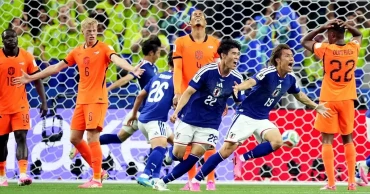
Japan's fighting spirit frustrates Dutch in thrilling 2-2 draw
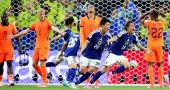
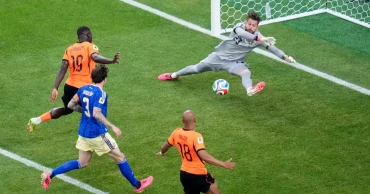
Against one of the tournament’s most formidable sides, Japan arrived with a clear game plan: stay disciplined, remain patient and strike when the opportunity arises. Over 90 minutes, the Samurai Blue executed that strategy to near perfection, twice coming from behind to secure a dramatic 2-2 draw against the Netherlands and begin their World Cup campaign on a positive note.
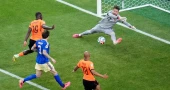
The Group F encounter at AT&T Stadium in Texas on Sunday night was a fascinating contest between Dutch attacking dominance and Japanese resilience. While the Netherlands controlled possession for long stretches and launched wave after wave of attacks, Japan absorbed the pressure with composure before delivering timely counterpunches.
From the opening whistle, the Dutch asserted their authority, pinning Japan back with fluid possession. They nearly found an early breakthrough as early as the third minute when Donyell Malen tested Zion Suzuki, but the Japanese goalkeeper produced a crucial save to keep his side level.
Japan, however, refused to panic, building a low block with icy composure, and after absorbing heavy pressure for the first quarter of an hour, Japan gradually began to venture out of their shell.
In the 15th minute, Daizen Maeda created danger with a low cross into the box, but the Dutch defence reacted quickly to snuff out the threat.
Five minutes later, the Oranje intensified their pressure, only to see Malen and Cody Gakpo denied in quick succession by Japan’s organised backline.
3 months ago