Referendum verdict
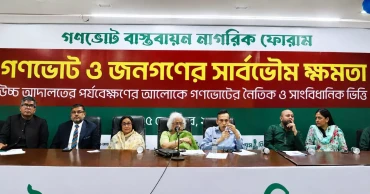
Uphold referendum verdict to preserve political legitimacy, speakers warn govt
The legitimacy of both the interim government formed after the July 2024 mass uprising and any government elected through a national election could be questioned if the verdict of the February 12, 2026 referendum is ignored, speakers said at a seminar on Saturday.
They stressed the need to implement the July Charter and of respecting the popular mandate expressed through the referendum.
The Referendum Implementation Citizens Forum organised the seminar titled “Referendum and the Sovereign Power of the People: Moral and Constitutional Basis of the Referendum in Light of the High Court’s Observations” at the Abdus Salam Hall of the Jatiya Press Club.
Supreme Court lawyer Shishir Manir said the events of August 5 and the formation of the interim government that followed did not take place through the conventional constitutional process.
“This uprising was not the result of the will of any individual, political party or administration,” he said.
He said the fall of the previous government, the formation of the interim government and the February 12 national election all took place outside the existing constitutional framework.
“If the July Charter is not implemented, the legitimacy of the government will also be questioned,” he said.
Criticising the BNP, Shishir Manir said, “Although the BNP claims to be a party of the people, it is not accepting the referendum.”
He said the interests or personal ambitions of a few individuals could not be placed above the will of the people.
Addressing the Prime Minister, he said the government now faced a choice between playing a statesmanlike role and giving priority to party interests.
Tajul Islam, former chief prosecutor of the International Crimes Tribunal, said the BNP had repeatedly promised to fully implement the July Charter but was now moving away from that commitment.
He said the opposition party had also failed to ensure implementation of the referendum verdict through parliament.
Supreme Court lawyer Barrister Tanim Hossain Shawon said weaknesses in the Constitution had contributed to the events of August 5.
He said the previous government had used constitutional provisions to maintain authoritarian rule, while the July uprising, formation of the interim government and subsequent political process all took place outside the existing constitutional framework.
Shafiqul Alam, editor of the Daily Waadaa and former press secretary to the chief adviser of the interim government, said a section of people was trying to sow doubts about the July Uprising and the entire tenure of the interim government.
He said such efforts reflected the narrative promoted by the Awami League.
However, he said the political awareness and aspirations that had developed among young people and ordinary citizens could not be suppressed.
Barrister Asaduzzaman Fuaad, general secretary of the AB Party, said the BNP was one of the major beneficiaries of the political changes of 1975 and 1990 but had failed to meet people's expectations after coming to power.
“This time too, despite being one of the biggest beneficiaries of the mass uprising, they are following the same path,” he said.
He said the party still had an opportunity to change course.
Alternatives organiser Tajnuva Jabin said the July Charter was not being implemented because of the “arrogance of the home minister”.
“The referendum belongs to the people of Bangladesh. If everyone were united, no one could have stopped its verdict from being implemented,” she said.
1 month ago
‘Political crisis’ triggered for ignoring referendum verdict: Jamaat chief
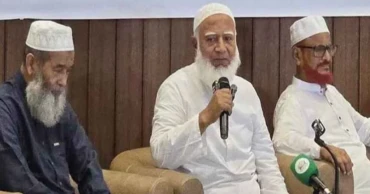
Leader of the Opposition and Bangladesh Jamaat-e-Islami Ameer Dr Shafiqur Rahman on Wednesday said his party remains firm in its demand for the formation of a constitutional reform council in line with the verdict of referendum, instead of giving representatives to a special parliamentary committee on constitutional amendment accepting a proposal from the ruling party.
"The people gave a mandate for reform, not merely for amendment (to Constitution). So, we cannot agree to the proposal (given by the ruling party to join) for the special committee," he said, while addressing a post-budget view-exchange meeting with journalists at the LD Hall of the Jatiya Sangsad Bhaban.
The opposition leader said the referendum had given a clear public mandate for constitutional reform, but the government's decision to pursue constitutional amendments through a special parliamentary committee contradicts that mandate.
He said a political crisis has been created in the country as the verdict of the referendum has not been implemented.
Shafiqur Rahman, however, said they remain open to dialogue with the government on the issue as it needs to reach a political solution through talks in the parliamentary democracy.
Explaining his party's street programmes, he said the opposition had been compelled to take to the streets with programmes after failing to secure sufficient discussion in Parliament on this issue.
“It needs permission from the Speaker to discuss the issue in Parliament, but does not require such permission in the parliament of the people (streets),” the Jamaat chief said.
He said as they do not get enough scope to discuss the issue in Parliament, they decided to go to the people's parliament. “We’ve taken the side of the people. We want the public verdict to be implemented,” he said.
Turning to the 2026-27 national budget, the opposition leader said the government had accepted several proposals put forward by the opposition, including withdrawing the provision to legalise undisclosed money and scrapping the proposed tax on small grocery shops and marginal businesses.
He also demanded shifting the fiscal year from July-June to January-December to align with the calendar year.
Arguing for the change, Shafiqur Rahman said the existing fiscal calendar encourages excessive spending during the final three months of the year, leading to waste, corruption and poor implementation.
He also called for ensuring that the impact of reduced taxes on 61 essential commodities is reflected in market prices, saying otherwise the benefits will be captured by business syndicates rather than consumers.
The Jamaat chief criticised the absence of budget allocations for the July Museum and July Foundation, saying the July movement should be preserved as part of the nation's history.
3 months ago
Opposition threatens to go to street if Referendum verdict ignored
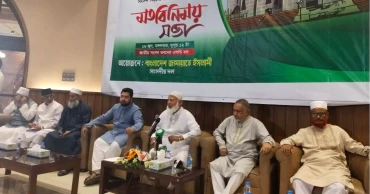
Opposition Leader Dr Shafiqur Rahman on Tuesday warned that they would take to the streets with the demand for implementation of people’s verdict given in the referendum if it is ignored in Parliament.
“It will be resolved either in Parliament or on the streets. We will not leave this public demand, nor do we have the right to do so,” he said while exchanging views with journalists at the LD Hall of the Parliament complex.
Dr. Shafiqur said they are committed to fulfilling the aspirations expressed by people and cannot betray that commitment. “We are confident this demand, Inshallah, will be materialised either today or tomorrow,” he added.
The opposition leader rejected a government proposal seeking opposition nominations for a special parliamentary committee on constitutional amendment.
He said his party would only consider participating in a committee formed for constitutional reform, not for routine amendments to the constitution.
Referring to the referendum results, he noted that 70 percent of voters supported constitutional reform. “We stand with people and the verdict of the people. Therefore, we have said that if a committee is formed for reform and not for amendment, we will consider joining it.”
Dr Shafiqur said constitutional amendment is a routine parliamentary process that does not require a special committee.
When a constitutional amendment comes as a bill in Parliament, the opposition will participate in discussions over the bill, he said.
“If they come up with a proposal for reform, then we will consider it,” he added.
In reply to another question, he said the people sent them to Parliament to raise voice for them. If any logical issue is not considered or ruled out and we can’t get scope, then we will walk out (from the house) but not for a long term.
Asked about the role of the opposition in Parliament, Dr Shafiqur said their lawmakers were elected to represent public interests and raise the people's concerns.
“If any logical issue is ignored and we are denied the opportunity to speak, we may walk out of Parliament, but not for a long term,” he said.
He said they should not be considered as an aggressive opposition. “Do not consider us an excessively aggressive opposition. Rather, cooperate with us to perform as a reasonable and logical opposition over national interests,” he said pointing at the journalists.
The opposition leader recalled that Bangladesh had a relatively effective opposition in Parliament following the 2008 election but claimed that no effective opposition existed in the legislatures formed through the elections of 2014, 2018, and 2024.
“We have seen opposition parties sharing ministries with the government. We have also seen opposition leaders whose selection depended on the ruling party leadership. We have witnessed such opposition in Parliament,” he said.
“Our position is completely different. We will not be a submissive opposition. At the same time, we will not engage in any behavior inside Parliament that hampers public interest. The people sent us here to speak on their behalf,” said the opposition leader.
He emphasised that the opposition would focus exclusively on issues affecting the country and its people.
“Our concern is the country and its people. We will not spend even a single minute in Parliament on matters beyond national interest,” he said adding that every minute of Parliament's session costs approximately Tk 176,000.
Commenting on the supplementary budget passed by Parliament on Monday, Dr. Shafiqur criticised the timing of its presentation.
According to the law, the supplementary budget should be placed in March, but it is often presented in June at the very end of the fiscal year, he said.
Dr Shafiqur noted that parliamentary approval was sought for approximately Tk 56,000 crore through the supplementary budget 2026 and alleged that a significant portion of the allocation could be vulnerable to misuse. “There is no accountability for a big portion of it,” he said.
The opposition leader also said the country's fiscal year should be aligned with the calendar year to ensure better planning and implementation in public finances.
Deputy Opposition Leader Dr Syed Abdullah Mohammed Taher, Opposition Chief Whip Nahid Islam, Jamaat lawmakers ATM Azharul Islam, Shahjahan Chowdhury, Rafiqul Islam Khan, Barrister Nazibur Rahman Momen, Prof Mujibur Rahman and GM Nazrul Islam, Jamaat Secretary General Mia Golam Parwar and Assistant secretary general AHM Hamidur Rahman Azad were present.
3 months ago