US-Iran talks postponed
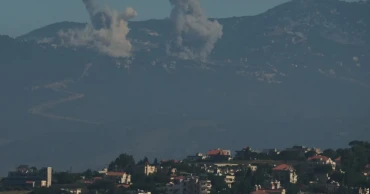
US-Iran talks postponed as Israel-Hezbollah fighting intensifies in Lebanon
Planned talks between the United States and Iran were postponed on Friday after renewed fighting between Israeli forces and Hezbollah in southern Lebanon, raising fresh concerns about the durability of a preliminary agreement aimed at ending the recent Iran conflict.
Iranian officials cancelled a scheduled trip to Switzerland for negotiations with US representatives, insisting that hostilities in Lebanon must cease before discussions can proceed, according to regional officials and a source familiar with the matter. US Vice President JD Vance also delayed his planned visit.
The postponement came as Israeli airstrikes targeted multiple locations in southern and eastern Lebanon overnight, while Hezbollah reported fierce clashes on the ground. Lebanon’s Health Ministry said at least 21 people were killed, while Israel reported the deaths of four soldiers.
The confrontation between Israel and the Iran-backed Hezbollah movement remains one of the most sensitive aspects of the broader Iran-US agreement. Although neither Israel nor Hezbollah is a party to the deal, the accord is intended to halt regional hostilities, including fighting between the two sides.
The interim agreement has already helped restore stability in Iran and the Gulf region and facilitated the reopening of the Strait of Hormuz, a key global energy route that had been severely disrupted by Iranian attacks and threats.
Future negotiations are expected to focus on securing a permanent settlement to the conflict and addressing concerns over Iran’s nuclear programme, which was at the centre of the war involving Israel, the United States and Iran that began on February 28.
According to the Israeli military, four soldiers, including a lieutenant colonel, were killed in an attack on a tank near the southern Lebanese city of Nabatiyeh. Five other soldiers were wounded in a separate drone attack.
In response, Israel launched airstrikes against what it described as Hezbollah infrastructure in Nabatiyeh and other areas, accusing the group of violating the ceasefire. Additional strikes were reported in Lebanon’s eastern Bekaa Valley, including the village of Douris.
Israeli Prime Minister Benjamin Netanyahu vowed a strong response, saying Hezbollah would pay a heavy price for attacks on Israeli soldiers and territory.
Hezbollah confirmed targeting Israeli tanks, saying its actions were retaliation for Israeli ceasefire violations. The group said Israeli troops had attempted to advance toward the strategically important Ali al-Taher hill overlooking Nabatiyeh.
The renewed violence has displaced residents in parts of southern Lebanon, with many fleeing their villages amid fears of further escalation.
Disagreements over Israel’s continued military presence in southern Lebanon also remain unresolved. Iran has repeatedly demanded a full Israeli withdrawal, while Netanyahu has maintained that Israeli troops will remain in a security zone for as long as security conditions require.
The latest developments have added strain to relations between Washington and Jerusalem, with reports indicating growing criticism from US President Donald Trump toward Netanyahu’s handling of the situation.
Sources familiar with the negotiations said Iran refused to begin the Switzerland talks while Israeli military operations in Lebanon continued. The White House had earlier attributed Vance’s postponed trip to logistical reasons.
Regional officials said mediators are working to reschedule the talks, although uncertainty remains over when discussions can resume.
Meanwhile, shipping activity through the Strait of Hormuz has improved significantly, with the United States reporting that more than 12.5 million barrels of oil passed through the waterway on Wednesday. However, analysts say it could take weeks or months before energy exports fully return to normal levels.
Iran’s newly established authority overseeing the strait announced Friday that vessels would be required to register with it, although security, safety and environmental service fees would be waived during the 60-day period outlined in the interim agreement.
Negotiators still face major challenges in reaching a comprehensive nuclear accord. Iran insists its nuclear programme is for peaceful purposes, although the International Atomic Energy Agency says Tehran possesses highly enriched uranium that could potentially be used to produce nuclear weapons.
Under the interim agreement, negotiators have 60 days—subject to extension—to reach a final nuclear deal. The framework includes incentives for Iran, such as the eventual lifting of international sanctions and a proposed $300 billion fund for post-war reconstruction.
The United States has already eased some restrictions by allowing Iran to resume oil exports and by lifting its blockade on Iranian ports. The agreement also envisages the release of frozen Iranian assets, although the timing remains uncertain.
3 months ago