Agility Robotics
Agility Robotics seeks Wall Street debut in $2.5bn humanoid robot push
Agility Robotics, a US company that develops human-like robots for warehouse work, plans to go public in a move that could test investor confidence in the growing market for AI-powered humanoid machines.
The Oregon-based company announced Wednesday that it will merge with an investment firm in a deal valuing Agility at about $2.5 billion. The move is expected to make it the first publicly traded company focused entirely on building and selling humanoid robots.
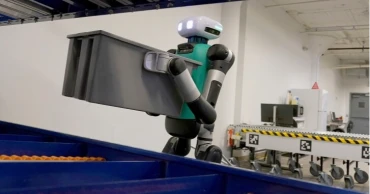
Agility is best known for its robot "Digit," which is designed to lift and move heavy containers and storage bins in warehouses and industrial facilities. Company officials say Digit is already being used commercially, making it one of the first humanoid robots to perform real-world warehouse tasks.
The company will merge with a special-purpose acquisition company (SPAC) managed by Churchill Capital Group. Churchill co-founder and chairman Michael Klein said Agility has attracted support from major technology and investment firms, including Amazon, Nvidia, SoftBank and Foxconn.
Among its early customers are Toyota, German industrial supplier Schaeffler and Latin American e-commerce giant Mercado Libre.
Agility faces competition from companies such as Tesla, whose CEO Elon Musk has promoted the Optimus humanoid robot as a key part of the company's future plans. Chinese robotics company Unitree is also moving toward a stock market listing in Shanghai.
Despite being classified as a humanoid robot, Digit was not designed to closely resemble a human, according to Agility co-founder and chief robot officer Jonathan Hurst. Its bird-like legs and claw-style gripping hands are specifically designed to improve performance in industrial environments.
Chief Executive Officer Peggy Johnson said Digit is intended to handle repetitive, physically demanding and potentially hazardous tasks that many workers prefer to avoid.=
"The demand is growing rapidly," Johnson said, noting that companies are bringing manufacturing back home, experienced workers are retiring, and fewer young people are interested in taking up routine manual jobs.
Unlike many traditional industrial robots that operate behind safety barriers, future versions of Digit are expected to work directly alongside human employees in warehouses and factories. The company also sees potential applications in hospitality, home services and elderly care in the future.
Agility said the funds raised through the public listing will help expand commercial deployments and increase production of its next-generation robot, Digit V5.
The company believes the global market for humanoid robots could eventually exceed $1 trillion, although a growing number of firms are competing to capture a share of the sector.
Industry analysts say Agility and Unitree represent two different approaches to humanoid robotics. While Agility focuses on practical workplace robots, Unitree has gained attention for showcasing robots that can dance, perform backflips and demonstrate other entertainment-oriented features.
Experts say the emerging humanoid robot industry is still evolving, with companies continuing to search for the most promising commercial opportunities.
3 months ago