Apparel exports to EU
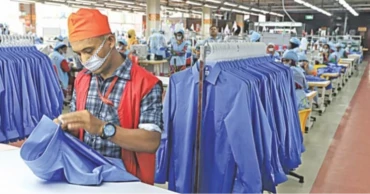
Bangladesh apparel exports to EU slump 19% in Jan-May
Bangladesh’s apparel exports to the European Union (EU) slumped by 18.89 percent year-on-year to €7.28 billion ($8.33 billion) in the first five months of 2026 (January-May), marking the steepest decline among the region's major global suppliers.
According to Eurostat data analysed by Mohiuddin Rubel, founder and CEO of Bangladesh Apparel Voice, the country is facing a critical "dual weakness," losing ground on both shipment volume and unit price simultaneously.
During the period, Bangladesh's apparel export volume to the EU fell by 10.46 percent, while its unit price dropped by 9.41 percent. Both figures are roughly double the global average decline.
Overall EU Demand Shrinks
The downturn reflects a broader contraction in the EU apparel market. Total EU apparel imports from the world fell by 9.96 percent year-on-year to €33.84 billion ($38.71 billion), down from €37.58 billion ($43.00 billion) in the same period last year.
The global decline was driven by a 6.46 percent drop in volume and a 3.74 percent decline in unit prices, suggesting that weaker consumer demand and softer pricing contributed almost equally to the market contraction.
However, Bangladesh’s performance in May alone showed worsening vulnerability, with export value sliding by 17.12 percent, volume down by 13.55 percent, and unit prices dropping by 4.13 percent.
Mixed Performance Among Competitors
While Bangladesh struggled on both fronts, its global competitors showed mixed resilience by adopting different market strategies.
China – the leading supplier – recorded the smallest value decline of 4.20 percent. It was the only major exporter to grow its shipment volume, which rose by 1.96 percent, defending its market share through a 6.05 percent price cut.
Vietnam emerged as the most resilient exporter, with its export value dipping just 1.51 percent. Despite a sharp 12.27 percent drop in volume, it defended its value through premium positioning, pushing its unit price up by 12.26 percent.
Pakistan’s export value fell by 17.01 percent despite a 3 percent increase in volume, suffering from a major unit price collapse of 19.43 percent.
India experienced a milder version of Bangladesh's dual weakness, with its export value declining by 13.33 percent.
Turkey and Cambodia faced volume-led declines of 17.17 percent and 15.13 percent, respectively, though their unit prices saw upward adjustments.
Indonesia experienced the sharpest volume contraction among all suppliers, plunging 23.76 percent.
Sustained Structural Concerns
Highlighting the gravity of the data, Mohiuddin Rubel noted that Bangladesh is currently the only major apparel supplier losing on both volume and price at this scale – contrasting sharply with Vietnam’s price-resilience and China’s volume-resilience.
He warned that because this dual weakness has persisted from April into May, it points to a sustained structural problem within Bangladesh's apparel sector rather than a temporary, one-month blip.
2 months ago
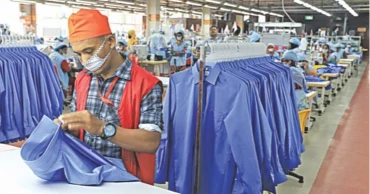
Apparel exports to EU drop 19.33% in Jan-Apr amid dual hit to volume, price
Bangladesh’s apparel exports to European Union (EU) took a severe hit in the first four months of 2026, recording the steepest decline among major global suppliers amid a broader market contraction, according to the latest Eurostat data.
Bangladesh underperformed compared to its key competitors, suffering from a dual blow of eroding export volumes and falling unit prices, said Mohiuddin Rubel, Former Director of the Bangladesh Garment Manufacturers and Exporters Association (BGMEA) and Additional Managing Director of Denim Expert Ltd
According to data presented in the document "EU export document", total EU apparel imports from across the globe dropped by 10.42 percent year-on-year during the January–April 2026 period, falling to €27.77 billion from €31.00 billion in the corresponding period of 2025.
During this timeframe, Bangladesh's exports to the EU plummeted by 19.33 percent, dropping to €6.09 billion from €7.54 billion.
Industry experts pointed out that unlike other major competitors who managed to hold ground on either price or volume, Bangladesh lost on both fronts simultaneously. The country's export volume fell by 9.91 percent to 435.97 million kg, while its average unit price slid sharply by 10.45 percent to €13.96 per kg.
The single-month data for April 2026 painted an even bleaker picture for the country, showing a sharp 19.53 percent year-on-year drop in value, alongside a 14.63 percent decline in volume and a 5.74 percent dip in unit prices.
Mixed Fortunes for Global Competitors
While the overall European market slowed down due to a 5.48 percent drop in global import volumes and a 5.22 percent decline in average unit prices, Bangladesh's rival manufacturing hubs showed highly varied strategies and outcomes:
China: The top clothing supplier posted the mildest value decline of just 4.70 percent (€7.95 billion) and emerged as the only major exporter to increase its shipping volume, which grew 3.25 percent to 408.91 million kg. This was achieved through aggressive pricing, with its unit price dropping 7.70 percent to €19.44 per kg.
Vietnam: Exhibited remarkable resilience, with its export value dipping a marginal 0.70 percent to €1.37 billion. Despite a 7.11 percent contraction in shipment volume, Vietnam managed to defend its market position through premium pricing, securing a 6.90 percent increase in unit prices to €29.43 per kg.
Turkey and India: Turkey saw a volume-led export value decline of 16.60 percent to €2.42 billion, even as its unit prices rose marginally by 1.49 percent. India registered a 12.10 percent contraction in value to €1.64 billion, hit by drops in both volume (-7.70 percent) and price (-4.76 percent).
Pakistan: Recorded an unusual market dynamic where its export volume actually rose by 5.86 percent (108.53 million kg), but its overall earnings plummeted by 17.94 percent to €1.09 billion due to a massive 22.49 percent collapse in unit prices—the steepest price drop among all monitored nations.
The Eurostat data highlighted that Bangladesh's double-digit decline represents a distinct vulnerability in the European market. While China opted for volume growth via price cuts and Vietnam successfully prioritized value over volume, Bangladesh was uniquely caught in a downward spiral on both metrics.
Local industry insiders stressed that the dual erosion of price and volume on a comparable scale was not observed in any other major garment-exporting nation, signaling an urgent need for Bangladeshi exporters to re-evaluate pricing strategies, boost competitiveness, and diversify into higher-value apparel segments.
3 months ago