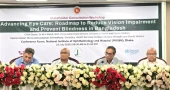
Dr MA Muhit
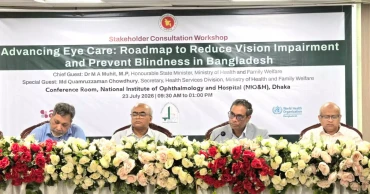
Bangladesh sets 5-year target to eliminate cataract blindness: State Minister
Bangladesh will take all necessary measures to completely eliminate cataract blindness within the next four to five years, State Minister for Health and Family Welfare Dr MA Muhit has said on Thursday.
"Through a national roadmap implemented with coordinated efforts from the public, private and NGO sectors, it is possible to eliminate cataract blindness in Bangladesh within the next four to five years," the state minister said while addressing a stakeholder consultation workshop titled "Advanced Eye Care in Bangladesh: Action Plan for Reducing Visual Impairment and Preventing Blindness" at the National Institute of Ophthalmology and Hospital in Sher-e-Bangla Nagar.
He also emphasised delivering high-tech eye care services to the country's most marginalised and poor populations as a civic right, through the use of artificial intelligence (AI) and modern technology.
The state minister noted that Bangladesh's public sector, private initiatives and NGOs are all doing commendable and visible work in eye care.
However, he said, a national initiative is being undertaken because there is no unified, common reporting system connecting these efforts. "This sector will not change in a day, so we are moving forward with a five-year perspective plan."
Muhit said that in the first year itself, existing eye care facilities and planning at district hospitals will be reassessed and effective steps taken accordingly, including recruitment of additional manpower where needed and a strong push to build capacity at district-level hospitals.
Giving specific directions on extending eye care to people of all ages, the state minister said coordinated campaigns and programmes will be launched to identify vision problems among schoolchildren and provide them with necessary glasses. "Eye health of working people at factories, offices and other institutions will also be looked after, with arrangements made to provide them with glasses as well."
He said a large-scale cataract surgery programme will be undertaken to address cataracts among the elderly, adding that performing several hundred thousand successful surgeries every year could make the country free of cataract blindness within the next four to five years.
Muhit said modern technology offers vast opportunities in treating emerging eye conditions such as diabetic retinopathy. "We can introduce an AI-based enhanced screening system. The use of technology has made community outreach and field-level service delivery far easier than before. We want high-tech eye care to reach the doorsteps of marginalised people, not remain confined to the wealthy in cities."
Referring to the shortage of skilled manpower as a major challenge in the eye care sector, the state minister said, "We must give the highest priority to human resource development and training cadres. There are already many good training institutions in the NGO and private sectors in the country. We need to increase the number and quality of all public and private institutions to make it easier for physicians to acquire the necessary skills."
Senior ophthalmologists, academics, experienced physicians working at district and peripheral levels, and representatives of international organisations took part in the workshop's open discussion session.
2 months ago
Health budget prioritises disease prevention, reforms over unplanned hospital construction: Muhit
State Minister for Health Dr MA Muhit on Sunday said the proposed national budget for the 2026-27 fiscal year prioritises disease prevention and comprehensive reforms in the healthcare sector rather than the unplanned construction of buildings and hospitals.
“This huge investment is aimed not merely at constructing hospitals or bringing temporary improvements to public health, but at increasing life expectancy and enabling people to live healthy lives,” he said, adding that the health sector allocation has almost doubled from the outgoing fiscal year.
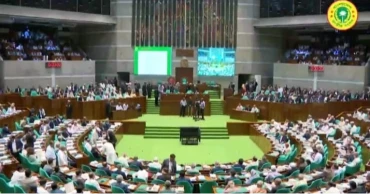
Muhit made the remarks while taking part in the general discussion on the proposed budget in Parliament.
He said the health sector allocation has increased to Tk 69,000 crore in the proposed budget from Tk 35,000 crore in the previous budget.
The state minister said the country's economy and healthcare system deteriorated during the previous 15 years of misrule, making comprehensive reforms essential.
The objective of this health budget is to rebuild the collapsed healthcare system and establish an integrated health service where people, regardless of their economic status, will receive free and easily accessible treatment, he said.
“This budget has been designed to build an accessible, affordable and inclusive healthcare system,” Muhit said.
Focusing on the country's major health challenges, he said around 71 percent of deaths in Bangladesh are now caused by non-communicable diseases (NCDs), including diabetes, hypertension, kidney diseases and other chronic diseases.
He stressed the need to make healthcare services more effective by adopting modern technologies and improving health management.
The state minister also expressed concern over the high cost of medical treatment, saying nearly 79 percent of healthcare expenditure in Bangladesh comes directly from patients' pockets.
In Thailand, out-of-pocket expenditure accounts for only around 10 percent, while in the Maldives it is about 18 percent, he said.
“There is no plan in this budget for indiscriminate construction of hospitals and buildings,” said the state minister.
Criticising the opposition for not raising voice for health reform, he claimed that the opposition often talks about reforms and the July Charter, but they only speak of reforms that will give them a share of power. “They have never spoken about reforms in the health sector,” he said.
Muhit stressed the need for strengthening health management, decentralising healthcare services and ensuring greater transparency and accountability in procurement in the health sector.
“We will build a healthcare system where people in both urban and rural areas receive the same standard of services. Our healthcare system will be built on the foundation of primary healthcare,” he said.
Citing that the health budget has been increased by 100 percent this time, the state minister said the government will place greater emphasis on disease prevention rather than treatment. “We will build a referral network (to ensure better delivery of healthcare services),” he said.
3 months ago