sexual and reproductive healthcare
TIB launches project to strengthen governance in sexual and reproductive healthcare
Transparency International Bangladesh (TIB) has launched a new project aimed at improving the quality of sexual and reproductive health and rights (SRHR) services for women and adolescent girls while promoting transparency and accountability in service delivery.
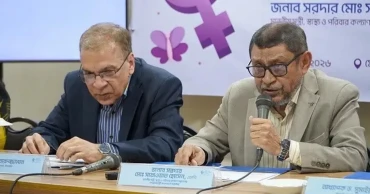
A project introduction and consultation workshop on the initiative, titled "Strengthening Integrity and Accountability in Sexual and Reproductive Health Systems in Bangladesh," was held in Dhaka on Sunday, TIB said in a media release.
Under the project, direct evidence on service delivery will be collected at the union level, while community facilitators will monitor selected indicators to identify healthcare and governance-related challenges at 16 Union Health and Family Welfare Centres in Lakshmipur and Nilphamari districts.
Based on the findings, TIB will undertake evidence-based field initiatives and engage with relevant authorities through sustained advocacy to improve service quality and strengthen transparency and accountability in the healthcare system.
Funded by the Swedish government and implemented with support from Transparency International Global Health, the multi-country project is being carried out simultaneously in Bangladesh, Zambia, Ecuador and Tunisia, the release said.
Speaking as the chief guest at the event, Health Minister Sardar Md. Sakhawat Husain said, “The health sector became deeply entrenched in corruption due to years of poor governance. Public resources were looted and wasted, depriving people of their rightful healthcare services. However, under the Prime Ministers directive, we are firmly committed to establishing good governance and taking a strong stance against corruption in the health sector. In this context, TIB’s project is a timely and valuable initiative. The government remains committed to providing all necessary support, from the field level to the policymaking level, for its successful implementation.”
He also expressed hope that the initiative would contribute significantly to achieving the government’s objectives in the health sector.
Dr. Syeda Naushin Parnini, Additional Secretary (Development Wing) of the Medical Education and Family Welfare Division, said, “TIB’s project is a timely initiative to strengthen transparency and integrity in Bangladesh’s sexual and reproductive health system. As a pilot initiative, the project has selected Nilphamari and Lakshmipur, alongside Dhaka, and I believe there are sound reasons for choosing these districts. The government stands ready to support the project in every possible way so that it delivers meaningful benefits for all stakeholders involved in maternal and child healthcare.”
Welcoming the initiative, Director General of the Directorate General of Family Planning, Dr. Jinnat Rehana, said “We welcome this project as an effective mechanism for identifying gaps in the sexual and reproductive health sector. If the project shares its monitoring findings and identifies specific challenges with us, we will be able to take prompt measures to improve service quality by addressing similar issues across other unified health centers. I also believe that TIB’s initiative will, in the future, expand further to strengthen reproductive healthcare services and public awareness.”
Highlighting that the health sector is one of TIB’s priority areas for research, public engagement, and advocacy at both the national and local levels, TIB Executive Director Dr. Iftekharuzzaman said, “The active cooperation and participation of the government, along with all relevant stakeholders at every level, are crucial for the successful implementation of this project, which has been designed to improve the quality of sexual and reproductive health services while ensuring integrity and accountability.”
Among the key challenges discussed during the workshop was the need for timely budget allocations for the sexual and reproductive health sector that are aligned with field-level realities, as well as ensuring transparent and accountable public expenditure despite existing budget constraints. In this context, the Executive Director emphasized that the nearly two-and-a-half-fold increase in health sector allocations proposed in the national budget would deliver meaningful benefits only if public funds are utilized through corruption-free and conflict-of-interest-free processes across the sector.
Project Coordinator Dr. Mushfika Mizan presented the project’s implementation plan in detail during the consultation workshop.
Under the project, TIB will conduct regular monitoring of the selected health centers, collect feedback directly from service recipients, facilitate community meetings to encourage active citizen participation at the local level, and undertake continuous advocacy and engagement with relevant authorities at the local, upazila, district, and national levels.
The project is aligned with Bangladesh’s national health sector priorities, universal health coverage, gender equality, and the global anti-corruption agenda.
3 months ago