Qatar talks
Container ship runs aground in Strait of Hormuz as Iran reiterates control claims amid Qatar talks
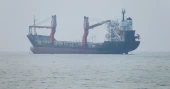
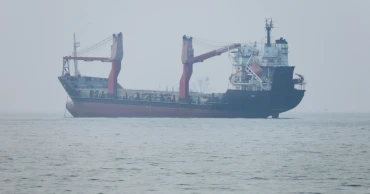
A foreign container ship ran aground in the Strait of Hormuz after allegedly failing to follow a route approved by Iran, Iranian state television reported on Wednesday, as technical talks aimed at ending the Iran-US conflict got underway in Qatar.
Iranian state media identified the vessel only as a foreign container ship and did not disclose its name, flag or cargo details.
According to the report, the ship became stranded in shallow waters after choosing a route outside what Iran describes as its designated "Route of Authority" in the strategic waterway.
Iranian state television said the country's paramilitary Revolutionary Guard had repeatedly warned shipping companies and vessel operators against using routes not authorised by Tehran, claiming such actions could lead to serious incidents.
The report appeared to reinforce Tehran's longstanding assertion of control over navigation in the Strait of Hormuz, a vital global shipping lane through which about one-fifth of the world's oil and natural gas passes during peacetime. The waterway is widely recognised internationally as an international maritime passage.
Meanwhile, technical-level negotiations between Iranian and US representatives began in Doha, Qatar, on Wednesday, according to two regional officials familiar with the talks. The discussions are aimed at resolving outstanding issues and laying the groundwork for a broader agreement to formally end recent hostilities between the two countries.
US Middle East envoy Steve Witkoff and Jared Kushner, US President Donald Trump's son-in-law, are in Qatar for the negotiations, which are being mediated by Qatari officials.
Although Iran has publicly denied scheduling direct talks with US representatives, officials have left open the possibility of indirect negotiations through Qatari mediators, a format previously used by the two sides.
Qatar's Foreign Ministry confirmed that Foreign Minister Sheikh Mohammed bin Abdulrahman Al Thani met with the US delegation, with discussions focusing on the interim agreement as well as regional security and stability through dialogue and diplomacy.
The negotiations are also expected to address broader regional issues, including tensions in Lebanon.
Iran has insisted that all hostilities between the Iran-backed Hezbollah movement and Israeli forces must end, while also calling for Israel to withdraw from territory it currently occupies in southern Lebanon. Israel has maintained that it will retain control of the area to counter Hezbollah attacks.
Speaking to Iranian state television, Iranian Parliament Speaker Mohammad Bagher Qalibaf said efforts to reach a permanent agreement were continuing but warned that Tehran remained prepared for military action if diplomatic commitments were not honoured.
"We are engaged in dialogue, but if they refuse to implement what has been agreed through dialogue, we are prepared for war," he said.
3 months ago
US, Iran signal diplomatic engagement despite dispute over planned Qatar talks
The United States and Iran have separately announced plans to send delegations to Qatar this week, although the two sides remain divided over whether direct negotiations are set to take place following days of military escalation in the Persian Gulf.
US President Donald Trump said Iran had requested a meeting with American officials and that talks were expected to be held in Doha on Tuesday.
However, Iranian officials rejected that claim. Senior negotiator Kazem Gharibabadi said no talks with the United States had been confirmed, while Foreign Ministry spokesman Esmail Baghaei said Tehran's delegation would travel to Qatar to discuss the terms of an interim agreement with Qatari mediators, not US representatives.
"There are no negotiation meetings with the US side at any level scheduled in the coming days," Baghaei said.
Despite the conflicting statements, recent exchanges of military strikes appeared to subside on Monday after several days of heightened tensions.
Earlier this month, Washington and Tehran reached an interim agreement under which Iran would dilute its stockpile of enriched uranium, while the United States agreed to ease oil-related sanctions. The deal also called for the free movement of commercial vessels through the Strait of Hormuz and gave both sides 60 days to negotiate a broader agreement.
The strategic waterway, through which around one-fifth of the world's oil shipments passed before the conflict, has been at the centre of the recent confrontation. Iran's attacks on vessels in the Strait of Hormuz and retaliatory US airstrikes had raised fears of wider regional instability and disruptions to global energy supplies.
A US official, speaking on condition of anonymity, said Washington believes both countries are stepping back from further military action and expects commercial shipping through the Strait of Hormuz to resume without interference.
The official also said Qatar is expected to release $6 billion in frozen Iranian assets under the interim agreement. The funds would be used to purchase food and other humanitarian supplies for the Iranian people.
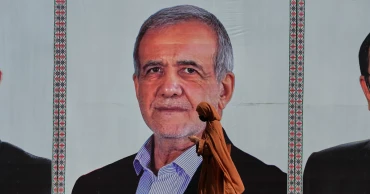
Iranian President Masoud Pezeshkian also referred to the anticipated release of the assets in remarks carried by state media.
Meanwhile, Oman said it is discussing with Iran the possibility of introducing service-related charges for commercial vessels transiting the Strait of Hormuz, although Omani Foreign Minister Badr al-Busaidi stressed that transit fees themselves would violate international rules and are not supported by Muscat.
Separately, tensions emerged between Iran and France after French President Emmanuel Macron said France and its partners were coordinating efforts to clear mines from the Strait of Hormuz. Iranian Deputy Foreign Minister Kazem Gharibabadi responded that, under the interim agreement, only Iran has the authority to conduct demining operations in the strategic waterway.
In a separate regional development, Lebanese President Joseph Aoun said Lebanon is committed to deploying its army along the country's southern border under a recently signed framework agreement with Israel. The deal has been rejected by the Iran-backed Hezbollah group, which warned that efforts to implement it could trigger civil conflict.
3 months ago