NASA space telescope
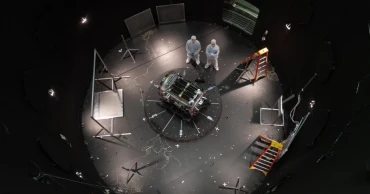
Rescue mission launched to save NASA telescope from falling back to Earth
A private spacecraft was successfully launched on Friday in an effort to save a NASA space telescope that is gradually losing altitude and risks falling back to Earth.
Northrop Grumman launched Katalyst Space Technologies' Link spacecraft from the Marshall Islands using a Pegasus rocket released from a modified aircraft in flight.
The spacecraft is expected to reach NASA's Swift Observatory in about a month. Once there, it will capture the telescope and raise its orbit, allowing it to continue its scientific mission.
Launched in 2004, the Swift Observatory has been losing altitude more quickly in recent months because of increased solar activity, which has strengthened atmospheric drag.
NASA is paying Katalyst Space Technologies $30 million for the rescue mission. If successful, Swift is expected to resume observing the universe by September after its orbit is lifted.
The telescope is designed to study powerful cosmic events, including gamma-ray bursts and exploding stars. Scientific observations have been temporarily suspended to preserve its remaining orbit until the rescue is completed.
NASA said the same type of mission could eventually be used to extend the life of the Hubble Space Telescope, which is also slowly descending because of increased atmospheric drag caused by solar storms.
Swift, which weighs about 1.6 tons, is currently orbiting Earth at an altitude of about 360 kilometers (224 miles). The Link spacecraft aims to raise its orbit by around 240 kilometers (150 miles), returning it to the altitude where it originally operated.
The spacecraft will use its thrusters to gradually lift the telescope, reducing the risk of damage during the maneuver.
Katalyst completed preparations for the mission in just nine months after NASA requested a fast timeline. Officials warned that without an orbital boost, Swift could become too low to recover and re-enter Earth's atmosphere as early as October.
The launch had been delayed several times because of poor weather and technical issues.
Calling it a "high-risk, high-reward" mission, Katalyst Space CEO Ghonhee Lee said the biggest risk had always been failing to launch in time, which would have allowed the telescope to burn up in Earth's atmosphere. He said the successful launch marked an important first step toward saving the observatory.
3 months ago