Iran's late Supreme Leader
Iranian leaders attend prayers for Khamenei as anti-US rhetoric intensifies
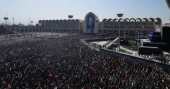
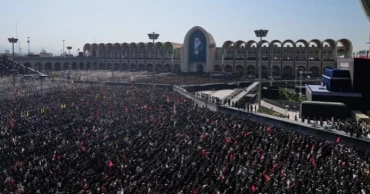
Iran's senior leaders and several sons of the late Supreme Leader Ayatollah Ali Khamenei appeared in public on Sunday to attend funeral prayers in Tehran, marking one of the first major public gatherings of top officials since the recent war with Israel. The event also saw renewed calls from mourners and speakers for revenge against U.S. President Donald Trump.
The appearance of Iran's top leadership before hundreds of thousands of mourners highlighted growing confidence about their security after the conflict, during which Israeli airstrikes reportedly killed the 86-year-old Khamenei, several members of his family and other senior officials.
During the war, Israeli forces also targeted other high-profile Iranian figures, in some cases reportedly using their public appearances to locate them for attacks.
However, Iran's new Supreme Leader, Ayatollah Mojtaba Khamenei, did not appear at the ceremony. He is believed to be in hiding after reportedly being wounded in the strike that killed his father. Israel has also threatened to target him as Iran continues negotiations with the United States on a permanent end to the conflict and issues related to the Strait of Hormuz, a key global oil shipping route.
Among the mourners was 42-year-old nurse Ziba Naderi, who said the country should follow the guidance of its new leader.
"I heard the calls for revenge, but our leader should decide what we need to do," she said. "We must follow his instructions."
Funeral prayers at Tehran's Grand Mosalla were led by 97-year-old Shiite cleric Ayatollah Jafar Sobhani.
Several senior Iranian officials attended the ceremony, including President Masoud Pezeshkian, Parliament Speaker Mohammad Bagher Qalibaf, Revolutionary Guard commander Gen. Ahmad Vahidi and Esmail Qaani, head of the Quds Force. Khamenei's sons Masoud, Meysam and Mostafa also appeared publicly for the first time since the war.
The venue displayed posters and graffiti calling for the deaths of Trump and Israeli Prime Minister Benjamin Netanyahu.
Poet Mohammad Rasouli, who hosted the event before the prayers, led chants of "Death to America!" and "Death to Israel!" Speaking through loudspeakers, he questioned why Trump was "still alive," drawing loud cheers from the crowd. It was one of the strongest public threats against the U.S. president made during the funeral events.
At the same time, Trump was speaking in Washington during celebrations marking the 250th anniversary of the United States.
Referring to recent U.S. military actions, Trump said, "We've had tremendous success. You look at Venezuela, you look at Iran. We wiped it out, wiped out their military."
Sunday's funeral drew a much larger crowd than Saturday's events. Thousands of mourners dressed in black carried banners praising Khamenei while some called for retaliation against Trump.
"I came here to demand revenge," said 29-year-old grocery worker Gholamreza Sabooni. "They killed our leader, so Trump should be killed."
U.S. authorities have monitored Iranian threats against Trump and other American officials for years, particularly after Trump ordered the 2020 killing of Gen. Qassem Soleimani, the former commander of the Quds Force. Iran has repeatedly denied plotting to assassinate Trump, although hard-line groups have frequently circulated propaganda depicting him as a target.
During the recent conflict, Trump also warned that the United States could destroy Iran's civilization if tensions escalated further.
Iranian authorities said Khamenei's body will be taken to several cities in Iran and neighboring Iraq before being driven through the streets of Tehran on Monday. National mourning will continue until Thursday, when he will be buried at the Imam Reza shrine in Mashhad, his birthplace.
Authorities have closed roads, restricted airspace and suspended many daily activities during the mourning period. No official estimate of attendance at the funeral ceremonies has been released, though similar memorial events were also held across Iran.
Negotiations with the United States aimed at reaching a permanent end to the war have been postponed until after the funeral ceremonies.
Many mourners said Iran should maintain a firm stance in future diplomacy.
"Our foreign policy should ensure that the blood of our martyred leader is respected and that no country can act against Iran without facing a serious response," said mourner Mohammad Reza Sharifi.
3 months ago