toothpaste
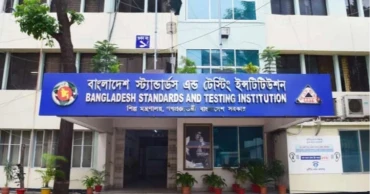
BSTI says will verify toothpaste microplastics findings before taking action
The Bangladesh Standards and Testing Institution (BSTI) has said it will take action only after scientifically verifying the findings of a recent study that detected microplastics in most types of toothpaste available in the market.
In a statement on Tuesday, it said a study by the Environment and Social Development Organization (ESDO), a private research organisation, found microplastics in 26 out of 34 toothpaste types it tested, raising public concern.
As the issue involves public health and the environment, BSTI said it is treating the matter with the utmost importance.
Microplastics are plastic particles measuring 5 millimetres or less and are usually invisible to the naked eye. According to the World Health Organization (WHO), they are an emerging environmental and public health concern. However, research into their health effects is still ongoing, and the WHO has said more studies are needed to better understand the risks.
BSTI said the United States was the first country to ban the intentional use of plastic microbeads in toothpaste and rinse-off cosmetic products under the Microbead-Free Waters Act of 2015. Under European Union Regulation (EU) 2023/2055, manufacturers have until 17 October 2027 to stop using intentionally added microplastics in toothpaste and rinse-off cosmetics.
Many countries have already banned the intentional use of plastic microbeads in toothpaste. However, BSTI noted that the standards of countries such as India, Pakistan and Sri Lanka, as well as those of international organisations, including ISO and ASTM, do not specify limits or bans on unintentional microplastics in toothpaste.
There is also no internationally accepted limit or standard testing method for such contamination.
Bangladesh has its own toothpaste standard, BDS 1216:2012 Specification for Toothpaste. Under SRO Nos. 50 and 51 of 2019, toothpaste manufacturers must obtain a BSTI licence after their products are tested for chemical, microbiological and safety requirements under the standard before they can be sold.
Although the Bangladesh standard does not specifically ban microplastics, it includes a list of 81 approved ingredients for toothpaste, and microplastics are not among them.
BSTI said manufacturers' quality control systems are also checked before licences are issued, leaving no scope for the intentional use of microplastics in toothpaste production.
The national standards body said it will not be scientifically correct to conclude that a manufacturer deliberately used microplastics simply because plastic particles were found in a test, or to assume the product poses a health risk without further evidence.
It said detailed testing is needed to identify the type, source and quantity of the particles and to assess any possible health risks.
To verify the findings, BSTI has requested the full research report, testing methods, raw data and other relevant information from the research organisation. It is also collecting information on raw materials, product ingredients and synthetic polymers from manufacturers and importers.
The agency has also begun collecting toothpaste samples from the market and factories for independent confirmatory testing at accredited laboratories in Bangladesh or abroad.
If the tests confirm that any product fails to meet Bangladesh standards or contains unapproved ingredients, BSTI said it will take legal action against those responsible under existing laws.
At the same time, the agency said it will not be appropriate to declare any toothpaste brand unsafe or of poor quality before completing proper scientific and legal verification.
BSTI also said it has started reviewing the national toothpaste standard in consultation with experts, research institutions, the Department of Environment, the Directorate General of Drug Administration, dentists, manufacturers and consumer representatives.
Once sufficient scientific evidence is available, the standard will be updated to include restrictions on the intentional use of plastic microbeads in toothpaste, mandatory disclosure of ingredients and appropriate testing methods.
BSTI urged the public not to be influenced by rumours or panic. It advised people to maintain good oral hygiene, avoid swallowing toothpaste and rely on verified information.
The agency reaffirmed its commitment to protecting public health, maintaining scientific integrity and safeguarding consumer interests.
2 months ago