July Museum bridges past and future
July Museum to guide nation whenever it loses its way: Prof Yunus
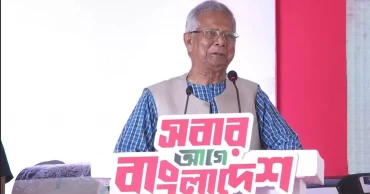
Former interim government Chief Adviser Prof Muhammad Yunus on Wednesday described the July Mass Uprising Memorial Museum as the starting point of Bangladesh's new journey, saying the nation should return to the museum whenever it loses its way to rediscover its democratic ideals and future direction.
Speaking as a special guest at the discussion titled "July 36" following the museum's inauguration, he also said the museum will serve as a bridge between Bangladesh's past and future, inspiring future generations to uphold the spirit of the July uprising and build a better nation.
"This museum stands between the past and the future. It has preserved the past instantly, but it has also created the future. It tells us who we are, what we wanted and what kind of Bangladesh we dreamed of building," Prof Yunus said.
He said the museum will serve as a guide whenever the nation faces uncertainty.
"If we ever lose our way, we will come here to find our path. If confusion clouds our thinking, we will rediscover our direction here and begin our journey anew," the former chief adviser said.
He said the institution is unlike conventional museums because it documented a defining chapter of Bangladesh's history almost immediately after the events unfolded. "There are many museums around the world that preserve objects from the distant past. This museum is different because it has preserved the memories, documents and artefacts of a historic event almost instantly," he said.
Prof Yunus, also a Nobel laureate, said the museum has created a new dimension in preserving the nation's history by connecting the past with the future.
He said the museum captures the aspirations and sacrifices of ordinary people, particularly young protesters who took to the streets hoping to build a new Bangladesh.
Referring to the handwritten farewell letter left by July uprising martyr Shariar Khan Anas, the former interim government head said it reflected the courage and conviction of an entire generation.
"He was not following a script. His parents tried to stop him, but he felt compelled to join the movement. His letter captured the emotions of a generation," he said.
Prof Yunus urged young Bangladeshis to draw inspiration from the museum and contribute to building the country the martyrs had envisioned.
He hoped students from schools, colleges and universities across the country will visit the museum, reflect on the July uprising and record their own dreams for Bangladesh's future.
"I hope visitors will not simply walk through the galleries and leave. They should think about what kind of Bangladesh they want to build," the Nobel laureate said.
He also envisioned the museum becoming a vibrant cultural hub where young people will express their aspirations through literature, music, art and other creative works.
Referring to the symbolic graves displayed on the premises, Prof Yunus said each memorial will tell the story of a martyr, enabling visitors to understand the sacrifices made by ordinary citizens.
"These were ordinary sons and daughters from ordinary families. They came to the streets because they believed Bangladesh deserved a better future," he said.
2 months ago