gold trade
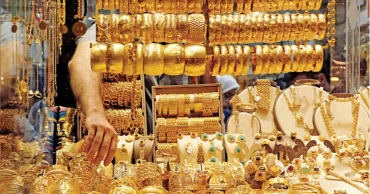
Bangladesh moves to formalise gold trade with new draft policy, eyes export potential
The Ministry of Commerce has invited government agencies and stakeholders to submit written feedback by Sunday on a draft "Gold Policy 2018 (Amended) 2026," aimed at transforming the country's gold sector from an informal state into a legal, recognised and accountable business sector.
Commerce Minister Khandaker Abdul Muktadir gave the directive on Thursday while chairing a meeting on the draft policy at the ministry's conference room.
Gold price jumps by Tk 9,856 per bhori
The minister said the gold sector has long played a significant role in the economy but has failed to achieve full institutional shape due to the absence of proper policy and regulatory frameworks, adding that regulatory weaknesses, not businesses alone, should be held responsible for the situation.
"We need to fix our mindset. It has not been right for a recognised business sector to remain outside a formal structure for so long. This situation arose because necessary steps were not taken in time. We now want to bring the sector under a legal and institutional framework," the minister said.
Noting that the government aims to allow the gold sector to operate like other industrial and business sectors, Muktadir said formalisation would boost employment generation, legal imports, revenue collection, and transparency in gold stocks and transactions, with businesses paying duties and taxes as per rules while the government ensures favourable regulations.
Every stage of the purchase, sale and storage of legally imported gold must be brought under accounts, he said, adding that regulators should have regular oversight of how much gold traders hold, how much is sold, and where it is sourced from.
Highlighting the economic importance of gold, the minister said one of the primary functions of currency is to preserve value, and gold is similarly recognised internationally as a means of preserving value, with central banks across the world holding significant gold reserves alongside foreign currency.
"If $4 billion or $10 billion worth of gold is legally imported into the country and remains here instead of being illegally taken abroad, then value is essentially being preserved within the country," he said.
To prevent gold from being smuggled abroad, the minister stressed avoiding an abnormal gap between domestic and international market prices, noting that a significantly lower local price compared to neighbouring or nearby countries creates economic incentives for illegal outflow.
He said international gold prices, particularly rates from major trading hubs including Dubai, must be considered while setting customs duties and tax rates.
The minister said the policy is not limited to gold imports but also gives serious consideration to the potential for jewellery manufacturing and exports through value addition within the country, adding that allowing raw material imports at minimal and reasonable duties would enable local artisans and entrepreneurs to produce internationally competitive products.
He said two aspects need consideration: first, whether gold imported at international prices can be exported after value addition domestically; and second, the significant domestic demand for gold, particularly for weddings and social occasions, which requires the policy to also account for the purchasing power of ordinary consumers.
Noting that rising gold prices are putting pressure on common people, the minister said a rational policy and supply system would increase market competition and allow consumers to purchase gold at comparatively fairer prices.
Before finalising the draft policy, the ministry will review the policies and regulatory systems of three to four gold jewellery-exporting countries, including India, the minister said, adding that a comparative analysis will be conducted of their import systems, tariff structures, stock management, export facilities and monitoring mechanisms against Bangladesh's proposed policy.
He called on the National Board of Revenue (NBR), Bangladesh Bank and other relevant agencies to identify possible questions, risks and implementation-related complexities and submit written opinions accordingly.
"It is not the government's intention to push the sector into a new crisis by formulating this policy. Everyone involved here is experienced and aware. We must collectively build a framework that prioritises the country's interest, so that the gold sector becomes legal, transparent and sustainable," the minister said.
The meeting was told that after compiling feedback from various stakeholders, another stakeholder meeting would be held if necessary, following which the revised gold policy would be finalised at the earliest.
Commerce Secretary Ataur Rahman Khan presided over the meeting, where Bangladesh Jewellers Association (BAJUS) President Enamul Haque Khan and Bangladesh Export Promotion Bureau (EPB) Vice Chairman Mohammad Hasan Arif, among others, spoke.
Representatives from the NBR, Bangladesh Bank and other relevant government agencies and the gold sector also shared their views at the meeting.
2 months ago