vintage computer
As AI takes over, vintage computer collecting gains popularity
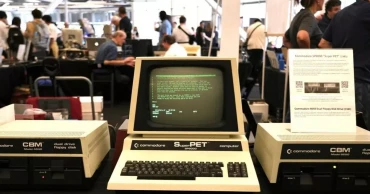
As the technology world races toward artificial intelligence, a growing number of enthusiasts are looking back to the early days of computing by collecting and restoring vintage computers.
Software engineer Josh Dersch is one of them. He spends hours in his garage trying to bring decades-old machines back to life and estimates that he has more than 200 vintage computers and related devices at his home in Seattle.
“I’ve always found the origins of things fascinating,” Dersch said. “It’s a fun challenge to figure out what’s wrong and repair it. You can understand the whole system from top to bottom.”
Dersch is part of a growing community dedicated to preserving the computers that helped start the digital revolution.
While Silicon Valley is now focused on developing AI and other advanced technologies, vintage computer enthusiasts are keeping machines made by Atari, Commodore and IBM alive — systems that paved the way for today’s laptops, smartphones and wearable devices.
For collectors, these machines are not outdated junk but important pieces of computer history. Many enjoy hearing the familiar sounds of old machines and playing simple games such as “Pong” and “Space Invaders.”
“Interest in the history of computers and everything connected to it is growing,” said Erik Klein, president of the Vintage Computer Federation, which holds an annual festival at the Computer History Museum in Mountain View.
Vintage computer festivals draw thousandsMore than 3,500 people attended a two-day Vintage Computer Festival in early August to mark the 50th anniversary of Apple, founded in nearby Cupertino in 1976.
The event included a panel discussion with Apple co-founders Steve Wozniak and Ronald Wayne, who recalled the company’s early days as a small startup led by the late Steve Jobs.
More than a dozen similar events are now held in cities across North America, South America and Europe.
Klein said the growing interest is also driving demand for vintage computers on online marketplaces. Rare and iconic machines, such as the Apple-1 — Apple’s first product — can sell for hundreds of thousands of dollars.
At the festival, collectors displayed computers they had carefully restored to working condition, giving visitors a chance to use machines developed long before the internet, social media and AI became part of everyday life.
Restoring the ‘grandfather’ of modern computersDersch traveled from Seattle to showcase the prized machine in his collection — a Xerox Alto.
He spent years restoring the computer, which is often described as the “grandfather of the modern computer.” It was developed at Xerox’s Palo Alto Research Center in the 1970s.
The Alto was among the first computers to move beyond text-based displays and introduce technologies such as the mouse and graphical user interface, including windows, icons and cursors. Those features later became standard in personal computers and are widely credited with influencing early products developed by Jobs and Bill Gates.
Dersch’s exhibit included a fully working Xerox Alto workstation with its large vertical monitor, bulky keyboard and mouse. It also featured large disk drives that stored only tiny amounts of data compared with modern storage devices.
“It’s fun to show people what I’ve done and see what others have done,” Dersch said. “There’s also a section where I can buy more old machines to take home, so that’s always fun.”
Klein, a Silicon Valley software engineering manager, was once an avid collector himself. At one point, he had about 150 computer systems, along with accessories, manuals and original packaging, packed into his closets and garage.
But the collection eventually became too much to manage, and Klein worried that it could become a burden for his family. He gradually sold or gave away most of his machines, keeping only a few favorites.
Hobby spreading around the worldKlein now puts his passion for vintage computers into organizing festivals, repair workshops, swap meets and other events through the Vintage Computer Federation.
“It’s really about sharing the history and encouraging people to maintain, collect and enjoy this vintage technology,” he said.
Sellam Ismail, who organized the first vintage computer festival in 1997, said he is pleased to see how much the collector community has grown.
The first festival, held at a venue east of San Francisco, attracted about 150 hobbyists. Ismail organized the events for about a decade before helping establish the Vintage Computer Federation, which now runs festivals in the United States and Canada.
He has also helped groups organize similar events in Argentina, Germany and Switzerland.
“The community grew. More and more people started getting old computers and collecting them,” said Ismail, who once had a huge collection stored in a warehouse.
With the festival approaching its 30th anniversary next year, Ismail expects the hobby to continue expanding.
“Next year is the 30th anniversary, and I expect this to continue and grow even bigger,” he said.
2 months ago