lunar landings
NASA plans more than 20 lunar landings to build future Moon base
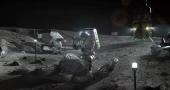
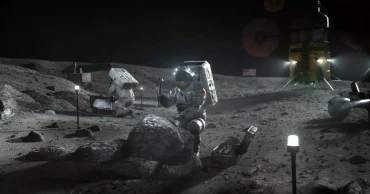
NASA is moving forward with plans to establish a lasting base near the Moon's South Pole, with more than 20 robotic landing missions planned through 2029 to deliver equipment, conduct scientific research and test technologies for future human operations.
The planned lunar base is expected to support scientific research, technology development and eventually human activities on the Moon.
NASA is working with commercial partners Blue Origin, Firefly Aerospace, Intuitive Machines and Voyager Technologies, which are developing landers for missions through 2028. The spacecraft will carry infrastructure, scientific instruments and other equipment needed to build a long-term presence on the lunar surface.
The missions are part of the first phase of NASA's Moon Base architecture, which is currently underway and runs through 2029.
Before astronauts arrive, robotic spacecraft will study the lunar environment, test new technologies and begin establishing infrastructure needed for future human missions.
NASA expects its Commercial Lunar Payload Services (CLPS) programme to provide regular cargo deliveries, helping create a dependable supply system between Earth and the Moon.
Blue Origin
Blue Origin is preparing its Blue Moon MK1 lander for its first planned lunar mission, called Endurance.
The lander has completed several environmental tests, including a thermal vacuum test at NASA's Johnson Space Center in Houston. The tests were designed to ensure the spacecraft can operate in conditions similar to those on the Moon.
Its main structure, propulsion systems and avionics are now assembled. The company is conducting additional integration work and preparing for further tests, including checks of wiring connections for payloads.
Endurance has also completed communication tests with NASA's satellite and deep-space communication networks. A major final test before launch preparations will involve loading its cryogenic propellants.
During its mission, the lander is expected to demonstrate precise landing capabilities, gather information about the lunar environment and test autonomous systems that could be used in future Moon Base missions.
Firefly Aerospace
Firefly Aerospace is preparing Blue Ghost Mission 2, building on the success of its first lunar landing.
The new mission will use a larger spacecraft designed for operations on the far side of the Moon. Blue Ghost will be mounted on Firefly's Elytra orbital spacecraft, creating a system about 22 feet tall.
Elytra will be able to deploy payloads both in lunar orbit and on the surface, giving NASA greater flexibility for scientific research and future cargo operations.
Blue Ghost Mission 2 is planned to make the first US landing on the far side of the Moon. Scientists hope to study the region's geology and learn more about the early universe during the period known as the cosmic Dark Ages.
Three NASA payloads will be carried on the mission to support scientific research and test technologies that could be useful for future lunar infrastructure.
Firefly also plans to reuse some systems from its first Blue Ghost mission, helping speed up development and reduce risks.
Intuitive Machines
Intuitive Machines is preparing its third Nova-C lunar landing mission, IM-3, which will also deploy the company's first lunar data relay satellite, Altus-1.
The Nova-C lander, named Trinity, is undergoing assembly and testing as the company works toward providing regular science and cargo deliveries to the Moon.
The spacecraft's upper deck has been aligned, while its internal wiring is being tested. The company has also completed long-duration thermal vacuum testing with NASA's Marshall Space Flight Center in Huntsville, Alabama.
The tests were designed to ensure that sensors can work accurately through the extreme temperatures expected during the spacecraft's descent to the lunar surface.
Further work includes engine integration and hot-fire testing.
IM-3 will place Altus-1 into lunar orbit and carry several payloads. Trinity will transport five NASA payloads, six commercial payloads and one civil payload to the surface.
The mission will also study Reiner Gamma, an unusual magnetic feature on the Moon. It is expected to be the first mission to explore the surface of a lunar swirl, providing scientists with a closer look at the mysterious region.
Voyager Technologies
Voyager Technologies is testing its Griffin-1 lander at NASA's Jet Propulsion Laboratory in Southern California as it prepares for a planned lunar mission.
Griffin-1 is designed to carry large infrastructure-related payloads and is scheduled for launch in late 2026. It is expected to deliver the largest commercial payload ever placed on the lunar surface.
Five NASA payloads will be installed on the Astrolab FLIP rover. The rover and its instruments will help test lunar mobility, demonstrate new technologies and prepare for longer operations on the Moon.
Griffin-1 recently completed mass properties testing, which provides information needed for navigation, guidance and flight control.
More environmental tests are planned to simulate conditions from launch through lunar landing. The testing is intended to identify potential problems and improve the spacecraft's reliability.
After testing, Griffin-1 will return to Voyager's facility in Pittsburgh for final assembly before moving through launch preparations and being transported to Cape Canaveral.
Northrop Grumman tests lunar technology
NASA is also working with Northrop Grumman on three technology demonstrations that will be delivered to the lunar surface.
The projects use power and avionics systems originally developed for NASA's Gateway programme. The technology is now being adapted for use on the lunar surface as NASA places greater emphasis on surface operations.
The demonstrations will test systems designed to survive the Moon's harsh environment, including the extremely cold lunar night and long periods in darkness.
NASA and Northrop Grumman will also test shared power systems that could provide electricity to scientific instruments and other Moon Base equipment.
The projects will further examine power and avionics systems that could support future lunar operations.
Building a long-term lunar presence
NASA's planned robotic missions, commercial deliveries and technology demonstrations are aimed at gradually building the infrastructure needed for a long-term presence on the Moon.
The agency hopes the effort will support continued scientific research and technology development while preparing the way for sustained human activity on the lunar surface alongside robotic operations.
Source: Science Daily
2 months ago