Chinese-born spouses
Chinese-born spouses in Taiwan face growing scrutiny over loyalty
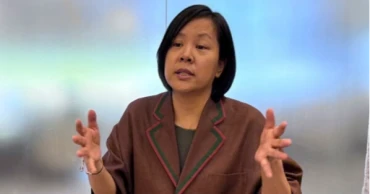
Li Chen-hsiu faced questions about her nationality, identity and loyalty to Taiwan just a day after taking her oath as a member of Taiwan's Legislature.
Li, who was born in China and became a Taiwanese citizen through marriage, is known as a “mainland spouse.” She is among around 369,000 Chinese-born people in Taiwan whose status has come under greater scrutiny as tensions with China continue to rise.
For two months, Li was the only China-born lawmaker in Taiwan who had moved to the island through marriage before she was forced to leave the legislature.
“It’s only because of Taiwan, which has this free and democratic system, and the Taiwan People’s Party, which was willing to give a political newcomer a chance, that I could have this opportunity,” she told The Associated Press in July.
But growing fears of a possible Chinese military attack have made life more difficult for mainland spouses. The group includes people from different generations and backgrounds, ranging from women who married former Chinese soldiers to younger and more educated people who married Taiwanese citizens after cross-strait travel restrictions eased.
Decades of tensionChina and Taiwan split after a civil war in 1949, when the Nationalist government fled to the island. The two sides cut off most contact for decades until Taiwan allowed residents to visit relatives in China in 1987.
Tensions have risen again since 2016, when independence-leaning President Tsai Ing-wen took office and Beijing ended official communication with Taipei.
China now regularly sends military aircraft and naval vessels near Taiwan and has increased efforts to isolate the island diplomatically. Beijing has also kept Taiwan out of international organisations and used disinformation campaigns against it.
The growing threat has intensified debate over who can be trusted in Taiwan.
A New Taipei court on Tuesday sentenced Hsu Chun-ying, head of an organisation that supports mainland spouses, to seven years in prison for allegedly working for Beijing to spy on Taiwan and interfere in its politics.
Older generation came to Taiwan after marriageMi Zhengrong, 72, is among the older generation of mainland spouses.
She met her first husband through relatives in China's Hubei province. He was a former soldier who had fled to Taiwan during the civil war. After cross-strait visits were allowed, some veterans returned to China and married women there before bringing them to Taiwan.
Mi married her husband and lived with him in China before they moved to Taiwan in 2002 because he missed the island. He died after 12 years of marriage.
Mi later married a neighbour in Taiwan and cared for him for nearly a decade after he became paralysed. She is now seeking his military pension, but he died 13 days before their marriage reached the 10-year requirement.
Although the military initially granted her the pension, it later withdrew it after finding that the couple had been married for less than 10 years.
Mi now survives on about 10,000 New Taiwan dollars ($330) a month, with around one-third going toward rent.
Despite her difficulties, she said she wants to remain in Taiwan.
“How many of us want to go back?” she said. “No one wants to go back.”
Taiwan had previously introduced measures to help mainland spouses integrate, including reducing the waiting period for citizenship and allowing them to work.
But authorities have recently begun tightening those policies.
Last spring, Taiwan deported three Chinese-born women who had used social media to advocate reunification with China by force. The Mainland Affairs Council said they posed repeated threats to Taiwan's national security and social stability.
Immigration authorities have also asked around 12,000 mainland spouses who already hold Taiwanese citizenship to prove they had cancelled their household registrations in China. Those who fail to provide the documents could lose their Taiwanese citizenship.
Li's case sparks debateLi entered the legislature in February with the Taiwan People's Party but quickly faced strong opposition.
Taiwan's interior minister said she could not serve because she had not provided documents showing she had given up her Chinese citizenship. The Mainland Affairs Council also said she failed to provide proof on time that she had held only one nationality for the previous 10 years.
Li argued that she had been a Taiwanese citizen since 1999 and had cancelled her Chinese household registration that year, which she said fulfilled the requirements.
The dispute remained unresolved until April, when her party expelled her. The government subsequently tightened requirements for Chinese-born lawmakers.
A spokesperson for the Mainland Affairs Council said the decision was based on legal requirements, not politics.
Some legal experts, however, accused the government of applying the rules selectively.
Bruce Liao, a law professor and immigration law expert at National Chengchi University, said some laws were being interpreted in a distorted way.
Others defended the government's approach as necessary for national security.
Yen-Tu Su, a researcher at Academia Sinica, said the government has a strong interest in protecting the country and should have some authority to determine whether a foreign-born resident poses a threat to public safety.
Different rules for Chinese-born spousesEven before the latest controversy, Chinese-born spouses faced different rules from spouses from other countries.
Mainland spouses can apply for Taiwanese citizenship after six years, compared with four years for foreign spouses. They must also hold Taiwanese citizenship for 10 years before applying for government jobs, while foreign spouses can apply for most lower-level government positions soon after becoming citizens.
The different treatment is largely linked to concerns over loyalty and China's security threats.
Shangguanluan, a Chinese writer and activist who moved to Taiwan with her Taiwanese husband in 2021, said she often faces questions about whether she is working for China's Communist Party or could be a spy.
She acknowledged that Beijing actively seeks information but said mainland spouses are unlikely to be its most valuable targets.
“If they want some core secrets,” she said, they are more likely to target people with direct access to sensitive information, such as defence officials, technology experts, academics or senior business figures.
“There’s no room for ‘mainland spouses’” among the most valuable targets for such information, she said.
2 months ago