BNP’s presidential candidate
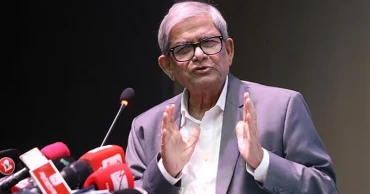
Mirza Fakhrul: From grassroots politics to presidential nominee
Mirza Fakhrul Islam Alamgir, who has risen through the political ranks from grassroots activism and steered the BNP through some of its most difficult years, is now the party’s nominee for the presidency.
A BNP delegation submitted the nomination paper to Chief Election Commissioner AMM Nasir Uddin at Nirbachan Bhaban in the city's Agargaon area Thursday afternoon, formally putting forward its Secretary General for the country’s highest constitutional office.
Fakhrul nominated as BNP’s presidential candidate
Earlier, BNP Chairman and Prime Minister Tarique Rahman nominated Mirza Fakhrul Islam Alamgir as the BNP’s candidate for the presidential election.
Tarique announced his decision at the beginning of a meeting with the party’s Standing Committee members and senior leaders at the Prime Minister’s Office at secretariat.
Mirza Fakhrul was a student leader in his youth, an economics teacher in his professional life and eventually a politician who went on to become a municipality chairman, a member of parliament, a state minister and a minister.
Now, he is set to become the country’s 23rd president.
At 78, Fakhrul has had a long and varied political journey, marked by political responsibility, organisational leadership and periods of adversity.
Fakhrul, widely regarded as a moderate and seasoned politician within the BNP, remained one of the party’s most visible leaders during its prolonged political struggle against the Awami League government.
Early life and education
Fakhrul was born on January 26, 1948, in the Kalibari area of Thakurgaon town. His father, Mirza Ruhul Amin, was a lawyer who served twice as a member of the Pakistan Provincial Assembly and later as a member of Bangladesh’s Parliament. He also served as a minister in the Ershad government.
Fakhrul completed his primary and secondary education in Thakurgaon before passing his Higher Secondary Certificate examination from Dhaka College. He then enrolled in the Department of Economics at the University of Dhaka where he obtained both his bachelor’s and master’s degrees.
His involvement in politics began during his university years. He joined leftist politics and became president of the East Pakistan Students’ Union’s Dhaka University unit.
He also served as the elected general secretary of the organisation’s SM Hall unit.
During the 1969 mass uprising, Fakhrul was president of the Dhaka University unit of the Students’ Union.
From teaching to politics
After completing his studies, Fakhrul joined the teaching profession and worked as a lecturer in economics at Dhaka College.
He later entered government service but left his job in 1986 to pursue politics full-time.
His political career took a new turn when he was elected chairman of the Thakurgaon municipality as an independent candidate in 1988.
Earlier, in 1979, during President Ziaur Rahman’s administration, Fakhrul had served as private secretary to then Deputy Prime Minister S A Bari.
His entry into national politics came through the National Awami Party (NAP) of Maulana Abdul Hamid Khan Bhashani before he eventually joined the BNP.
Rise within BNP
During the anti-Ershad movement in the early 1990s, Fakhrul joined the BNP. He was appointed president of the Thakurgaon district unit of the party in 1992 and subsequently rose through the party hierarchy, serving in several key positions before becoming a senior joint secretary general.
He served as BNP acting secretary general from 2011 and was elected secretary general at the party’s sixth national council in 2016. He has remained in the post since then.
Before reaching the party’s top leadership, he also served for years as the first vice-president and later president of the BNP’s farmers’ organisation, Jatiyatabadi Krishak Dal.
A visible face during BNP’s difficult years
Fakhrul’s political journey has been marked by prolonged challenges, particularly during the period following the 1/11 political changeover and the Awami League’s long tenure in power, when the BNP faced repeated repression and political setbacks.
During the Awami League government, then BNP Chairperson and firmer prime minister Khaleda Zia was imprisoned for nearly two years from 2018 and later remained largely inactive in politics due to illness.
Meanwhile, then acting chairman of the party Tarique Rahman left Bangladesh for London in 2008 during the military-backed caretaker government and continued to lead the party from there.
In their absence, Fakhrul provided the BNP’s main leadership from within Bangladesh. He remained at the forefront of the party’s movement against the Sheikh Hasina government and was jailed several times while leading those political programmes.
With the BNP’s top two leaders largely absent from the country’s political arena for extended periods, Fakhrul emerged as the party’s most visible leader at home, helping steer the organisation through successive crises and leading its movement against the Awami League government.
Parliamentary and ministerial career
Fakhrul was elected to Parliament from Thakurgaon-1 constituency in the 2001 general election on the BNP’s electoral symbol.
He served as state minister for agriculture and later as state minister for civil aviation and tourism during Khaleda Zia’s government.
In the 2018 general election, he contested from Thakurgaon-1 and Bogura-6 constituencies and won Bogura-6. However, amid allegations of widespread vote rigging, he did not take oath as an MP, an unusual episode in Bangladesh’s parliamentary history.
Under the current government led by Prime Minister Tarique Rahman, Fakhrul serves as the Local Government and Rural Development Minister. His parliamentary seat is next to that of the Prime Minister.
A long-serving party leader
Senior BNP leaders have often credited Fakhrul with holding the party together during periods when its top leadership faced legal, political and organisational challenges.
His nomination for the presidency therefore comes after a long career spanning student politics, teaching, government service, local government, parliamentary politics, ministerial responsibility and the leadership of the country’s principal political party.
Family
Fakhrul is married to Rahat Ara Begum. They have two daughters, Mirza Shamaruh Mirza and Mirza Safaruh.
His wife, a former senior official of a private financial institution, is now retired.
Their elder daughter lives in Australia and works as a postdoctoral fellow in Sydney, while their younger daughter teaches at an English-medium school in Dhaka.
With the submission of his nomination paper, Fakhrul’s decades-long political journey has now brought him to the threshold of the country’s highest constitutional office.
1 month ago
Speculation over BNP’s presidential candidate to end Thursday
Speculation over the BNP’s presidential nominee will end on Thursday, as its Chairman and Prime Minister Tarique Rahman is scheduled to meet the party’s Standing Committee members to make the final decision, with nomination papers for the presidential election scheduled to be submitted from 10am to 4pm that day.
Several BNP leaders said the party’s candidate will be known after the meeting, scheduled for 12 noon, just hours before the nomination deadline expires at 4pm.
They, however, indicated that BNP Secretary General and Local Government, Rural Development and Co-operatives Minister Mirza Fakhrul Islam Alamgir is likely to get the ruling party’s nomination for the presidency.
The BNP’s formal announcement may come around 12:30pm after the Standing Committee meeting, they said.
Earlier on August 10, the BNP Standing Committee entrusted its Chairman Tarique Rahman with the responsibility of nominating the party’s candidate for the presidential election.
Since then, speculation has intensified that Mirza Fakhrul would be the BNP nominee for the country’s top constitutional post.
A Standing Committee member said, “The name of the person who will be the presidential candidate will be known at the meeting with the chairman on Thursday.”
He said the prospective candidate’s signature will be obtained at the meeting and a delegation will then be sent to the Election Commission for submitting the nomination paper along with the signatures of the proposer and seconder.
Meanwhile, the 11-party opposition alliance, led by Bangladesh Jamaat-e-Islami, has named Liberal Democratic Party Chairman Col (retd) Oli Ahmad as its candidate for the presidential election.
Both the ruling and opposition camps have collected nomination papers for their respective aspirants.
Chief Election Commissioner AMM Nasir Uddin, who is serving as the returning officer for the presidential election, has already convened a meeting of MPs at the session chamber of the Jatiya Sangsad Bhaban on August 20 for voting in accordance with the Presidential Election Act, 1991.
According to the election schedule announced by the EC on August 6, nomination papers will be scrutinised on August 16, while the last date for withdrawal of candidature is August 18.
Voting will take place from 2pm to 5pm on August 20 at the session chamber of the Jatiya Sangsad. A total of 349 MPs are eligible to vote in the presidential election, with the Chattogram-4 parliamentary seat currently vacant.
This will be the first presidential election in 35 years involving more than one candidate, making it the first contested presidential election since the restoration of the parliamentary system in 1991.
On July 24, Mohammed Shahabuddin resigned as President, following which Speaker Hafiz Uddin Ahmad assumed charge as acting President.
Under Article 123(2) of the Constitution, an election to fill a vacant presidential office must be held within 90 days of the post becoming vacant due to resignation.
2 months ago