Ukrainian Refugee Shelter
Ukrainian Refugee Shelter in Poland Fights to Stay Open Amid Funding Crisis
A women’s shelter in Poland that supports Ukrainian refugees fleeing violence is struggling to survive as funding declines and anti-Ukrainian sentiment grows.
Nastya Podorozhnya, 29, founded Martynka, a helpline and support group for Ukrainian women escaping gender-based violence, after Russia launched its full-scale invasion of Ukraine in February 2022.
Podorozhnya was living in Poland when the war began but returned to Ukraine to help her sister and nieces escape. When she came back to Poland with thousands of other refugees, she saw volunteers welcoming Ukrainians. But she also worried that vulnerable women accepting help from strangers could become targets for human traffickers.
Four years later, Martynka is facing a difficult future. International funding has fallen as donors turn their attention to other crises, while hostility toward Ukrainians has increased. Poland also has yet to develop a long-term strategy for integrating refugees.
The organisation runs a small shelter in a two-bedroom apartment in central Krakow. It has provided a safe place for more than 100 women and children, helping them escape abusive situations and access medical care, psychological support, jobs and housing.
Podorozhnya said fundraising has become increasingly difficult, with donation appeals often attracting abusive comments online.
“It's because I'm Ukrainian,” she said.
Ukrainians contribute to Poland's economy
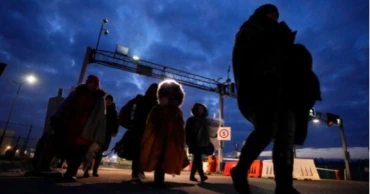
About 3.5 million Ukrainians crossed into Poland during the first weeks of the war, according to the United Nations. Polish people opened their homes and welcomed refugees at railway stations, while the government gave them access to employment and social security benefits.
By the end of 2022, about 1 million Ukrainian refugees remained in Poland. More than 70% of those who stayed found jobs, while a Deloitte study estimated that Ukrainians contributed 2.7% of Poland's gross domestic product in 2024.
More than 1 million Ukrainians were already living in Poland before the war, mainly as economic migrants.
Anti-Ukrainian rhetoric grows
Ukrainian refugees have increasingly faced hostile rhetoric. Research published this year found that many Ukrainian migrants saw Poland's 2025 presidential campaign as a turning point, when anti-Ukrainian messages became common across political parties.
President Karol Nawrocki, who won the election, had promised measures giving Polish citizens priority in accessing some public services. Liberal candidate Rafał Trzaskowski also proposed limiting some child welfare benefits for Ukrainians.
Historical tensions between the two countries have also resurfaced.
In June, Ukrainian President Volodymyr Zelenskyy faced criticism in Poland after naming a military unit after a Ukrainian paramilitary group accused of massacring Poles during World War II. Nawrocki responded by withdrawing a state honour previously given to Zelenskyy.
Ukrainian migrants are also reporting more hostile incidents. Polish police data showed that 180 Ukrainian citizens had been victims of prejudice-related crimes by mid-July. There were 275 such victims in all of 2025 and 267 in 2024.
Following reports of Ukrainians being attacked on Polish streets, Prime Minister Donald Tusk said in late July that Poland must fight violence and hatred.
Support for vulnerable refugees declines
The Polish government has gradually reduced support for Ukrainian refugees, saying many have become financially independent.
However, Poland's ombudsman has warned that the changes could particularly hurt vulnerable groups, including single mothers with several children, older people and those with chronic illnesses or disabilities.
Single mothers make up a large share of Ukrainian refugees because most Ukrainian men of military age, between 23 and 60, are not allowed to leave the country.
Yuliia Repenko of the Ukrainian House, an organisation supporting Ukrainians, said it is increasingly helping people who are at greater risk of being excluded from society.
The government has defended its decision to reduce assistance, saying vulnerable people can still receive direct state support and others in need can seek help from social workers.
International funding for Ukrainian refugees has also fallen. UN refugee agency data shows that only about half of the agency's identified needs for Ukrainians have been funded this year, compared with 94% in 2022.
“Financial supporters have moved on from helping Ukrainian refugees, but the war is still ongoing,” said Sonia Novytska, a Martynka helpline worker.
Martynka received around 1,800 requests for help last year, and staff expect the number to rise. The helpline now receives calls not only from victims of violence but also from mothers struggling to provide food and housing for their children.
Podorozhnya said supporting refugees also benefits Polish communities by helping prevent vulnerable people from becoming homeless or turning to substance abuse out of desperation.
“Martynka does the job of the Polish state,” she said.
2 days ago