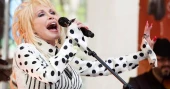
Hollywood singer
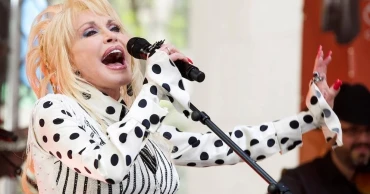
Was Dolly Parton a feminist? She never claimed the label, but her life and songs told a different story
Dolly Parton never described herself as a feminist and generally avoided political labels. But for many of her fans and admirers, her life, career and music reflected values closely linked to feminism.
The country music icon, who died this week at the age of 80, built a career on her own terms and often used her songs to speak about women’s independence, workplace inequality and double standards.
In 1987, Parton was featured among the 12 Women of the Year on the cover of Ms. magazine, alongside prominent figures from politics, literature and social activism. Feminist icon Gloria Steinem wrote that Parton had used her business skills and influence to support other women and disadvantaged people.
“If feminism means each of us finding our unique power, and helping other women to do the same,” Steinem wrote, “Dolly Parton certainly has done both.”
Parton herself, however, never embraced the feminist label.
Author Lynn Melnick, who wrote about Parton’s influence on her life and recovery from trauma, said the singer did not need to call herself a feminist.
“She didn't tell us she was a feminist,” Melnick said. “She showed us — in her actions and her words and in her songs.”
One example came from Parton’s 1968 song Just Because I’m a Woman, which challenged the different standards often applied to men and women.
During a 2019 performance at the Newport Folk Festival, Parton explained that the song was inspired by expectations that women should remain “pure,” while men were often judged differently for similar behaviour.
Music writer Caryn Rose said Parton understood how her appearance could be used to underestimate her and turned that perception to her advantage.
“She knew she was blonde and pretty, and that it was always going to work against her,” Rose said. “So she figured out how to make it work for her.”
Parton’s feminist themes were also reflected in songs such as 9 to 5, which highlighted the struggles of working women, unequal treatment and economic independence. The song was linked to the 1980 film of the same name, in which she starred alongside Lily Tomlin and Jane Fonda.
She also addressed issues including equal pay, teenage pregnancy, women’s sexuality and the social judgment faced by women.
Her 1975 song The Bargain Store was about emotional healing after a relationship, although some country radio stations reportedly avoided playing it because they misunderstood its meaning. Another song, Down from Dover, told the story of a pregnant teenage girl at a time when unmarried mothers were rarely discussed openly in popular music.
Some writers and fans have described Parton as being ahead of her time, reflecting ideas later associated with third-wave feminism, which placed greater emphasis on personal choice and individual expression.
Parton often defended her glamorous image — the wigs, makeup, high heels and rhinestones — as her own choice.
In a 1977 interview with Barbara Walters, Parton faced personal questions about her marriage and appearance, including whether her famous breasts were real. Walters also asked her to stand up and display her body.
Parton remained calm and confident, explaining that she was comfortable with jokes about her appearance because she knew exactly who she was.
“I know exactly what I am doing and I can change it at any time,” she said, adding that her confidence in herself and her talent allowed her to enjoy makeup, clothes and her larger-than-life image.
For her feminist fans, that confidence, independence and refusal to let others define her may have been the clearest message of all.
Parton may never have called herself a feminist, but through her choices, her music and her outspoken independence, many believed she showed exactly what it meant.
1 month ago