rural Bangladesh
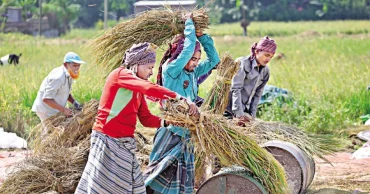
Govt puts rural Bangladesh at heart of development agenda
For millions living in Bangladesh’s villages, development is often measured in simple, everyday terms-whether a road remains usable during the monsoon, whether a farmer can take produce to market on time, whether safe drinking water is available nearby, or whether a young person can find work without leaving home.
The government’s development priorities for the next fiscal year appear to be built around precisely these concerns.
Rural connectivity, climate-resilient infrastructure, employment generation, poverty reduction and financial inclusion have been placed at the centre of development programmes for fiscal year 2026-27, according to the budget document.
The stated goal goes beyond building roads and bridges. The government wants to make rural communities more self-reliant by combining physical infrastructure with jobs, entrepreneurship, access to finance, digital services and skills development.
According to the budget document, the government has undertaken programmes to improve connectivity and strengthen disaster resilience through the development of rural roads, bridges, growth centres and cyclone shelters.
Construction and maintenance of rural roads, bridges and culverts are playing a vital role in strengthening the rural economy and market systems, it said.
The government will also strengthen activities through local government institutions to ensure safe drinking water supply, universal sanitation coverage, reduce waterlogging and promote environmentally sustainable water management.
Ahead of the monsoon season, canal re-excavation, drain rehabilitation and improvements to drainage systems have been intensified to mitigate waterlogging in city corporations and municipalities.
Initiatives are also being taken to improve urban roads and drainage systems, restore canals and introduce modern waste management systems to improve the quality of urban life, according to the document.
To achieve the Sustainable Development Goals (SDGs), relevant government agencies are implementing coordinated programmes covering infrastructure, water supply and sanitation.
Through the development of rural roads and market infrastructure, alongside climate-resilient infrastructure, nearly 93 percent of the rural population currently has access to all-weather roads throughout the year.
The government plans to gradually raise the coverage to 100 percent.
Measures are also being taken to reduce dependence on groundwater by increasing the use of surface water and establishing water treatment plants to ensure universal access to safe water.
In line with the government’s electoral commitments, various programmes will be implemented through the local government system to generate employment, alleviate poverty and strengthen good governance.
Digitalisation of services provided by Union Parishads, Upazila Parishads and local administration has also been expanded.
The government is strengthening social protection measures and efforts to prevent child marriage through improved birth and death registration services, while steps are being taken to address existing challenges in these areas.
“Most of the current government’s development plans for the next five years are centred on rural Bangladesh,” the budget document said, noting that the majority of the country’s population lives in villages.
The government aims to make rural communities self-reliant by implementing an integrated action plan for FY2026-27 and the medium term.
The plan includes poverty alleviation and employment generation, promotion of women entrepreneurship, expansion of financial inclusion and enhancement of the skills of small and marginal farmers, women and youth.
Training, research and advisory services are being expanded through the Rural Development Academy.
Programmes are also being implemented in 200 upazilas to develop women’s skills and create women entrepreneurs, while cooperatives are being used to promote sustainable financial inclusion among marginalised communities.
The government is also facilitating easier access to credit, reforming microcredit and women entrepreneur loan schemes, and providing collateral-free loans to expand self-employment, income generation and agro-processing activities among marginal farmers and women.
To achieve the SDGs and implement the Electoral Manifesto 2026, priority has been given to good governance, entrepreneurship development, agriculture and food security, climate-resilient development and inclusive growth in the rural development and cooperative sector.
The government is also taking steps to accelerate inclusive and sustainable growth through expanded digital services, greater financial inclusion for small and marginal farmers, tree plantation, environmental conservation and skill development initiatives for women and youth.
Cooperative-based activities are also being strengthened to expand employment and self-employment opportunities in rural areas, the document added.
1 month ago