Pacific island
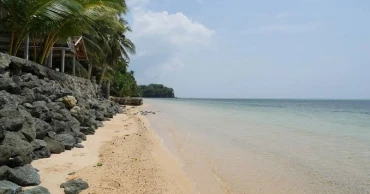
Pacific island nations seek climate funding as rising seas threaten survival
Pacific island nations are looking for ways to turn growing geopolitical interest in their strategically important region into funding to help them cope with the devastating effects of climate change.
In Melekeok state on Palau's largest island, rough seas often push ocean water into people's homes. Residents have long called for communities to move inland, but a lack of funding has slowed the process.
“We cannot move faster than climate change,” said Bol Sebalt, a 43-year-old resident of the low-lying coastal area.
Sebalt has already moved to a new inland settlement being developed for Melekeok's roughly 300 residents. But she remains the only person living there because basic facilities, including plumbing, sewage systems and streetlights, are still incomplete due to slow and limited funding.
Similar concerns are being raised by leaders from small Pacific island nations attending this week's Pacific Islands Forum summit in Palau. Many of these countries are among the most vulnerable to rising sea levels, stronger storms and other climate-related disasters.
Pacific leaders renewed their call for major polluting countries to take stronger action to limit global warming and provide more financial support for countries already suffering climate damage.
A recent United Nations report warned that the world is likely to cross the 1.5 degrees Celsius warming threshold set under the 2015 Paris climate agreement within the next few years.
Vanuatu Climate Adaptation Minister Ralph Regenvanu said climate-related “loss and damage” is already a reality for his country, warning that the impact would include not only economic losses but also ancestral lands, cultural heritage and national identity.
Tuvalu's climate change minister, Maina Talia, said keeping global warming as close as possible to 1.5 degrees Celsius remained essential for the survival of small island nations.
“There is no other way out for us,” he said. “The only way out is to continue to push for 1.5, to stay alive, to stay in our countries.”
Scientists in the region have also warned that warmer oceans could severely affect Pacific tuna fisheries, which account for about 30% of the world's tuna catch, as well as mangrove ecosystems that support marine life. Climate patterns such as El Niño have already brought drought to some parts of the Pacific and flooding to others.
Climate change is often the main concern for Pacific leaders, but their annual summit is also increasingly affected by competition for influence between major powers, particularly China and its rivals.
Palau President Surangel Whipps Jr. said countries seeking a greater role in the Pacific could instead demonstrate their commitment by funding climate projects. He has also promoted a plan to make Palau one of the world's first countries to run entirely on renewable energy.
However, geopolitical tensions again surfaced at the summit after representatives from China and Taiwan were seated in the same row during the opening ceremony.
Pacific leaders are also struggling to secure funding for the Pacific Resilience Facility, a regional fund designed to support community-based climate adaptation projects. The fund, which will be headquartered in Tonga, has yet to receive the level of financial support initially hoped for from major donors.
Tongan Prime Minister Fatafehi Fakafanua said existing international financial institutions often take too long to deliver funds needed by Pacific communities.
He said the Pacific Resilience Facility was designed to provide faster access to funding for urgent climate needs across the region.
Meanwhile, smaller island nations are also questioning whether Australia and New Zealand, the Forum's two largest members and major aid donors, are doing enough to address climate change.
Australian Prime Minister Anthony Albanese said the country's shift away from fossil fuels could not happen overnight and would require greater renewable energy capacity.
But Vanuatu's Regenvanu said Australia, as a major fossil fuel producer, should do more, including stopping future expansion of fossil fuel projects.
1 month ago