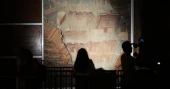
Ancient Rome's largest fresco
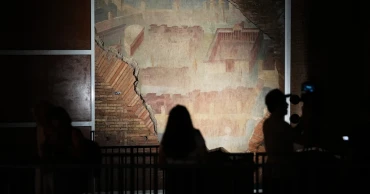
Ancient Rome's largest fresco and mosaic complex opens to public
One of the largest known fresco and mosaic complexes from ancient Rome has been opened to the public for the first time, nearly three decades after its discovery beneath the remains of the Baths of Trajan.
Rome Mayor Roberto Gualtieri on Tuesday unveiled the recently restored “Painted City” fresco and “Great Mosaic,” which were found in an underground gallery during archaeological excavations in the 1990s on Oppio Hill near the Colosseum.
The fresco, dating to the first century AD, portrays a walled maritime city from an aerial perspective and is believed to be the largest surviving wall fresco of its kind from ancient Rome.
Its vivid blue and terracotta shades remain visible despite centuries underground, although the colours have faded over time.
Gualtieri described the works as exceptional both for their artistic value and their historical significance.
The cultural superintendent of Rome, Claudio Parisi Presicce, said the fresco is particularly well preserved, showing buildings, a theatre, temple, public squares and towers.
“We don’t know what city it refers to, but it must have been a particularly well-known one,” he said.
The restoration involved removing accumulated surface deposits, strengthening the mortar and using conservation techniques to improve the visibility of the decorated surfaces while protecting them from further deterioration.
The site is initially being opened under a limited trial programme, with groups of up to 15 visitors allowed in on weekends. Authorities will monitor the impact of increased humidity and other environmental conditions on the fragile artworks before expanding public access.
The accompanying mosaic stands about 15 metres high and contains elaborate columns, architectural features and human figures arranged across four levels.
The upper sections feature detailed figures and scenes resembling theatrical performances, while the lower portions provide an overhead view of the layout of a port city.
The Baths of Trajan were inaugurated by Emperor Trajan in 109 AD and covered around six hectares, making them the largest bathing complex in the ancient world at the time.
The vast complex incorporated an earlier bathing facility associated with the Domus Aurea. Its design was altered to make better use of varying water temperatures and enhance the bathing experience.
The area now accessible to visitors also includes a large semicircular upper-level structure believed by archaeologists to have served as a library.
The baths were not only a place for bathing and physical exercise but also provided space for cultural and intellectual activities.
1 month ago