EU Parliament
Carney to speak at EU Parliament as Canada seeks closer ties with Europe
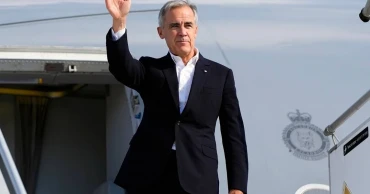
Canadian Prime Minister Mark Carney will address the European Parliament on Thursday, with his speech drawing added attention after US President Donald Trump warned that a move to make Canada an associate member of the European Union could be a “hostile act.”
Trump’s comments have raised expectations about Carney’s address and whether he will again criticize the use of economic power to pressure smaller countries, as he did at the World Economic Forum in Davos in January.
European Commission President Ursula von der Leyen proposed making Canada the EU’s first associate member on Wednesday, in a major diplomatic gesture as Trump’s trade policies and repeated demands have pushed Ottawa closer to Europe.
Speaking in Charlotte, North Carolina, Trump said the US could respond to the proposal with heavier tariffs on the EU.
He linked the threat to the “intention” behind the European move, saying, “If it’s a good intention, that’s fine. If it’s a bad intention, we’ll put very heavy tariffs on Europe.”
Trump also suggested the US could restrict trade with Europe in some areas.
He described the possibility of Canada joining the EU as “laughable” and called Canada a “terrible trade partner.”
For decades, Canada has built its economy around close ties with the United States. But Trump’s tariffs, demands for economic concessions and repeated comments about making Canada the 51st US state are prompting Ottawa to reduce its dependence on Washington and strengthen economic, security and political ties with Europe.
Europe offers Canada closer tiesVon der Leyen’s proposal would make Canada the EU’s first associate member. Such a status does not currently exist under the bloc’s treaties and would have to be established.
She said Europe wants to take its relationship with Canada to “the highest level possible.”
Carney, who was sitting in the front row of the European Parliament chamber, nodded and stood to embrace von der Leyen as lawmakers gave the proposal a standing ovation.
Von der Leyen said Canada and the EU should go beyond their existing free trade agreement and establish an “Alliance for the Future” covering a “common prosperity and economic security space.”
Carney is scheduled to host EU leaders at a Canada-EU summit in Montreal on Oct. 29-30. The proposed new relationship is expected to be discussed in greater detail at the meeting.
Canada sends about 70% of its exports to the United States, leaving its economy highly exposed to Trump’s tariffs.
Ottawa has imposed retaliatory measures and rejected demands that Carney says threaten Canadian sovereignty. The EU has taken a different approach, suspending retaliation and accepting tariffs of up to 15% on most of its exports to the US.
Carney brings Davos message to EuropeCarney has repeatedly called on middle powers to resist economic pressure from dominant countries.
At the World Economic Forum in Davos in January, he warned that countries negotiating individually with a powerful nation “negotiate from weakness” and “accept what is offered.”
Trump criticized Carney the following day, and Thursday’s speech could add to tensions between the two leaders.
Jonathan Wilkinson, Canada’s ambassador-designate to the EU, said Wednesday that Ottawa is not seeking full EU membership because that would require Canada to give up some sovereignty.
Instead, he said Canada wants “to get as close as we possibly can” to Europe while becoming more economically independent.
The exact terms and powers of any associate membership have yet to be negotiated.
Canada has already taken a major step toward closer cooperation with Europe. This year, it became the first non-European country to join the EU’s 150-billion-euro ($173 billion) SAFE defense procurement program, allowing Canadian companies to participate in joint procurement as European countries increase defense spending.
Canada and the EU have also discussed closer cooperation in energy, critical minerals, artificial intelligence and digital trade.
“The policies and rhetoric of the Trump administration are clearly pushing both Canada and the EU to imagine a world without strong U.S. leadership and to act accordingly,” said Daniel Béland, a political science professor at McGill University in Montreal.
Nelson Wiseman, professor emeritus at the University of Toronto, said Carney’s handling of Trump has increased European interest in the Canadian prime minister.
“Carney’s shrewdness in dealing with Trump has captured Europe’s attention,” Wiseman said.
Washington watching closelyWiseman said Europeans have traditionally viewed Canada as a country with a deep understanding of the United States because of their close economic and political ties.
He said Carney’s decision to resist Trump rather than quickly accept Washington’s demands has strengthened that perception.
Béland said Carney may avoid directly naming Trump in his speech while making clear who his broader message is aimed at.
“He knows that, beyond Europe, the world will be watching, including the White House,” Béland said.
25 days ago