Yemen’s oil
A week after Houthis seize Red Sea city, rebels eye Yemen’s oil-rich east
A week after Iran-backed Houthi rebels swept along Yemen’s Red Sea coast, expanding their control toward a key maritime chokepoint and threatening Saudi Arabia’s oil exports, the group appears to be turning its attention to the country’s oil-rich east.
The Houthis’ biggest territorial expansion in years has reignited Yemen’s 12-year civil war and pushed global fuel prices higher. It has also provided Iran with another potential source of leverage as the United States has begun easing Tehran’s control over the Strait of Hormuz, located on the other side of the Arabian Peninsula.
The Houthis have also launched attacks on Saudi oil facilities and tankers. An attack on Saudi Arabia’s East-West Pipeline, blamed on Iran-backed militias in Iraq, has added to the kingdom’s security concerns and unsettled global markets.
The rebel offensive has forced about 125,000 Yemenis to flee their homes. More than 150,000 people have been killed in the civil war, which has at times pushed Yemen close to famine.
The rebels now appear to be targeting Yemen’s oil-rich eastern regions. Standing in their way are the Saudi-backed government and various armed groups that were still fighting each other as recently as January. Saudi Arabia’s most important ally, the United States, appears to be staying out of the conflict for now.
Houthis fighting on several frontsThe Houthis captured the important Red Sea port city of Mokha before seizing several islands near the narrow Bab el-Mandeb Strait, through which about 12% of global trade passes during peacetime.
The rebels are also only 32 kilometres (20 miles) from Djibouti, a small African country that hosts US and other foreign military bases.
The Houthis launched their first major advance from their northern stronghold in 2014, capturing the capital Sanaa and large parts of northern Yemen. Saudi Arabia intervened the following year, and fighting continued until a ceasefire in 2022.
Heavy fighting has been reported in recent days in and around Marib, a central city in an oil-rich province of the same name. Previous Houthi offensives failed to capture the city, which is also a major military base for Saudi-backed forces.
The Houthis are also threatening Taiz, a western city that has remained a major front line throughout much of the conflict.
Pressure grows on the world’s largest oil exporterThe Houthis want Saudi Arabia to end a long-running blockade on areas under their control.
“It is Saudi Arabia that closed the Bab el-Mandeb strait to shipping traffic to and from Yemen and imposed an unjust blockade on the country,” Mohammed al-Bukhaiti, a member of the Houthi political bureau, told The Associated Press.
Saudi Arabia and its allies have struggled for years to contain or deter the Houthis and could consider a diplomatic solution to stop the attacks. Such a move could eventually require concessions from the United States to Iran, the only country considered to have significant influence over the Houthis.
The United States bombed Houthi targets under both the Biden and Trump administrations but has shown little interest in intervening this time. The Houthis also appear keen to avoid drawing the US into the conflict, saying they are targeting only Saudi-linked shipping.
Red Sea shipping traffic recovers for nowShipping company Windward reported that daily traffic through the Bab el-Mandeb Strait fell from 35 crossings before the Houthi advance to 25 afterward. However, traffic has since recovered, reaching 45 crossings on Sunday.
The Houthis could still broaden their targets beyond Saudi ships and tankers. During their self-declared blockade of Israel at the height of the Gaza war, the rebels attacked ships in the Red Sea that had no known connection to the conflict.
“At the moment, their focus is on Saudi-linked shipping,” said Valentin d’Hauthuille, a Middle East analyst at conflict monitor ACLED.
However, he said the Houthis could “extend the criteria according to which vessels are assessed to be ‘Saudi-linked’ to increase pressure on both Saudi and the global economy.”
Diplomatic efforts underway, but challenges remainRegional mediators have begun efforts to ease tensions, but a diplomatic agreement appears unlikely without progress in the wider conflict involving Iran.
Iran wants the United States to lift a blockade and sanctions that have severely damaged its economy. Washington, meanwhile, wants the Strait of Hormuz fully reopened and seeks an agreement to limit Iran’s nuclear programme.
Neither side has shown signs of changing its position since a preliminary agreement collapsed over the summer.
Oman hosted a meeting between US and Houthi representatives last weekend, according to a Houthi official and another person familiar with the talks who spoke to AP this week. They requested anonymity because they were not authorised to speak publicly about the meeting.
The United States says it has remained in “constant contact” with Saudi Arabia, a close ally that receives billions of dollars in American military assistance.
Saudi Crown Prince Mohammed bin Salman recently visited Egypt, which has played a role in regional mediation. A Turkish government official said this week that Ankara was also holding talks with Iran and the United Arab Emirates to try to reduce tensions.
The Houthi attacks are the first major test of a new defence pact involving Saudi Arabia, NATO member Turkey and nuclear-armed Pakistan. However, officials from Turkey and Pakistan said they have not received a request from Saudi Arabia for military assistance.
Humanitarian crisis deepensThe latest fighting has killed eight civilians and wounded 32 others, according to the UN humanitarian office, which estimates that about 125,000 people have been displaced.
The Health Ministry of the Saudi-backed government says the Houthis have killed about 150 civilians since Sept 3.
Saudi Arabia said Thursday that debris from a Houthi drone intercepted over the kingdom killed one person and injured two others.
Yemen was already the poorest Arab country before the civil war. The conflict and Saudi-led blockade have contributed to widespread hunger in recent years.
The Houthis’ detention of UN and aid workers has also disrupted international assistance in areas under their control. Experts say the rebels have struggled to pay government employees, contributing to unrest, while much of the tax revenue they collect has been directed toward their military operations.
The UN humanitarian office, known as OCHA, said only 20% of its humanitarian appeal for Yemen has been funded. It warned that “millions risk losing access to food, healthcare, nutrition, water and protection services.”
“The needs are extremely high right now,” said Sara Ahmed, a supervisor with Doctors Without Borders in Mokha.
She said medical workers are operating in difficult conditions to keep essential services running while hearing airstrikes nearby.
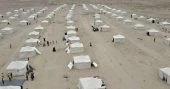
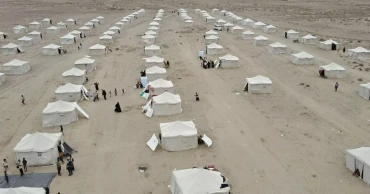
Mahida Ahmed fled the fighting in Mokha and is now staying at a displacement camp in Aden, where the Saudi-backed government is based.
She said she fled quickly with her children and left all her belongings behind, while her husband remains stranded in Mokha.
“This war has been completely devastating for us,” she said.
23 days ago