Dhaka-Ctg connectivity
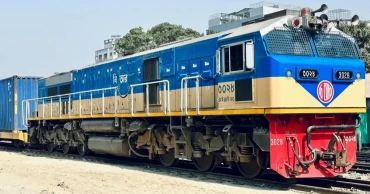
Bangladesh plans major railway expansion, faster Dhaka-Ctg connectivity, electric trains
Bangladesh is pursuing a broad-based programme to expand and modernise its railway network, with plans for new rail links, double-line corridors, modern signalling, improved passenger services, stronger freight connectivity and eventually electric and high-speed trains.
The initiatives are aimed at increasing railway capacity, reducing travel time, improving safety and reliability, and strengthening railways as a key component of the country’s passenger and logistics network.
According to the government’s 2026-27 budget documents, railway development will focus on constructing new railway lines and bridges, procuring modern locomotives, coaches and wagons, upgrading existing infrastructure, modernising signalling and expanding optical-fibre-based communication networks.
The government also plans to improve railway connectivity with seaports and land ports, expand regional and cross-border links and increase commuter train services.
Dhaka-Chattogram corridor gets major focus
One of the most significant components of the plan is a proposed chord line on the Dhaka-Cumilla section of the Dhaka-Chattogram railway corridor.
According to the budget speech, the proposed line would reduce the rail distance between Dhaka and Chattogram by around 80 kilometres, from approximately 320 km to 240 km.
The government expects the shorter route to reduce train travel time between the two cities from about five hours to around three hours.
Finance and Planning Minister Amir Khosru Mahmud Chowdhury said in the budget speech that a feasibility study for the chord line had been completed, with the Shyampur-Cumilla alignment preliminarily selected from three proposed routes.
The proposed shortcut would also have a major freight component.
Freight trains carrying goods from Chattogram Port, the planned Bay Terminal and Matarbari Deep Sea Port are expected to be able to connect directly with the proposed Dhirashram Inland Container Depot (ICD) through the existing Chattogram-Feni-Cumilla-Brahmanbaria-Bhairab-Narsingdi railway route.
The government sees the proposed connectivity as a way to strengthen the country’s logistics network and improve the movement of imported and exported goods.
Electric trains on Dhaka-Chattogram route
The government is also moving towards electrification of the Dhaka-Chattogram railway corridor.
Prime Minister Tarique Rahman told Parliament on Sept 9 that the feasibility study and detailed design for installing electric traction to operate electric trains on the corridor had been completed.
He said a detailed implementation plan and timeline would be prepared after securing the necessary financing, and the project would be implemented subject to availability of funds.
Once implemented, the electric traction system is expected to increase average train speeds and reduce journey times.
Double-line development
The government is simultaneously working to convert the Dhaka-Chattogram railway route into a dual-gauge double-line corridor.
The Prime Minister said feasibility studies and detailed designs for dual-gauge double lines on the Tongi-Akhaura and Laksam-Chattogram sections had already been completed.
The Laksam-Chattogram Dual Gauge Double Line Development Project is currently being processed for approval, while preparation of the Development Project Proforma (DPP) for the Tongi-Akhaura project is at the final stage, he said.
The two projects are expected to increase passenger-carrying capacity and train speeds once implemented.
Greater emphasis on freight transport
The government’s railway strategy is not limited to passenger services.
Greater emphasis is being placed on freight transportation to increase the commercial viability of Bangladesh Railway and strengthen rail’s role in the country’s supply chain.
The proposed connections involving Chattogram Port, Bay Terminal, Matarbari and Dhirashram ICD are particularly significant in this regard, as they would create a stronger rail-based link between seaports and inland logistics facilities.
The government also plans to encourage private investment in railway development and use Public-Private Partnership (PPP) arrangements for suitable infrastructure projects.
New trains, workshops and technology
The modernisation programme includes procurement of new locomotives, passenger coaches and freight wagons, along with construction and rehabilitation of railway bridges.
The government plans to strengthen the Saidpur and Pahartali railway workshops so that coaches and locomotives can increasingly be assembled locally, potentially reducing dependence on imported rolling stock.
Modern signalling systems and optical-fibre-based communication networks are also part of the planned upgrade to improve operational reliability and the quality of passenger and freight services.
Towards a wider rail network
The longer-term objective is to gradually bring all districts and major cities under railway connectivity and strengthen links with ports, economic centres and neighbouring countries.
Bangladesh Railway’s master-planning documents have also envisaged a wider network of new and upgraded corridors, including links towards the country’s ports and border areas and improved regional connectivity with neighbouring countries.
The government has proposed Tk 9,940 crore for the Ministry of Railways in the 2026-27 budget, reflecting the priority given to railway development in the current fiscal programme.
Taken together, the planned projects represent a shift towards a more integrated railway system combining infrastructure expansion with technological modernisation, faster passenger services and greater freight-carrying capacity.
Bangladesh Railway's revenue increased by Tk 221 crore in the 2025-26 fiscal year, but it continued to spend significantly more than it earned despite a modest improvement in its operating ratio.
According to a Bangladesh Railway , it earned Tk 2,066.38 crore in FY26, up from Tk 1,845 crore in the previous fiscal year.
Its total operating expenditure, including salaries, allowances, pensions and maintenance of tracks and rolling stock, stood at Tk 3,955 crore, resulting in an expenditure-to-income ratio of 1.91, an improvement from 2.09 in FY25.
21 days ago