protect agriculture
Bangladesh’s water challenge: Ambitious plans to restore rivers, protect agriculture
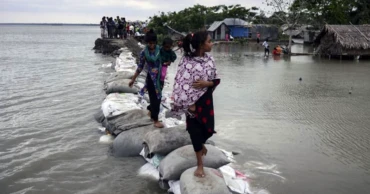
For Bangladesh, a delta defined by water, managing it has always been a delicate balancing act — containing destructive floods during the monsoon while ensuring enough freshwater for agriculture, fisheries and ecosystems in the dry season.
The government is implementing a range of projects to improve water resources management, including river restoration, flood protection, irrigation, drainage improvement, salinity control and waterlogging mitigation, according to a budget dicument.
The Ministry of Water Resources is also planning to excavate and re-excavate 680 kilometres of canals, irrigation canals and drainage channels in fiscal 2026-27 as part of a broader government initiative to excavate 20,000 kilometres of canals, rivers and drainage channels over the next five years.
Special initiatives have been taken to restore and free at least one river in each division from encroachment to maintain ecological balance.
Under seven projects, measures are being implemented to remove illegal encroachments and restore the natural flow of the Dhaleshwari, Louhajang, Alaikuri, Mogra, Salta, Sutang, Bakkhali and Barnai rivers.
The ministry has also developed a Water Quality Index (WQI) for rivers surrounding Dhaka.
A real-time dashboard for monitoring groundwater levels has been developed using artificial intelligence and deep-learning technologies, creating a digital system for monitoring groundwater resources, according to the document.
Under the project titled “Identification and Classification of Canals in Bangladesh and Development of a Geo-Informatics Database”, canals across the country will be identified and a GIS-based canal network developed.
For flood protection, the government has set targets for FY2026-27 to construct, reconstruct and rehabilitate embankments and flood walls over 309 kilometres and improve river navigability and remove submerged shoals over 484 kilometres.
Meanwhile, construction, reconstruction and rehabilitation works covering 292 kilometres of embankments and flood walls are underway under the government’s 180-Day Programme for Flood Protection.
The budget document said obstruction of water flows through upstream dams on the Teesta and Padma rivers has adversely affected agriculture, irrigation, fisheries and biodiversity in their river basins in Bangladesh.
Against this backdrop, the government has approved the “Padma Barrage (Phase-I)” project at a meeting of the Executive Committee of the National Economic Council (ECNEC).
The project will be implemented from July 2026 to June 2033 and includes construction of a 2.1-kilometre main barrage and a hydropower plant on the Padma River at Pangsha in Rajbari.
The project is intended to conserve and regulate Padma River water and restore freshwater flows during the dry season, with the stated objectives of increasing agricultural production, maintaining navigability and preserving ecological balance.
According to the budget document, the project will enable annual storage of 2,900 million cubic metres of water and help prevent salinity intrusion in the Padma basin, including the Sundarbans, by restoring navigability in five distributaries and tributaries.
It is also expected to provide irrigation to 2.88 million hectares of land and support uninterrupted agricultural production.
The project has projected annual increases of 20.39 million tonnes in rice production and 2.34 million tonnes in fish production.
The government estimates that the project will directly and indirectly benefit people in 120 upazilas across 19 districts in four divisions, representing around 37 percent of the country’s population.
The government is also taking initiatives to implement the “Comprehensive Management and Restoration of the Teesta River Project”, commonly known as the Teesta Master Plan, to improve the livelihoods and living conditions of people in northern Bangladesh.
23 days ago