Tokyo court
Tokyo court grants legal protection to human voice in AI clone case
A Tokyo court has recognized legal protection for a person's voice in a landmark case involving the unauthorized use of an artificial intelligence-generated voice resembling that of a popular Japanese anime voice actor.
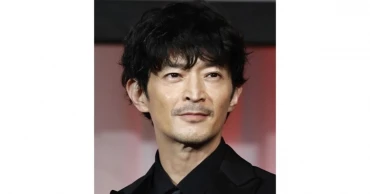
The Tokyo District Court on Wednesday ruled in favor of actor Kenjiro Tsuda, who had asked TikTok to remove an account that used an AI-generated voice similar to his distinctive deep voice.
The decision marked the first time a Japanese court has recognized a legal right to one's voice. The ruling could be significant for anime voice actors, who have become increasingly concerned about the use of AI to imitate their voices on social media.
Tsuda is best known for voicing characters such as Kento Nanami in the popular anime series "Jujutsu Kaisen."
In his lawsuit, Tsuda said the anonymous operator of the TikTok account "Nanami" had improperly benefited from his voice. The account used an AI-generated voice to narrate more than 180 videos about urban legends and paranormal topics.
Presiding Judge Aya Takahashi said in the court ruling that a person's voice, like their portrait, can represent their individual personality.
She said the unauthorized use of Tsuda's voice with the clear intention of benefiting from its commercial appeal amounted to an infringement of his publicity rights.
The account had more than 200,000 subscribers as of November 2025, and viewers frequently pointed out the similarity between the narrator's voice and Tsuda's.
The defendant argued that the videos used an AI-generated voice that merely sounded like Tsuda's and was not his actual voice. The defendant also said the videos had not harmed Tsuda's reputation as a voice actor.
The court, however, did not order the removal of all the videos using the voice because the TikTok account had already been shut down.
The ruling comes amid growing concern among Japanese voice actors over AI technology being used to replicate their distinctive voices.
In 2024, OpenAI said it would stop using one of its ChatGPT voices after actor Scarlett Johansson said it sounded strikingly similar to her voice.
Last year, Oscar-winning actors Michael Caine and Matthew McConaughey reached agreements with voice-cloning company ElevenLabs allowing its AI technology to replicate their voices.
22 days ago