ECNEC approves 13 projects
13 development projects worth over Tk 58,000cr receive ECNEC approval
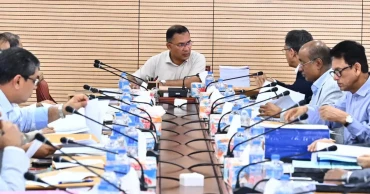
The Executive Committee of the National Economic Council (ECNEC) on Wednesday approved 13 development projects involving Tk58,088 crore, including the Tk41,904.48 crore Fifth Primary Education Development Programme (PEDP-5), with several conditions and observations to ensure proper use of public funds.
The meeting, chaired by Prime Minister Tarique Rahman, also sent four other projects back for review, asking the concerned ministries to address a number of observations before resubmitting them.
Briefing reporters after the meeting, State Minister for Planning Zonayed Abdur Rahim Saki said a total of 17 projects were placed before the ECNEC, of which 13 were approved and four returned for further review.
PEDP-5, one of the largest projects approved at the meeting, will cover a wide range of government initiatives to improve primary education across the country.
Saki said the programme includes establishing new primary schools, renovating existing ones, providing teacher training, introducing multimedia classrooms and implementing the government’s ‘One Teacher, One Tab’ initiative.
It also includes the ‘One Child, One Tree’ programme, school uniforms, shoes and educational materials for students, as well as midday meals and sports and cultural activities.
The project has an estimated cost of Tk41,904.48 crore.
The state minister said the Planning Commission had raised questions about several expenditure items, including Tk436 crore allocated for consultancy services, and sought rationalisation of costs in different components.
The ECNEC also directed that expenditure of a revenue nature be transferred to the revenue budget within two years. The government was asked to submit the Project Completion Reports for PEDP-3 and PEDP-4, which have not yet been completed.
He said the project would be revised in line with the ECNEC’s observations, including changes to its name, training arrangements, selection of beneficiaries and quality assurance of educational materials, within two weeks.
Another important approval concerns the drilling of two appraisal-cum-development wells, Titas-32 and Titas-33, at the Titas Gas Field at a cost of Tk592 crore.
Saki said the government had taken an initiative to undertake around 30 exploration wells during the current fiscal year to increase domestic gas production.
The Prime Minister also directed the authorities to examine the possibility of extracting LPG-related components from gas fields containing the necessary elements.
The project for constructing bridges and culverts up to 15 metres long on rural roads was approved with an allocation of Tk523.34 crore. Its scope has been expanded to meet the growing demand for small bridges and culverts, particularly in areas where new canals are being excavated under the government’s canal restoration programme.
The Social Religious Institutions Development Project was approved at a cost of Tk2,565.59 crore to improve infrastructure at mosques, temples and other religious institutions.
The third revision of the Priority-Based Important Rural Infrastructure Development Project was also approved, with an additional allocation of Tk1,047.92 crore, taking its revised cost to Tk3,951.37 crore, according to the briefing.
Two projects aimed at strengthening the Bangladesh Police were approved. The purchase of operational vehicles will cost Tk4,328 crore and involve procuring more than 4,000 vehicles.
Another Tk2,280.14 crore was allocated for specialised vehicles and equipment, including armoured personnel carriers, to enhance the operational capacity of the police force.
Saki said the government considered strengthening the police essential to improving law and order and public security, particularly following damage to police vehicles during the July uprising.
The ECNEC also approved a Tk177.19 crore project to construct 57 flats for army officers at the Mainul Road residential area in Dhaka Cantonment.
A separate Tk200.11 crore project will construct three 13-storey residential buildings for government employees at the Zigatala Government Colony, providing around 160 flats.
Another Tk535.54 crore project will establish five institutes of nuclear medicine and allied sciences at five medical college hospital campuses.
Saki said the Prime Minister directed the authorities to prepare another project within three months to establish such facilities at the remaining 10 medical college hospitals and install cyclotrons at eight locations to improve access to nuclear medicine services.
The ECNEC also approved a Tk1,203.73 crore project to ensure safe water supply and sanitation in the Barind region, covering upazilas in Rajshahi and Rangpur divisions.
A Tk730.46 crore project was approved for the restoration, rehabilitation and protection of canals in Barishal City Corporation.
The project will cover 29 canals and include the development of walkways and protection of ponds.
An innovation project on climate-smart urban development, financed through a German grant, was also approved at a cost of Tk87 crore. It will cover Chapainawabganj, Charghat, Gaibandha and Sirajganj municipalities.
The state minister said four projects were returned for further review.
These include the Dhaka South City Corporation project for repairing and developing damaged roads, drains and footpaths; the Growth project for local economic development in selected municipalities; the first revised project for establishing Netrokona University; and the Dhaka Water Security and Resilience Programme.
Explaining the decision on the municipal development project, Saki said the authorities had been asked to assess the results of earlier pilot initiatives, including their contribution to municipal revenue generation and the creation of new entrepreneurs.
The revised proposal should also identify priority beneficiaries for training and consider expanding the programme beyond the 70 municipalities initially proposed.
On Netrokona University, he said the initial project cost was around Tk2,500 crore, while the first revised proposal was reduced to Tk645 crore. A subsequent proposal sought more than Tk1,400 crore, prompting questions about infrastructure priorities, land acquisition costs and the proposed solar power facilities.
The Dhaka water security project was sent back because the government is preparing an integrated plan for surface water management in the capital to avoid duplication and overlapping among existing and proposed projects.
Responding to a question about the Tk436 crore consultancy allocation in PEDP-5, Saki said the government had repeatedly raised the issue during the project’s review and directed the authorities to rationalise the expenditure.
He said the government wanted to accelerate development activities without compromising scrutiny and accountability.
The state minister also said the Planning Ministry was developing a software-based system using artificial intelligence to examine project expenditure against approved rate schedules.
For procurement outside the rate schedules, relevant experts would be invited to the Project Scrutiny Committee meetings. The government has also approved appointing price assessment companies for major projects to verify procurement prices against prevailing market rates.
He said the measures were intended to strengthen institutional checks and balances and prevent wasteful spending of public money.
Asked whether the approval of large projects indicated a shift from the government’s commitment to avoiding megaprojects, Saki said projects were being taken up based on public needs and national priorities.
He cited primary education and urban transport as areas where large-scale investment was necessary.
2 hours ago