Aluminium cookware
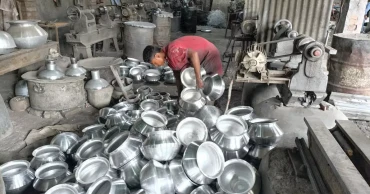
Aluminium cookware can add lead to everyday meals, study finds
Locally made aluminium cooking pots can release lead, a toxic metal, into cooked food, with the highest levels found during the first uses of a new pot, according to a study by icddr,b and Stanford University.
Lead can cause lasting harm to children’s brain development. The researchers are calling for safer cookware and clearer guidance for households.
In Bangladesh, exchanging old aluminium utensils for new cookware, or for old clothes, is a familiar practice.
The study did not look at these exchanges, but its findings show that a pot’s newness or shine does not prove it is safe. Many locally made pots are produced by melting scrap metal. Without checks on that scrap, lead can end up in the finished pots.
Lead can damage children’s learning and behaviour, and the World Health Organization says there is no known safe level of lead in blood.
Published in the Journal of Exposure Science & Environmental Epidemiology by Nature, the study aimed to measure how much lead moves from locally made aluminium pots into food, and how acidity, cleaning and cooking habits change this.
The researchers tested seven used pots collected from local households and 20 new pots bought from a supplier. They first estimated how much lead was in the metal of each pot.
They then heated the pots, and cooked plain rice and khichuri, a lentil and rice dish. Finally, they measured the lead in the liquid and the food using a highly sensitive laboratory method.
“We measured lead in both the pots and the food cooked in them, so we could see how an everyday cooking pot becomes a source of exposure,” said Dr Jenna Forsyth, Director, Project Unleaded, Human and Planetary Health, Stanford University.
Lead was released from every pot tested, whether new or used. In the first cooking in new pots, rice contained up to 305 micrograms of lead per kilogram, and khichuri up to 420 micrograms per kilogram.
For comparison, the US Food and Drug Administration (FDA) limit for food intended for babies and young children is 10 micrograms per kilogram.
Lead levels fell with repeated use, but they were still found the third time the pots were used.
Rice cooked in six of the seven used pots also contained lead.
How a pot was used and cleaned made a difference. Scrubbing a new pot with a steel-wire sponge released about five times more lead than not scrubbing, and stirring with a metal spatula also increased release.
Based on how much rice children in rural Bangladesh typically eat, the authors estimate that a child eating rice cooked in such a pot could take in more than five times the FDA’s reference level for daily lead intake from food.
55 minutes ago