South China Sea pact
China, ASEAN make progress on South China Sea pact but miss year-end deadline
China and Southeast Asian nations have made significant progress towards a proposed agreement on the South China Sea but will not be able to complete decades-long negotiations by the end of this year as previously planned, three regional diplomats said Wednesday.
China and the Association of Southeast Asian Nations (ASEAN) began negotiating the proposed "code of conduct" in 2005 to prevent occasional confrontations in the disputed waters from escalating into a major conflict that could threaten regional economies.
The proposed agreement primarily seeks to encourage restraint and discourage aggressive actions that could trigger clashes in the strategically important waterway, a major route for global trade.
After years of negotiations behind closed doors, sometimes disrupted by heightened tensions and confrontations in the disputed waters, China and ASEAN agreed in 2023 to accelerate the process and complete the talks by 2026.
However, three senior Southeast Asian diplomats familiar with the negotiations told The Associated Press that China and ASEAN had provisionally agreed on around 80 percent of the paragraphs in the proposed agreement following the final round of talks last month.
The remaining major disagreements concern the geographical coverage of the agreement, the definitions of sensitive terms and whether the pact should be legally binding, the diplomats said.
They spoke on condition of anonymity because they were not authorised to discuss the negotiations publicly.
The talks are expected to continue next year, when Singapore takes over ASEAN's rotating leadership. The Philippines, which currently chairs the bloc, increased the frequency of meetings to at least once a month, giving negotiators more opportunities to address outstanding issues, the diplomats said.
China and Malaysia, which oversees ASEAN's overall relations with Beijing, jointly led at least 10 major rounds of negotiations this year.
The progress of the proposed agreement and continuing tensions in the South China Sea are expected to feature prominently at the ASEAN leaders' annual summit, which begins in Manila this weekend. The regional leaders will also meet their counterparts from Asian and Western countries, including the United States and China.
China and four ASEAN members — Brunei, Malaysia, the Philippines and Vietnam — along with Taiwan have been involved in longstanding territorial disputes over the strategically important waterway, which is also believed to contain significant underwater oil and gas reserves.
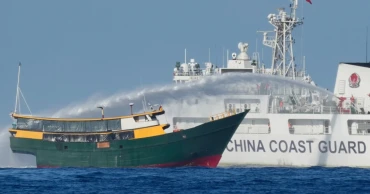
Tensions have intensified in recent years, particularly between Chinese and Philippine coast guard and naval forces around disputed shoals.
In 1988, a confrontation between Chinese forces and Vietnamese military personnel over a disputed reef killed dozens of Vietnamese soldiers, marking one of the deadliest known clashes in the South China Sea.
Manila-based geopolitical analyst Julio Amador III said the proposed code of conduct might not completely prevent aggressive actions in the disputed waters but could help discourage potential aggressors when combined with diplomatic efforts and stronger military capabilities.
"Restraining great powers takes a lot of effort," Amador said, referring to China.
He said countries should not rely on a single approach but use various measures, including a code of conduct, legal action against China and increased military spending.
The disputed waters have long been regarded as a potential flashpoint in Asia and have emerged as a sensitive arena in the broader rivalry between Washington and Beijing.
The United States has repeatedly reaffirmed its commitment to defend the Philippines, its oldest treaty ally in Asia, in the event of an armed attack on Filipino forces, including in the South China Sea.
China, meanwhile, has warned Washington against interfering in what it describes as an exclusively Asian dispute.
6 hours ago