Atlantic
US government opposes plan to auction Titanic artifacts
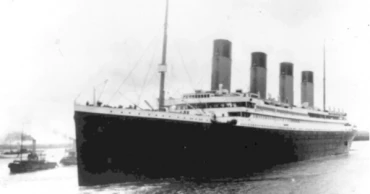
A plan to auction more than 100 artifacts recovered from the wreck of the Titanic has drawn opposition from the U.S. government, according to newly unsealed court documents.
The items include personal belongings, currency, kitchenware and decorative objects salvaged from the famous shipwreck in the North Atlantic.
RMS Titanic Inc., the company that holds exclusive salvage rights to the Titanic site, is seeking to sell the artifacts for the first time. The company had previously agreed that recovered items would only be displayed in museums and traveling exhibitions.
Court filings show the Georgia-based firm also proposed a global touring exhibition in four cities, though the locations have not been disclosed. Among the items listed for possible sale are a bronze cherub, a gold nugget necklace and a heart-shaped pendant.
The U.S. National Oceanic and Atmospheric Administration (NOAA), which represents American oversight of the wreck site, argued in court documents that the proposed auction would violate legal obligations tied to the salvage agreement. A judge unsealed the filings earlier this month.
The government said the company “does not seek the Court’s approval, does not believe that approval is required, and asserts that it is not restricted in its ability to sell” the artifacts.
RMS Titanic Inc. did not respond to media requests for comment on Monday. In earlier court submissions, its lawyers argued that the proposed sale would not breach existing agreements or court orders.
The dispute marks another chapter in long-running efforts to sell Titanic artifacts. Since 1987, salvage teams have recovered thousands of objects, including sections of the ship’s hull. The company earns revenue mainly by exhibiting them.
Over the years, attempts to sell parts of the collection have repeatedly faced opposition from U.S. courts, preservation groups and relatives of victims, especially when items are linked to passengers.
However, some artifacts not directly tied to the wreck or recovered by survivors have been sold at high prices in recent years. A life jacket worn by a passenger sold for more than $900,000 in April, while a gold pocket watch linked to the ship’s rescue operations fetched nearly $2 million in 2024.
Auction houses say demand remains strong due to the global fascination with the Titanic, which sank in 1912 after striking an iceberg on its maiden voyage from Europe to New York, killing more than 1,500 people.
The case also reflects a trans-Atlantic legal dispute over ownership and control of the artifacts. Some of the earliest recovered items were taken to France, where authorities granted ownership rights to the salvaging company. French research institute IFREMER worked with Woods Hole Oceanographic Institution during the wreck’s discovery.
Later recoveries were handled under a U.S. District Court in Norfolk, Virginia, which oversees the broader salvage agreement.
NOAA argues that all roughly 5,000 recovered items—regardless of where they were initially claimed—should remain part of a single preserved collection under U.S. court conditions. It also says French court terms required the artifacts to remain together and not be sold individually.
The company, meanwhile, has argued that the U.S. court does not have jurisdiction over items claimed in France.
Experts and ocean explorers have also expressed concern over the proposed auction, saying Titanic artifacts should remain publicly accessible.
Ocean scientist Greg Stone said recovery is acceptable if done carefully and with proper archaeological methods, but added he would prefer a nonprofit approach.
Law professor Richard Daynard of Northeastern University said the rules are meant to protect the artifacts for public benefit, warning against turning them into private luxury items.
“If it’s something where someone can walk through their house and say ‘Yes, I bought this for $5 million and it’s original from the Titanic,’ that’s not a good thing,” he said.
3 months ago
Historic iceberg A23a breaks apart, nears end after 40 years
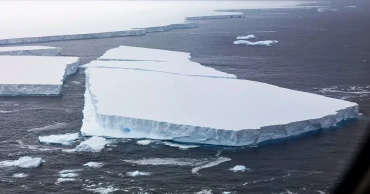
One of the world’s oldest icebergs, known as A23a, is in its final weeks after an extraordinary 40-year journey that has fascinated scientists.
Once the largest iceberg on Earth, A23a covered more than twice the area of Greater London. Over the past year, it has melted, fractured, and broken apart, leaving only fragments that are now slowly disappearing in warmer waters far from Antarctica.
Scientists have closely monitored A23a to understand how Antarctic ice may respond to climate change. “It’s been an extraordinary journey, but it is on its last legs now,” said Prof. Mike Meredith of the British Antarctic Survey.
A23a broke off from the Filchner Ice Shelf in 1986, the same year as the Chernobyl disaster and Whitney Houston’s first Grammy. Initially about 4,000 sq km (1,540 sq miles), it stayed anchored in the Weddell Sea for over three decades before moving again in 2020. Today, it is considered the oldest iceberg tracked by satellites.
Despite its longevity, A23a began shrinking rapidly in 2025. By mid-year, it lost its title as the world’s largest iceberg. Mechanical forces in the South Atlantic, combined with warming waters, caused large chunks to break off, forming new icebergs named A23g, A23h, and A23i.
By late December, meltwater collected on its surface, accelerating its breakup. Scientists described this process as “hydrofracturing,” where water seeps into cracks, widening them and triggering calving events.
Although iceberg melting is natural, A23a’s disintegration provides clues about the stability of Antarctic ice shelves, which play a key role in controlling sea-level rise. Icebergs act as “travelling natural laboratories,” helping scientists predict how ice shelves may respond to warming conditions.
In its final stretch, A23a has traveled over 700 km (435 miles) northeast in the South Atlantic, exposed to surface waters nearing 10°C. Satellite images show further fragmentation, suggesting the iceberg may soon completely vanish. By March 5, its area had shrunk to roughly 180 sq km (70 sq miles).
Source: BBC
7 months ago

Section of destroyed shuttle Challenger found on ocean floor
A large section of the destroyed space shuttle Challenger has been found buried in sand at the bottom of the Atlantic, more than three decades after the tragedy that killed a schoolteacher and six others.
NASA’s Kennedy Space Center announced the discovery Thursday.
“Of course, the emotions come back, right?” said Michael Ciannilli, a NASA manager who confirmed the remnant's authenticity. When he saw the underwater video footage, “My heart skipped a beat, I must say, and it brought me right back to 1986 ... and what we all went through as a nation."
It's one of the biggest pieces of Challenger found in the decades since the acciden t, according to Ciannilli, and the first remnant to be discovered since two fragments from the left wing washed ashore in 1996.
Read more: Nasa issues second image of ‘Pillars of Creation’ taken by James Webb telescope
Divers for a TV documentary first spotted the piece in March while looking for wreckage of a World War II plane. NASA verified through video a few months ago that the piece was part of the shuttle that broke apart shortly after liftoff on Jan. 28, 1986. All seven on board were killed, including the first schoolteacher bound for space, Christa McAuliffe.
The underwater video provided “pretty clear and convincing evidence,” said Ciannilli.
The piece is more than 15 feet by 15 feet (4.5 meters by 4.5 meters); it's likely bigger because part of it is covered with sand. Because there are square thermal tiles on the piece, it’s believed to be from the shuttle’s belly, Ciannilli said.
The fragment remains on the ocean floor just off the Florida coast near Cape Canaveral as NASA determines the next step. It remains the property of the U.S. government. The families of all seven Challenger crew members have been notified.
Read more: NASA says spacecraft succeeded in changing asteroid’s orbit
“We want to make sure whatever we do, we do the right thing for the legacy of the crew,” Ciannilli said.
Roughly 118 tons (107 metric tons) of Challenger debris have been recovered since the accident. That represents about 47% of the entire vehicle, including parts of the two solid-fuel boosters and external fuel tank.
Most of the recovered wreckage remains buried in abandoned missile silos at Cape Canaveral Space Force Station. The exception is a left side shuttle panel on display at Kennedy Space Center's visitor complex, alongside the charred cockpit window frame from shuttle Columbia, which broke apart over Texas during reentry in 2003, killing seven astronauts.
Far less has been recovered of Columbia — 42 tons (38 metric tons) representing 38% of the shuttle. The Columbia remains are stored in converted offices inside Kennedy’s massive hangar.
Launched on an exceptionally cold morning, Challenger was brought down by eroded O-ring seals in the right booster. Columbia ended up with a slashed left wing, the result of foam insulation breaking off the external fuel tank at liftoff. Mismanagement was also blamed..
A History Channel documentary detailing the latest Challenger discovery airs Nov. 22.
3 years ago

Enormous waves race across Atlantic, UK braces for storm
Enormous waves churned across the North Atlantic on Saturday as Britain braces for a second straight weekend of wild winter weather and flooding that's already seen the army deployed to help out residents in northern England and the Royal Navy assist in a search and rescue operation.
6 years ago