Germany Economy
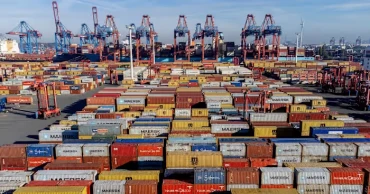
Germany's troubled economy shows modest growth after two years of shrinkage
Germany’s economy returned to modest growth last year after two consecutive years of contraction, official data showed Thursday, raising expectations that government investment in infrastructure and defense could help break years of stagnation.
The country’s gross domestic product (GDP) grew by 0.2% in 2025, driven by stronger consumer and government spending, while exports remained subdued due to tougher U.S. trade policies under President Donald Trump, the German Federal Statistical Office reported. This followed GDP contractions of 0.5% in 2024 and 0.9% in 2023.
“Germany’s export sector faced significant headwinds from higher U.S. tariffs, a stronger euro, and growing competition from China,” said Ruth Brand, head of the statistics office, in a statement.
Looking ahead, analysts expect slightly stronger growth this year as Chancellor Friedrich Merz’s government ramps up infrastructure spending to address years of underinvestment. Defense expenditure is also rising amid heightened security concerns following Russia’s invasion of Ukraine.
Read more: Germany to increase its funding contribution to Saidabad WTP Phase III project
Germany has faced extended economic stagnation since the COVID-19 pandemic. Rising energy costs from the Ukraine war, growing competition from China in key sectors such as automobiles and industrial machinery, higher tariffs on EU goods imposed by the U.S., and a stronger euro have all weighed on the export-driven economy. Structural challenges, including bureaucratic hurdles and a shortage of skilled labor, have also constrained growth.
Preliminary data indicate that the German economy expanded by 0.2% in the final quarter of 2025. A group of leading economists has projected 0.9% growth for 2026, though they caution that slower-than-expected government spending could limit the recovery.
8 months ago
.jpg)
German factory orders rebound in Jan, ahead of virus impact
Factory orders in Germany rebounded strongly in January after two months of declines, official data showed Friday, but it remains to be seen what impact mounting concerns over the coronavirus outbreak will have on Europe's biggest economy.
6 years ago