tax policy
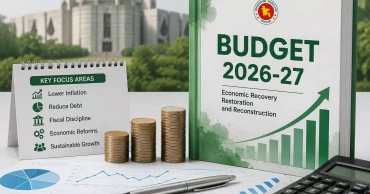
Govt eyes inflation relief, lower debt through sweeping reforms
The government has placed the restoration of macroeconomic stability at the centre of its economic recovery, restoration and reconstruction agenda, pledging a series of fiscal, monetary and institutional reforms aimed at curbing inflation, strengthening public finances and reducing debt dependence.
As per the budget document, the government acknowledged that persistently high inflation over the past several years has significantly eroded household purchasing power and weakened the country’s overall economic foundations.
Inflationary pressures have been driven not only by global factors but also by domestic challenges, including supply chain inefficiencies, market distortions, inadequate competition and various structural bottlenecks, it said.
To shield citizens from the impact of rising prices, the government said, it will focus on strengthening foreign exchange reserves, enhancing external sector resilience and ensuring greater stability in the foreign exchange market.
The document noted that Bangladesh’s import-dependent economy remains vulnerable to exchange rate fluctuations, with the depreciation of the Taka against major foreign currencies contributing significantly to domestic inflation.
The government also pledged to maintain close coordination between monetary and fiscal policies while ensuring adequate credit flows to productive sectors.
Efforts will be made to improve external balances through export growth, facilitation of remittance inflows and prudent management of non-essential imports.
Finance Ministry officials believe these measures, combined with improved expenditure efficiency and sound fiscal management, will help keep the budget deficit within sustainable limits, restore market confidence and create a more favourable environment for investment and production.
A major component of the government’s fiscal strategy is strengthening domestic resource mobilisation.
As part of an institutional reform initiative, the government has begun separating revenue policy formulation from revenue administration.
Under the new framework, tax policy will be developed through a dedicated system supported by professional expertise, evidence-based analysis and broad stakeholder consultations.
The government has also adopted a medium-term revenue strategy focused on broadening the tax base, improving compliance and enhancing transparency and efficiency in revenue administration.
Planned reforms include expanding the taxpayer base, digitising tax registration and return filing, strengthening monitoring systems, modernising VAT administration, improving withholding tax compliance and introducing risk-based audit mechanisms.
At the same time, taxpayer services will be expanded and procedures simplified to encourage voluntary compliance.
The budget also announced a comprehensive review of tax expenditures and exemptions to improve transparency, efficiency and accountability. Future tax incentives will be subject to stronger oversight and clearer justification.
According to the budget document, Bangladesh’s revenue-to-GDP ratio currently stands at around 8 percent, while the tax-to-GDP ratio is approximately 6.8 percent.
The government aims to raise these ratios to 11 percent and 9.6 percent, respectively, by fiscal year 2030-31 through a combination of policy and administrative reforms.
The budget document also highlighted growing concerns over public debt sustainability, attributing current pressures to large-scale borrowing undertaken for what it described as corruption-ridden and poorly planned “vanity projects” implemented during the previous regime.
The government said the resulting debt burden has placed considerable strain on the country’s fiscal position.
To address these challenges, the administration has set a target of improving Bangladesh’s debt risk rating from the current “moderate” category to a “low” risk category.
It plans to achieve this by enforcing stricter fiscal discipline, increasing revenue collection, maintaining sustainable budget deficits and modernising debt management practices.
The government further signalled a strategic shift away from what it termed a debt-driven growth model, emphasising the need to build a self-sustaining economy driven by production, employment generation and private sector investment.
“Policies will be pursued to systematically reduce debt dependence and promote investment-led growth as the foundation of sustainable economic progress,” the budget document stated.
4 months ago
Speakers call for stronger tobacco tax policy, higher prices in budget to protect public health
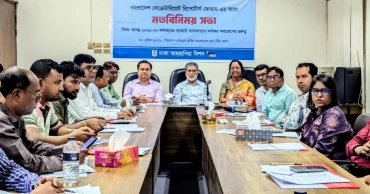
Speakers at a discussion on Thursday called for a strong tobacco tax policy including higher taxation and price increases on tobacco products in the 2026–27 national budget to safeguard public health.
The demand was raised at a discussion titled “The Importance of Effective Tobacco Taxation in the Upcoming 2026–27 National Budget,” jointly organised by Dhaka Ahsania Mission and Bangladesh Secretariat Reporters Forum (BSRF) at the CIRDAP auditorium in the capital.
Speaking as the chief guest, Additional Secretary of the Health Services Division (World Health Wing) Sheikh Momina Moni said the easy availability of tobacco products in Bangladesh is contributing to rising smoking rates, particularly among youth and low-income groups.
She stressed that increasing prices alone is not sufficient noting that tobacco prices must raise at a rate higher than inflation and income growth to effectively reduce consumption.
Md Mostafizur Rahman, former BCIC chairman Mostafizur Rahman, said Bangladesh incurred an estimated Tk 87,000 crore loss in 2024 due to tobacco-related health and environmental impacts.
Speakers observed that tobacco products remain relatively cheap in Bangladesh compared to essential commodities, making them more accessible, especially to younger consumers.
They said the lack of price adjustments in line with inflation and income growth has weakened tobacco control efforts.
They also noted that the existing tax structure leads to an estimated annual revenue loss of around Tk 44,000 crore, adding that effective tobacco taxation could both reduce smoking and increase government revenue.
Nearly 200,000 people die prematurely each year in Bangladesh due to tobacco-related diseases.
They emphasised that tobacco control should be treated as a public health priority rather than solely a revenue-generating issue, underscoring the need for significant price hikes through effective taxation.
Presenting the keynote paper, Shariful Islam, project coordinator at Dhaka Ahsania Mission, said prices of essential commodities rose sharply between 2021 and 2023, while cigarette prices increased at a much lower rate.
He noted that sugar prices rose by 88.97 percent, potatoes by 86.58 percent and flour by 75.09 percent, whereas cigarette prices increased by 15.38 percent in the low tier, 6.35 percent in the mid-tier and 11.11 percent in the premium segment.
He warned that mid-tier cigarettes, which have the largest consumer base, saw the lowest price increase, effectively making cigarettes cheaper relative to essential goods.
Shariful also proposed restructuring the cigarette market into three tiers by merging the low and mid-tier segments, with suggested retail prices of Tk 100, Tk 150 and Tk 200 for 10-stick packs.
He further recommended maintaining a 67 percent supplementary duty across all tiers and imposing a specific tax of Tk 4 per pack.
BSRF President Masudul Haque said tobacco companies often spread misinformation ahead of the national budget, claiming that higher taxes would lead to increased smuggling.
Members of the BSRF executive committee were present at the event.
Among others, BSRF General Secretary Ubaidullah Badal and Mokhlesur Rahman, deputy director of the health sector at Dhaka Ahsania Mission spoke at the event.
5 months ago

Relax tax policy on tobacco products: Speakers to govt
Speakers at a workshop urged the government to relax tax policy and its structure in a short time to build tobacco-free Bangladesh by 2040.
6 years ago