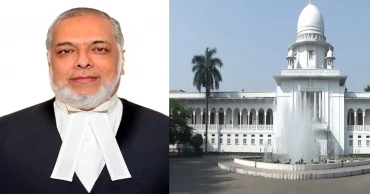
Ministry of Law, Justice and Parliamentary Affairs
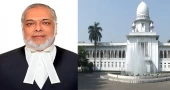
Justice Zubayer Rahman made Bangladesh's new Chief Justice
President Mohammed Shahabuddin has appointed Justice Zubayer Rahman Chowdhury as the 26th Chief Justice of Bangladesh.
According to a gazette notification issued by the Ministry of Law, Justice and Parliamentary Affairs on Tuesday (December 23, 2025), President Shahabuddin made the appointment exercising his power following Article 95 (1) of the Constitution.
Justice Zubayer is scheduled to take oath as the new Chief Justice on December 28.
Read more: Violent clash over char capture in Hatiya leaves five dead
The appointment follows the imminent retirement of the current 25th Chief Justice, Dr Syed Refaat Ahmed, whose retirement takes effect on December 27.
Born on May 18, 1961, Justice Zubayer is the son of the late AFM Abdur Rahman Chowdhury, who also served as a judge of the Supreme Court.
Obtaining LLB (Honours) and LLM degrees from the University of Dhaka, he did a master’s degree from the United Kingdom on international law.
He started his career as a lawyer in the district judges’ court in 1985 and at the High Court (HC) in 1987.
On August 27, 2003, he was appointed as an additional judge of the HC Division, with his position made permanent two years later.
Read more: Judiciary must see constitutional changes as reality, not threat: CJ Syed Refaat
President Shahabuddin appointed him as a justice of the Appellate Division on August 12, 2024, and he took oath the following day, on August 13.
9 months ago

Justice for all: Bold drive to ensure access for the marginalised in Bangladesh
Although Bangladesh’s constitution promises equal protection under the law, the real experience of many tells a different story as people face multiple barriers that prevent them from accessing the justice system.
Aiming to make the judicial services more extensive, accessible and effective for people particularly for marginalised groups, including women, the poor and children, the government has taken a project titled ‘Access to Justice for Women: Strengthening Community Dispute Resolution and Improving Case Management’.
It will be implemented by the Law Ministry involving Tk 186.4962 crore.
The project will be implemented in Barishal, Dhaka, Cumilla, Narsingdi, Khulna, Rangpur and Moulvibazar districts by March 2027, according to the project document.
Of the total amount of money, Tk 180.3082 crore will be provided by the German government as project grant while Tk 6.1880 crore will come from the national exchequer.
The main project objectives are to enhance the capacity of justice service providers, especially legal service providers and community-based organisations, and to enhance cooperation and coordination among relevant stakeholders in government, judicial and non-governmental voluntary development institutions.
It will also implement necessary legal and procedural reforms related to evidence-based case management and alternative dispute resolution.
The activities under the project involves organising seminars, workshops, and stakeholder meetings, conducting study tours, publishing legal aid materials, strengthening access to legal aid services and developing gender-sensitive conflict resolution policies and implementing evidence-based case management systems.
According to the project document, the Ministry of Law, Justice and Parliamentary Affairs is always striving to ensure an efficient and effective justice system.
For this reason, the ministry is taking various measures to ensure justice along with legal assistance to the people by formulating necessary laws, policies, rules, strategy papers, circulars, etc.
Judicial Service Commission presents 2023 Annual Report to President Shahabuddin
To this end, the project has been proposed with the aim of contributing effectively to the protection of the constitutional rights of the citizens of the state, especially the marginalised and helpless people, including women, by playing a role in adopting new reform methods, it said.
Despite legal reforms and various initiatives, women, children and marginalised communities in Bangladesh continue to face significant hurdles in accessing justice.
Structural barriers, social stigma, financial constraints and lengthy legal procedures often discourage vulnerable groups from seeking justice.
For many women, particularly in rural areas, navigating the judicial system remains a daunting task due to limited awareness of legal rights and fear of social backlash.
Victims of gender-based violence frequently encounter further victimisation during the legal process.
In many cases, police are reluctant to record complaints, while survivors face pressure from families or communities to withdraw cases or settle disputes informally, often at the cost of justice.
For children, the situation is equally complex.
Although child-friendly justice mechanisms exist in law, in practice, children involved in legal proceedings—whether as victims, witnesses, or accused—are often subjected to trauma due to lack of proper support systems, inadequate legal representation, and exposure to intimidating courtroom environments.
Marginalised communities, including ethnic minorities, the poor, and people with disabilities, struggle with additional obstacles such as discrimination, language barriers and lack of access to legal aid.
Many cannot afford the high costs of legal counsel or endure the prolonged nature of case resolutions.
Besides, case backlogs in courts remain a persistent problem, leading to years of delay in delivering justice.
This not only erodes trust in the legal system but also leaves victims without closure or remedy.
Legal experts and rights activists have long called for reforms that prioritise gender sensitivity, community-based dispute resolution, and the expansion of legal aid to ensure that justice is not a privilege, but a guaranteed right for all.
1 year ago

Virtual court a new chapter in law: Anisul
Law Minister Anisul Huq on Sunday said that operating trials by virtual courts using information technology has introduced a new chapter in country’s law.
6 years ago

Ordinance promulgated allowing IT use in court proceedings
An ordinance was promulgated on Sunday allowing courts to run trial proceedings through videoconferences and other digital facilities.
6 years ago