Bolivia
Bolivia declares state of emergency as road blockades trigger shortages and unrest
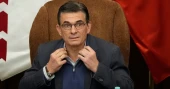
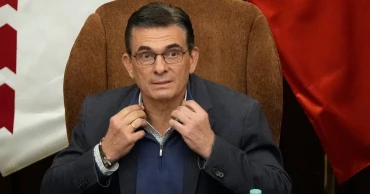
Bolivian President Rodrigo Paz on Saturday declared a 90-day state of emergency, granting the military broad powers to remove road blockades that have severely disrupted fuel and food supplies in the country's administrative capital, La Paz, and other major cities.
The move comes after five weeks of protests demanding Paz's resignation over austerity measures, including the elimination of fuel subsidies, and other grievances.
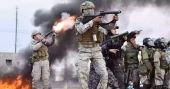
The demonstrations have sparked violent clashes between protesters and riot police, resulting in at least 365 arrests and 37 injuries, according to authorities.
At least 17 people have died during the unrest, most of them due to a lack of medical care caused by transport disruptions, according to Bolivia's ombudsman's office and human rights groups.
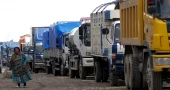
Road blockades on key highways have effectively isolated La Paz, leading to shortages of fuel and food, disrupting transportation and preventing patients from accessing medical treatment. The government said at least seven people had died because they were unable to receive timely medical attention.
In a televised address, Paz said the emergency measures were intended to restore normal life and guarantee access to essential supplies.
"This is not a state of emergency to restrict people's lives. It is a state of emergency to give people back their freedom," he said.
As the protests continued, businesses shut down, supermarket shelves emptied and hospitals reportedly ran short of oxygen supplies, prompting growing calls for the government to restore order.
On Friday, the government reached an agreement with one labour union, whose leaders urged protesters to lift the blockades. However, other groups have continued to demand Paz's resignation and refused to negotiate.
The emergency decree bans the blocking of roads, streets and highways that disrupt transportation and supply chains and authorises the armed forces to assist police in restoring order, reopening roads and protecting civilians.
The government said the emergency measures do not suspend constitutional rights or due process guarantees and allow citizens to continue their normal activities. The state of emergency could be lifted earlier if the violence and threats against the population cease.
Paz assumed office in November, ending nearly two decades of uninterrupted rule by the leftist Movement Toward Socialism (MAS) party, which left the country facing its worst economic crisis in a generation.
The centrist president pledged to tackle chronic fuel shortages and rebuild state finances while preserving social welfare programmes. However, his austerity policies, particularly the removal of long-standing fuel subsidies, have fuelled inflation and triggered widespread discontent.
The government's attempts to address fuel shortages with lower-quality gasoline also sparked criticism after reports that it damaged thousands of vehicles. Economic reforms aimed at attracting foreign investment and stimulating growth have meanwhile stalled in Congress.
Many of the protests have been led by Indigenous and rural groups that had traditionally supported MAS but helped bring Paz to power last year. They accuse his administration of ignoring their concerns.
Paz is also facing pressure from both the hard-right opposition, which dominates Congress, and the country's long-ruling left.
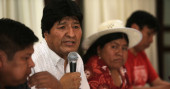
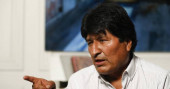
Former president Evo Morales has backed the protests and called for fresh elections while remaining in hiding in Bolivia's coca-growing region to avoid arrest on charges related to statutory rape.
The administration of US President Donald Trump has expressed support for Paz's government.
US Secretary of State Marco Rubio spoke with the Bolivian leader last week and said Washington was increasing emergency assistance and logistical support to help ease shortages caused by the blockades.
US Defence Secretary Pete Hegseth condemned the protests as attempts to overthrow Bolivia's legitimate government and warned those responsible for what he described as "death and destruction" in the region that the United States was closely monitoring the situation.
3 months ago
Bolivia protests intensify as president signs law enabling tougher crackdown
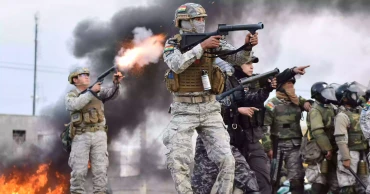
Clashes between protesters and police intensified in Bolivia on Monday as demonstrations demanding the resignation of President Rodrigo Paz entered their fifth week, prompting authorities to make dozens of arrests and raising concerns over a possible government crackdown.
The unrest escalated in the central city of Cochabamba after Paz signed legislation that could facilitate the declaration of a state of emergency, potentially granting broader powers to security forces to restore order and remove road blockades that have disrupted the country.
Protesters hurled stones, sticks and firecrackers at police, who responded with tear gas. Authorities said at least 23 people were detained in Cochabamba, while another 28 arrests were reported in El Alto following unrest linked to fuel shortages.
The demonstrations, led by labor unions, peasant organizations and Indigenous groups, have resulted in around 90 road blockades across the country, severely affecting transportation and causing shortages of food, fuel and medical supplies.
The protesters have accused Paz of failing to address Bolivia’s economic difficulties and criticized his decision to eliminate fuel subsidies. Many demonstrators say the government has not delivered on promises made during last year’s election campaign.
According to Bolivia’s independent public ombudsman, the unrest between May 1 and June 2 left 10 people dead, 37 injured and 365 arrested. The government said seven of the deaths were linked to a lack of medical care due to the blockades, while investigations into all fatalities remain ongoing.
Although Paz has repeatedly called for dialogue and urged restraint by security forces, protest leaders have largely rejected negotiations and continue to demand his resignation, just seven months after he took office.
Speaking after signing the legislation, Paz said the measure was intended to protect the country from what he described as “narco-terrorism” linked to the protests. He also reiterated his willingness to engage with groups presenting legitimate demands.
The new law eases procedures for imposing a state of emergency, though a separate presidential decree would still be required before such measures could take effect.
Analysts say the government faces growing pressure to take stronger action as the prolonged protests continue to paralyze large parts of the country, particularly La Paz and the neighboring city of El Alto.
4 months ago
'Everything is expensive!' Bolivia faces a shocking economic collapse
Fuel is rapidly becoming one of Bolivia’s scarcest commodities.
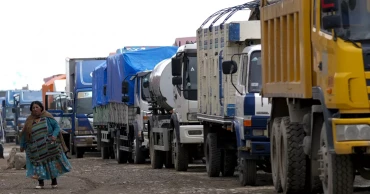
Long lines of vehicles snake for several kilometers outside gas stations all over Bolivia, once South America’s second-largest producer of natural gas. Some of the queues don’t budge for days.
While frustration builds, drivers like Victor García now eat, sleep and socialize around their stationary trucks, waiting to buy just a few gallons of diesel — unless the station runs dry.
“We don’t know what’s going to happen, but we’re going to be worse off," said García, 66, who inched closer to the pump Tuesday as the hours ticked by in El Alto, a bare-bones sprawl beside Bolivia's capital in the Andean altiplano.
Bolivia's monthslong fuel crunch comes as the nation's foreign currency reserves plummet, leaving Bolivians unable to find U.S. dollars at banks and exchange houses. Imported goods that were once commonplace have become scarce.
The fuel crisis has created a sense that the country is coming undone, disrupting economic activity and everyday life for millions of people, hurting commerce and farm production and sending food prices soaring.
Mounting public anger has driven crowds into the streets in recent weeks, piling pressure on leftist President Luis Arce to ease the suffering ahead of a tense election next year.
“We want effective solutions to the shortage of fuel, dollars and the increase in food prices,” said Reinerio Vargas, the vice rector of Gabriel René Moreno Autonomous University in the eastern province of Santa Cruz, where hundreds of desperate truckers and residents flooded main squares Tuesday to vent their anger at Arce’s inaction and demand early elections.
In a similar eruption of discontent, protesters shouting “Everything is expensive!” marched through the streets of the capital, La Paz, last week.
Bolivians say Arce's image has suffered not only because of the crisis but also because his government insists that it doesn't exist.
“Diesel sales are in the process of returning to normal,” Economy Minister Marcelo Montenegro said Tuesday.
Arce has repeatedly vowed that his government will end the fuel shortages and lower the prices of basic goods by arbitrary deadlines. On Nov. 10, he again promised he would “resolve this issue” in 10 days.
As the deadlines come and go, the black market currency exchange rate has risen to nearly 40% more than the official rate.
Arce's office did not respond to interview requests.
“The queues are getting longer and longer,” said 38-year-old driver Ramiro Morales, who needed a bathroom after four hours in line Tuesday but feared losing his place if he went searching for one. “People are exhausted.”
It’s a shocking turnaround for the landlocked nation of 12 million people that was a South American economic success story in the 2000s, when the commodities bonanza generated tens of billions of dollars under the nation’s first Indigenous president, former President Evo Morales.
Morales, Arce’s one-time mentor, is his present-day rival in the fight to be the ruling party’s candidate next year.
But when the commodities boom ended, prices slumped and gas production dwindled. Now, Bolivia spends an estimated $56 million a week to import most of its gasoline and diesel from Argentina, Paraguay and Russia.
Economy Minister Montenegro on Tuesday pledged that the government would continue providing fuel subsidies that critics say it can’t afford.
Banners from two years ago boasting that Bolivia’s inflation is the lowest in South America still greet tourists arriving at El Alto International Airport. Now, inflation is among the highest in the region.
Fuel shortages prevent farmers from getting their produce to distribution centers and markets, triggering a sharp price hike for food staples.
Last week in La Paz and neighboring El Alto, hungry Bolivians jostled in long lines to buy rice after much-delayed shipments finally arrived from Santa Cruz, the country's economic engine some 850 kilometers (528 miles) away.
With the diesel shortage affecting everything from the operation of tractors to the sourcing of machinery parts, the shortage is also hurting farmers during the crucial planting season.
“Without diesel, there is no food for 2025,” said Klaus Frerking, the vice president of the Eastern Agricultural Chamber of Bolivia.
The prices of potatoes, onions and milk have doubled in El Alto’s main wholesale food market in the past month, vendors said, overshooting the country’s nearly 8% inflation rate.
Nervous Bolivians are cutting back on their consumption.
“You have to search a lot to find the cheapest food,” said 67-year-old Angela Mamani, struggling to pull together meals for her six grandchildren at El Alto's open-air market Tuesday. She planned to buy vegetables but didn’t have enough cash and went home empty-handed.
This week, Arce's government presented a 2025 budget — with a 12% increase in spending — that drew backlash from lawmakers and business leaders who said it would lead to more debt and more inflation.
While the governing Movement Toward Socialism party tears itself apart in the power struggle between Arce and Morales, both politicians have seen the economic morass as a way to strengthen their positions ahead of 2025 elections.
Canada is already examining tariffs on certain US items following Trump's tariff threat
“They deny there are problems. They blame external contexts and conflicts,” said Bolivian economic analyst Gonzalo Chávez.
Morales' supporters last month launched 24-day protest partly targeting Arce’s handling of the economy that blocked main roads and stranded commercial shipments, costing the government billions of dollars.
Security forces broke up the rallies almost a month ago. But on Tuesday, Arce's government continued to blame Morales' blockades for spawning the ubiquitous fuel lines.
“We need change,” said Geanina García, a 31-year-old architect scouring the grocery hub of El Alto for cheap deals — a once-routine errand that she said had turned into a nightmare.
“People don’t live off politics, they live day to day, off of what they produce and what they earn.”
1 year ago
Bolivia suspends diplomatic relations with Cuba
The interim government of Bolivia has suspended diplomatic relations with Cuba due to alleged interference in the country by the Cuban government, the Bolivian Minister of the Presidency, Yerko Nunez, announced on Friday.
6 years ago
Bolivia religious debate: The Bible vs Andean earth deity
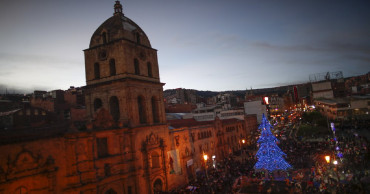
Hoisting a large leather Bible above her head, Bolivia's new interim president delivered an emphatic message hours after Evo Morales fled under pressure, the end of a nearly 14-year presidency that celebrated the country's indigenous religious beliefs like never before.
6 years ago
Morales names his candidate for Bolivia presidential vote
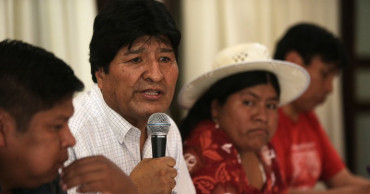
Former President Evo Morales announced Sunday that ex-Economy Minister Luis Arce Catacora will be his party's presidential candidate in Bolivia's May 3 elections.
6 years ago
Evo Morales' party to seek consensus candidates in Bolivia
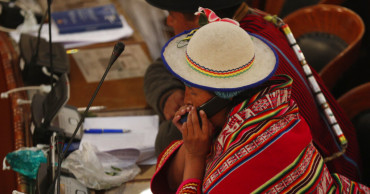
The political movement of former President President Evo Morales says it will seek consensus candidates for its presidential ticket in the country's new elections and will spend at least a month more consulting its bases.
6 years ago
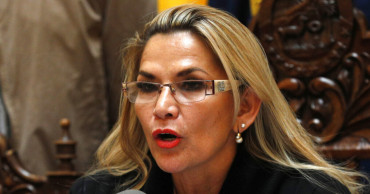
Bolivian lawmakers approve new elections, bar ex-president
Bolivian lawmakers on Saturday unanimously approved a measure calling for new presidential elections that would exclude former leader Evo Morales — a key step toward pacifying a nation rocked by unrest since an Oct. 20 marred by reported irregularities.
6 years ago
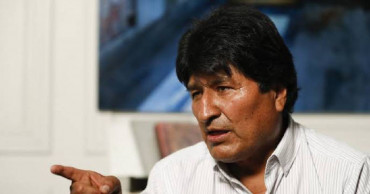
Evo Morales accused of terrorism and sedition
Bolivia's interim government is accusing ousted leftist President Evo Morales of terrorism and sedition.
6 years ago
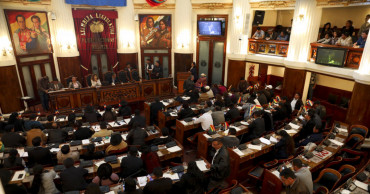
Bolivian interim leader proposes new elections as toll rises
Bolivia's self-proclaimed interim president sent a bill on holding new elections to congress Wednesday amid escalating violence that has claimed at least 30 lives since a disputed Oct. 20 vote and the subsequent resignation and exile of former leader Evo Morales.
6 years ago