Greek
Empty classrooms on Greek island highlight Europe's population crisis
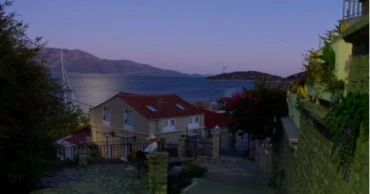
An almost empty classroom on the remote Greek island of Kalamos is highlighting a wider population crisis affecting Greece and other parts of Europe.
Chryssa Ntalaka, the only teacher at the island's last school, has just two students this year. When they leave for middle school on mainland Greece next year, the school is expected to close.
The nearby kindergarten was shut three years ago, although toys and children's books remain on its shelves.
“Usually, teachers are placed on these islands against their wishes,” Ntalaka told The Associated Press. “Whereas for Kalamos there are teachers and kindergarten teachers, as far as I know, who want to come — but there are no children.”
Falling enrollment has prompted Greek authorities to close 75 schools this year and suspend or extend classes at more than 400 others.
The trend is part of a broader demographic problem across Europe. The region has 16 of the world's 20 oldest populations, according to the World Population Review. Remote islands and mountain communities are often affected first as young people leave and public services disappear.
About 17 million people live on more than 4,000 islands across the European Union, while Greece has around 200 islands.
Kalamos now has only about 80 permanent residents. A decade ago, around 40 children attended its local schools and daycare.
Seven teenagers from the island now travel by ferry to attend school on the mainland. They sometimes miss classes when strong winds make the journey unsafe.
Antonis Aivaliotis, one of the students, said he would like to remain on Kalamos but sees little opportunity there.
“Of course I would like to stay here,” he said. “I love Kalamos. It is my home. But there's no development at all.”
Similar problems are affecting remote islands in Croatia, Japan and Italy. On Italy's Stromboli island, a school reopened last month after being closed for 20 years, with only one student.
The European Union's fertility rate fell to a record-low 1.34 children per woman in 2024, well below the 2.1 rate needed to maintain a stable population.
The EU has announced plans for an island strategy, while 146 million euros ($164 million) has been spent over the past five years to modernize schools in four Greek island groups.
14 hours ago