Hilsa fishing
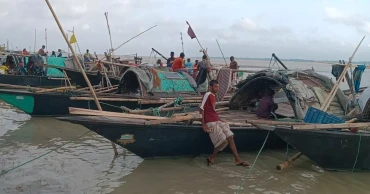
Rajbari’s hilsa glory fades as Padma loses depth, current
The boats are still there, the nets are still there. But the hilsa that once filled the fishing boats on the Padma River in Rajbari has largely disappeared.
Along the riverbank at Bahir Char Daulatdia in Goalanda, rows of fishing boats remain moored. Some fishermen return from the river with their meagre catch, while others sit in their boats repairing torn nets or applying tar to fishing gear under the sun.
For fisherman Shukur Ali Haldar, 75, the scene is a painful reminder of a very different Padma.
“I have been fishing in the Padma for nearly 50 years. We used to get five to seven maunds of hilsa in a single haul. Sometimes the nets were so heavy with fish that we could hardly pull them up. We would return to the ghat with boats full of hilsa,” he said.
“Now the Padma has neither the depth nor the current it once had. Because of the loss of depth, hilsa are no longer found here like before,” he said.
In the past, the river would come alive after dusk with the flickering lights of fishing boats and fishermen would cast their nets throughout the night and return at dawn with boats loaded with fish, he added.
Goalanda’s importance as a hilsa landing and trading centre was closely linked to its location at the confluence of the Padma and Jamuna rivers.
During the British period and for years after partition, large quantities of hilsa caught in the area were transported by rail to Kolkata.
Local traders said hilsa from Goalanda was once shipped in railway wagons to different parts of the region.
But the river has changed over the decades.
Submerged chars have emerged in many places, reducing navigability and altering the river’s flow.
Fishermen said the decline in depth and current, combined with changes in fishing practices and other environmental pressures, has contributed to the disappearance of hilsa from the Rajbari stretch of the Padma.
‘Now the Padma is almost hilsa-free’
Haldar said he had also witnessed the decline over the years.
“I have caught hilsa with fishermen such as Zafar Haldar, Sonai Haldar, Niranjan Haldar and Madan Haldar of Jafarganj in Manikganj. We used to catch two- to three-seer hilsa regularly,” he said.
He recalled selling a roughly one-kilogram hilsa for Tk 3,600 during the peak season in one year.
But the situation changed after major floods, he said.
“Hilsa started declining after the 1988 flood. After the 1998 flood, hilsa almost disappeared from the Padma,” he said.
Osel Bepari, former general secretary of the Daulatdia-Debagram Fishermen’s Cooperative Society, said fishermen from Rajbari as well as Manikganj, Sirajganj and Pabna used to come to this stretch of the river.
He said around 40 local boats, 12 boats from Manikganj and 16 from Sirajganj and Pabna were once engaged in fishing in the area. This year, only around 27 local boats are operating, he said.
He said fishermen now have to travel far downstream to find suitable fishing grounds. A boat may get only one opportunity to cast and retrieve its net every 16 to 17 hours.
“With hilsa becoming scarce, fishermen are increasingly using different types of nets to catch whatever fish they can find,” he said.
Anwar Bepari, 65, who has spent about four decades fishing in the river, recalled a time when a boat could catch 50 to 60 maunds of hilsa a day.“Now you can hardly say there is fish in the Padma.”
He blamed the use of illegal current nets and China-duari nets for destroying fish and their eggs, while also pointing to changes in the river caused by upstream structures and the formation of chars.
“The river no longer has enough water or current,” he said.
Traders also losing their old business
Fish traders and wholesalers around Daulatdia Ghat said their once-thriving businesses have also shrunk.
Chandu Mollah, who has been involved in the fish trade at Daulatdia ferry ghat for around 20 years, recalled seeing hundreds of kilograms of fish brought to the market every day when he started working there.
Now, he said, only a fraction of the boats return with hilsa.
“At the end of the day, only 10 to 12 hilsa may come from 10 to 20 boats. The fish trade has changed completely,” he said.
Badal Biswas, a wholesale hilsa trader at Goalanda Bazar, has been in the business for around 35 years, following in the footsteps of his late father, Sadeq Ali Biswas.
“Business was very lively during my father’s time. Hilsa from Goalanda used to be sent to different parts of the country. It was even transported to Kolkata in railway wagons,” he said.
“Now there is no Padma hilsa. Those days are a golden past,” Biswas said.
He has kept the family business going by bringing hilsa from Barishal and Chattogram.
Mohan Mondal, president of the Daulatdia Ghat Bazar Business Association, said the decline has been dramatic even in recent years.
“Even six or seven years ago, fishermen used to bring 20 to 30 maunds of hilsa to my wholesale shop every day,” he said.
There are now 11 wholesale shops at the ghat, he said, but on a recent day only two shops received hilsa, totalling just 2-3 kilograms.
During the peak season, the entire ghat may receive only 10-12 kilograms in a day, Mondal said.
A decline seen beyond Rajbari
The decline in Rajbari is part of a broader concern over hilsa production in Bangladesh.
5 days ago

Fishermen net hilsa again after 58-day fishing ban in Bay
Fishermen in the coastal areas of Taltali upazila of Barguna are rejoicing as silver hilsa began appearing in their nets following the end of a 58-day fishing ban in the Bay of Bengal on Wednesday night.
Fishermen said they caught between 10 and 20 kgs of hilsa each after casting nets near the shore.
“God has fulfilled our wishes.We hope this blessing continues for the entire season,” said fisherman Zakir Sikder.
The government had imposed the ban from April 15 to June 11 to ensure proper breeding, growth, and conservation of marine fish resources and to promote sustainable fishing.
With the restriction lifted at midnight on Wednesday, most of the 8,799 registered fishermen in Taltali returned to sea to resume fishing.
Hilsa returns to Chandpur markets after ban; prices fall, buyers rejoice
Local trader Tuku Sikder said those who cast nets near the coast returned with a good catch, while deep-sea fishermen are expected to return in two to three days.
The return of fishers with fresh hilsa has brought activity back to the Fakirhat fish landing center in Taltali.
Talking to local people, they said, the fish landing center in Taltali saw heavy traffic as trawlers carrying hilsa returned to port.
Fisherman Kabir said he sold 15 kg of medium-sized hilsa for Tk 26,250, earning Tk 70,000 per maund. “The price is good,” he added.
Fishermen Nanna and Kamal said they had caught 20 kg of hilsa. “If this continues, our struggles will ease,” they said.
Tuku Sikder, a member of the Fakirhat Fisheries Association and owner of the Bismillah trawler, said 600 trawlers set out from the landing center on Wednesday night.
Hilsa trade in Chuadanga remarkably bleak during Pahela Baishakh
“Those who fished near the coast returned with good catches. The 58-day ban seems to have paid off. Hopefully, hilsa will continue to appear in abundance throughout the season,” he said.
Jewel Hossain, an official of Fakirhat fish landing center confirmed that hilsa is being caught in significant quantities following the end of the ban.
Deep-sea trawlers are yet to return, but once they do, hilsa supply is expected to increase further.
He added that the current market price of hilsa varies between Tk 35,000 and Tk 120,000 per maund, depending on size and quality.
1 year ago
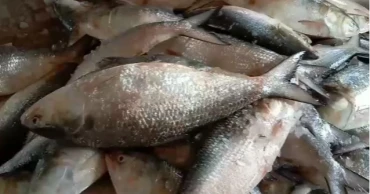
2-month ban on Hilsa fishing to end Sunday midnight
Fishermen are set to resume hilsa fishing as a two-month ban on catching, selling and transportation of the national fish will be ended Sunday midmight.
The fishermen are busy now for preparing nets and boats to go to the rivers for catching hilsa fish in different parts of the country.
With a view to boost the production of hilsa, the government imposed the two-month ban on hilsa catching, selling, hoarding and transporting from March 1 till April 30.
The ban covers hilsa sanctuaries in six districts -- Barishal, Chandpur, Laxmipur, Bhola, Shariatpur and Patuakhali.
Also read: Cox’s Bazar fishermen rejoice as Bay swarms with Hilsa
The sanctuaries are 100km in the Meghna River from Chandpur’s Shatnol to Laxmipur’s Char Alexander, 90km in Shahbazpur Channel in Bhola, 100km in Tentulia River in Bhola, 20km in Naria and Bhederganj upazilas in Chandpur district and 82km in Hizla, Mehendiganj and Barishal Sadar upazilas, Gazaria and the Meghna river.
The Ministry of Fisheries and Livestock allocated 80kg of rice for the registered fishermen during this ban period.
Hilsa has the highest contribution in the country's fish production as the single fish species.
Every year, the government imposes a two-month ban on catching, selling, hoarding and transporting hilsa to boost its production.
3 years ago

22-day ban on hilsa fishing begins Oct 7
A 22-day government ban on catching, selling, hoarding and transporting of hilsa will come into effect from October 7 in a bid to save mother hilsa during peak breeding season.
The ban will be lifted on October 28, said Iftekhar Hossain, public relations officer of the Ministry of Fisheries and Livestock on Thursday.
Read: Govt served legal notice to ban Hilsa export to India in 7 days
The objective of the restrictions on fishing is to protect the mother hilsa which lay eggs during the period.
The ban covers hilsa sanctuaries in six districts-Barishal, Chandpur, Laxmipur, Bhola, Shariatpur and Patuakhali districts.
The sanctuaries are- 100 km in the Meghna River from Chandpur’s Shatnol to Laxmipur’s Char Alaxandar, 90km in Shahbazpur Channel in Bhola, 100 km in Tentulia River in Bhola, 20 km in Naria and Bhederganj upazila in Chandpur district and 82 km in Hizla, Mehendiganj and Barishal Sadar upazila, Gazaria and Meghna river.
Read: With Hilsa catch declining, Bagerhat fishermen stare at penury
Hilsa has the highest contribution in the country's fish production as the single fish species.
4 years ago

22-day ban on Hilsa fishing begins Sunday midnight
A 22-day ban on catching, selling, hoarding and transporting hilsa will begin on Sunday midnight with a view to ensure the safe spawning of the popular fish during its peak breeding period.
The ban will remain in place till October 25.
Read:Durga Puja: 23 tonnes of Hilsa sent to India through Benapole
Earlier on September 22, the Bangladesh government imposed a 22-day ban on hilsa fishing from October 4.
The decision was taken at a meeting of the National Task Force with Fisheries and Livestock Minister SM Rezaul Karim in the chair, the government said in a release.
During the meeting, the Minister said that the government would take strict action against those "involved in harming the national interest of the country". He also urged people to make the ban a success.
Read: Govt to consult experts to boost Hilsa production: Dipu Moni
The objective of the restrictions on fishing from October 4 to October 25 is to save the mother hilsa which lays eggs during the period.
At the meeting, the Minister also urged all, including fishermen and their associations, to help make the countrywide programme a success.
5 years ago

22-day ban on hilsa fishing from Oct 4
The Bangladesh government has imposed a 22-day ban on hilsa fishing, with effect from October 4.
Besides catching, the ban will be enforced on selling and transporting Hilsa to ensure the safe spawning of the popular fish during its peak breeding period. The ban will remain in place till October 25.
Read: Durga Puja: 23 tonnes of Hilsa sent to India through Benapole
The decision was taken at a meeting of the National Task Force held on Wednesday, with Fisheries and Livestock Minister SM Rezaul Karim in the chair, the government said in a release.
During the meeting, the Minister said that the government would take strict action against those "involved in harming the national interest of the country". He also urged people to make the ban a success.
The objective of the restrictions on fishing from October 4 to October 25 is to save the mother hilsa which lays eggs during the period.
Read: Govt to consult experts to boost Hilsa production: Dipu Moni
At the meeting, the Minister also urged all, including fishermen and their associations, to help make the countrywide programme a success.
5 years ago

22-day Hilsa fishing ban: 5,533 jailed, Tk243 crore net seized
More than 5,000 fishermen were jailed and illegal nets worth Tk243 crore were seized during the 22-day Hilsa fishing ban.
5 years ago

4 arrested for hilsa fishing during ban in Narail
Detectives arrested four people from Narail for catching hilsa during the 22-day ban on fishing.
5 years ago
.jpg)
Hilsa fishing resumes as two-month ban ends
Hilsa fishing resumed here early Friday as two-month ban on catching and selling of the national fish ended.
Some 51,190 listed fishermen of the district went to the Meghan River early Friday for catching hilsa.
Dr Anisur Rahman, a researcher of Bangladesh Fisheries Research Institute, Chandpur, said this year the production of Hilsa will be increased due to the timely initiative of the authorities concerned to protect jatka.
Last year 5.33 lakh metric tonnes were produced and this years the authorities concerned has set a target to produce 5.50 lakh metric tons of hilsa, he said.
The two-month government ban on catching, selling and transporting of Hilsa began on March 1.
A 90-kilometre stretch of the Padma and Meghna rivers here turned into a sanctuary for Hilsa after the ban came into effect.
The ban was strictly maintained in six sanctuaries, said Md Asadul Baki, district fisheries officer.
The sanctuaries are- 100 km in the Meghna River from Chandpur’s Shatnol to Laxmipur’s Char Alaxandar, 90km in Shahbazpur Channel in Bhola, 100 km in Tentulia River in Bhola, 40 km in Andharmanik River in Patuakhali, 20 km at lower Padma (Padma confluence) in Shariatpur, and 83 km in the Meghna River (from Hizla to Mehendiganj) in Barisal.
Hilsa has the highest contribution in the country's fish production as the single fish species. More than 12.09 percent of the country's fish production comes from Hilsa.
6 years ago
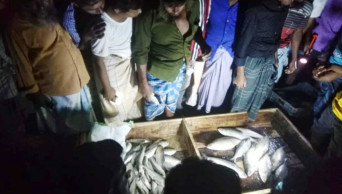
Hilsa fishing resumes after 22-day ban
The catching, selling, transportation and hoarding of Hilsa resumed on Thursday after a 22-day ban imposed by the government expired.
6 years ago