Bangladesh parliament
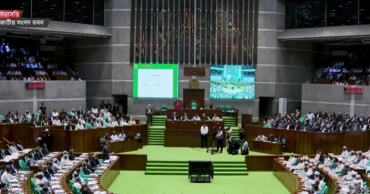
Japanese Agriculture Minister witnesses parliament session
Japanese Prime Minister’s special envoy and also Agriculture, Forestry and Fisheries Minister SUZUKI Norikazu witnessed the session of Jatiya Sangsad on Wednesday afternoon.
The House warmly welcomed the Japanese minister by thumping desks by the members of parliament (MPs) after Chief Whip Nurul Islam Moni announced the arrival of the Japanese Minister.
“We are delighted to announce with great pleasure that Japanese Prime Minister’s special envoy and also Agriculture, Forestry and Fisheries Minister SUZUKI Norikazu has arrived at Bangladesh Parliament,” said the Chief Whip.
He said the Japanese agriculture minister and his delegation are visiting the Parliament.
Bangladesh has shared a long friendly relationship with Japan since 1971, he added.
Following the announcement, the MPs welcomed the visiting minister and his delegation by thumping their desks.
Deputy Speaker Barrister Kayser Kamal was chairing the House during the visit at around 5:50pm.
5 months ago
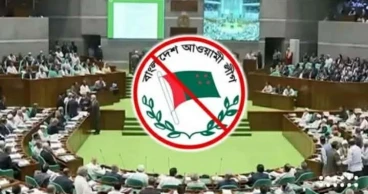
Anti-Terrorism amendment bill passed to curb ban groups’ activities, propaganda
Parliament on Wednesday passed the Anti-Terrorism (Amendment) Bill, 2026, aiming to modernise existing law by incorporating provisions to ban not only entities but also their activities and propaganda.
The bill was placed and moved by Home Minister Salahuddin Ahmed.
It sought to replace the Anti-Terrorism (Amendment) Ordinance, 2025, which was promulgated during the tenure of the interim government.
The proposed law introduces significant amendments to Sections 18 and 20 of the Anti-Terrorism Act, 2009, with the objective of expanding the government’s authority to curb not just the existence of an organisation but its entire operational and digital footprint.
Under the revised Section 18, the government will have explicit authority to prohibit all activities of an entity, in addition to declaring it banned and listing it in the official schedule.
The Anti-Terrorism Act, 2009 was enacted to prevent terrorist acts, ensure effective punishment, and address related matters.
It allowed the government, on reasonable grounds, to list individuals or entities involved in terrorism in the schedule through a Gazette notification.
However, the existing law does not explicitly provide for banning the activities of such entities.
The amendment aims to address this gap and make the law more effective and up to date.
One of the most stringent changes comes under Section 20 which introduces a comprehensive communication blackout for banned entities.
The new provisions include a ban on issuing press releases, publications, and printed materials on behalf of such entities.
It also prohibits all forms of propaganda through mass media, online platforms, and social media.
Besides, banned entities will not be allowed to organise rallies, meetings, assemblies, press conferences, or deliver public speeches.
The bill also includes a repeal and savings clause.
Once enacted, it will repeal the Anti-Terrorism (Amendment) Ordinance, 2025, while ensuring that all actions taken under the ordinance remain valid under the new law.
The bill was passed by voice vote.
6 months ago
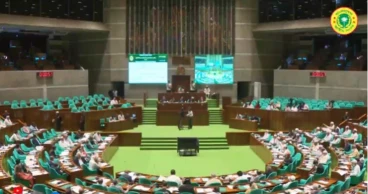
JS passes 14 bills to convert ordinances into formal law
Parliament on Tuesday passed 14 bills, including the Code of Criminal Procedure (Amendment) Bill, 2026 and the International Crimes (Tribunals) (Amendment) Bill, 2026 in a bid to endorse the relevant ordinances promulgated during the tenure of the interim government and turn them into law.
The ministers concerned placed the bills in the House and then the bills were piloted to votes. Members of Parliament passed the bills by voice votes.
The 12 other bills include Haor and Wetland Conservation Bill, 2026, Civil Courts (Amendment) Bill, 2026, Registration (Amendment) Bill, 2026, Bangabandhu Sheikh Mujib Medical University (Amendment) Bill, 2026, Sheikh Hasina Medical University (Amendment) Bill, 2026 and Bangamata Sheikh Fazilatunnesa Mujib Medical University, Sylhet (Amendment) Bill, 2026.
The remaining bills are Increase in Supply of Electricity and Energy (Special Provisions) (Repeal) Bill, 2026, Appreciation (Supplement) (Financial Year 2024-25) Bill, 2026, Appreciation (Financial Year 2025-26) Bill, 2026, Bangabandhu Poverty Alleviation and Rural Development Academy Bill, 2026, Sheikh Russell Rural Development Academy, Rangpur (Amendment) Bill, 2026, and Commercial Courts Bill, 2026.
Besides, two other bills were placed in the House. The bills are National Freedom Fighters Council (Amendment) (Repeal) Bill, 2026 and Smoking and Tobacco Products Use (Control) (Amendment) Bill, 2026.
Opposition plays ‘very cooperative role’ in Parliament: Speaker tells UNDP Resident Representative
Out of the 133 ordinances issued during the interim government, the parliamentary special committee recommended approval to 98 in their original form and 15 in amended form. It placed its report in the House on April 2.
The committee, however, did not recommend approval to around 20 ordinances, including the Anti-Corruption Commission Ordinance, National Human Rights Commission Ordinance, Police Commission Ordinance, Prevention and Remedies of Disappearances Ordinance and Referendum Ordinance.
Of these, four ordinances, including Supreme Court Judge Appointment Ordinance and Supreme Court Secretariat Ordinance, have been recommended to be allowed to lapse.
6 months ago
July Charter Implementation Order 'a document of infinite deception': Salahuddin
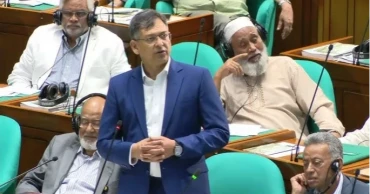
Home Minister Salahuddin Ahmed on Tuesday characterized the July National Charter (Constitution Reform) Implementation Order as an invalid legal document, labeling it a manifestation of "infinite deception" by the interim government.
“This order is a document of infinite deception by the interim government. I reiterate this again today,” he said, joining the two-hour discussion on a motion placed by the opposition leader in Parliament for summoning the session of the Constitution Reform Council.
Bangladesh Jamaat-e-Islami Ameer Dr Shafiqur Rahman placed adjournment motion in the House under the Section 62 of the Rules of Procedure, seeking the adjournment of the business of the House for the discussing summon of the session of the Constitution Reform Council as per the July National Charter (Constitution Reform) Implementation Order, 2025.
Speaker Hafiz Uddin Ahmad, Bir Bikram, moved the motion for two-hour discussion as the last agenda for Tuesday’s business in the House.
The Home Minister argued that the order holds no legal standing as it is categorized as neither a law nor an ordinance.
He, however, said they (the government) hold on to every single word of the July National Charter which was signed by the political parties as a historic document.
Salahuddin Ahmed pointed out the President had the jurisdiction to issue such orders only between March 1971 and April 1973, and that authority ceased following the formation of the first parliament in 1973.
He said 133 ordinances issued during the interim government have been introduced in parliament but the July Charter Implementation Order was not among them as it lacks legislative legitimacy.
He further questioned the President's authority to convene a session of the constitution reform council, citing the absence of constitutional provisions for such a body or its accompanying oath of office.
The Minister dismissed claims that the BNP opposes reform or the July Charter itself, asserting that the party upholds the spirit of the historic document.
“All the issues that were agreed upon in July National Charter 2025 with notes of dissent…. But where are the notes of dissent here (in the Order)?” he said.
"No order of the President can reduce the sovereignty of the parliament," Ahmed stated, citing Article 93 of the Constitution, which prohibits the President from issuing ordinances that change constitutional provisions.
Reaffirming the BNP's commitment to the July Charter, the Home Minister emphasized that the party intends to pursue democratic constitutional amendments through inclusive dialogue.
On behalf of the Leader of the House, he proposed the formation of a special parliamentary committee—including all represented parties and independent lawmakers—to draft a constitutional amendment bill based on broad consensus.
Later, Leader of the Opposition Dr Shafiqur Rahman suggested forming a parliamentary committee to take a decision on the implementation of the referendum results.
PM seeks steps to reduce school-time gridlock
“We want a solution. We want it on the basis of justice. After discussing this issue, if you think it is good, you can form a committee. However, we will call for the committee to be formed with an equal number of members from two sides,” he said.
He said if the committee is formed with majority from the ruling side, it will bring no good result. “We’ve raised our desire. Now the decision is yours,” he said.
Referring to the remark that the order is a document of endless fraud, he said the interim government and the President did this together on November 13, 2025 but the referendum was held on February 12, 2026. BNP officially congratulated the government for holding the parliamentary election and the referendum on the same day due to their demand. “So, the referendum was also their demand.”
"We will sincerely appeal to the government party - the people have accepted the referendum. If we also respect the people by accepting it, then this parliament will be respected. Let the public desire be reflected through this with our joint initiative,” said Dr Shafiqur Rahman.
Law Minister Md. Asaduzzaman said that all reform initiatives must be implemented within the framework of the Constitution, stressing that the constitution remains the supreme legal foundation of the state and parliament.
He said the July Charter is the central focus of current political discourse and that it represents the public mandate following the July 24 mass uprising. “The people have given us the mandate to conduct all activities under the constitution and bring necessary reforms through parliament,” he said.
The law minister explained that the July Charter outlines reform measures that must be adopted through parliamentary processes rather than through extra-constitutional means.
He emphasized that parliament is sovereign in law-making and cannot be compelled by unauthorized orders.
“The July Charter should guide reforms, but all actions must be taken through constitutional and parliamentary procedures,” he said, adding that national unity and democratic consensus are essential for sustainable constitutional reform.
Joining the discussion, BJP chairman Andaleeve Rahman (Partho) asked the NCP leaders not to turn into the Jamaat generation while representing Gen Z.
“You are our heroes. Those who fought (in the July uprising) are here (in Parliament). I would like to tell them that you represent Gen Z. You should not become Jamaat generation,” he said, pointing at the NCP leaders.
He said there is a tendency among some political actors to push them (BNP-led alliance) against the spirit of the July uprising for political advantage, which could harm national unity.
“We are seeing an attempt to push us against the spirit of July,” he said, adding that such “tagging politics” was also seen during the Awami League regime.
Questioning the formation of the Constitution Reform Council, the BJP chief said they wanted to remain within the constitutional process through which amendments are made.
He claimed that although around 70 percent of people voted “yes” in the referendum, 51 percent supported the BNP-led alliance (in the 13th parliamentary election) in favour of constitutional changes.
Focusing on the roles of different political parties and actors in the 2024 July movement, the BJP chief said, “You scored 12 runs from six balls. But we scored 300 runs before.”
Stressing the need for political unity over the spirit of July movement, he said, “We must respect the Constitution and at the same time we must respect the spirit of July.”
Earlier, NCP Member Secretary Akhter Hossen said BNP chairman Tarique Rahman on January 30 last had urged people to vote “yes” in the referendum during a pre-election rally in Rangpur, the birthplace of July martyred Abu Sayeed, but now BNP is showing reluctant to accept the referendum results.
“We want to ask the Prime Minister (Tarique Rahman) why you don't want to accept the verdict of the referendum after asking (the people) to vote 'yes' in the referendum," said the NCP leader.
Noting that the people had given their verdict in favour of implementing the July National Charter, he said terming the public verdict as unconstitutional is audacity and stigmatization of Parliament.
“Whether the Referendum Order is approved by Parliament or not, there is no chance of making the referendum illegal,” he said.
Besides, Jamaat lawmakers Md. Rafiqul Islam Khan (Sirajganj-4), Muhammad Nazibur Rahman (Pabna-1), Md Saiful Alam (Dhaka-12), Md. Shafiqul Islam (Patuakhali-2) and Md Nurul Islam (Chapainawabganj-3), and NCP lawmaker Md Abul Hasnat, who is widely known as Hasnat Abdullah (Cumilla-4), joined the discussion.
6 months ago

PM states Bangladesh’s anti-war position during meeting with Vice-President of European Parliament
Vice-President of the European Parliament Nicola Beer has met Bangladesh's Prime Minister Sheikh Hasina at her hotel suite in Brussels recently.
During the meeting, both sides underscored the urgency to end conflicts in Ukraine and Gaza.
Also read: PM Hasina highlights AL’s struggles to restore democracy in Bangladesh during discussion with European Commissioner Jutta Urpilainen
The Prime Minister stated Bangladesh’s position against wars anywhere in the world, highlighting that women and children suffer the most in wars and conflicts.
The European Parliament’s Vice-President underscored closer cooperation between the European Parliament and Bangladesh Parliament, said the Ministry of Foreign Affairs on Thursday (October 26, 2023).
Also read: Bangladesh can support EU’s efforts to diversify production of pharmaceuticals, vaccines: PM tells EIB President
Both sides also discussed women’s empowerment, particularly in politics, education and workforce.
2 years ago
Tk 2,000 min tax for TIN holders won't be imposed; Finance Bill 2023 passed in parliament
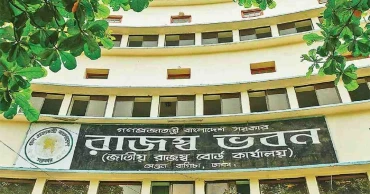
Finance Bill 2023 was passed on Sunday (June 25, 2023), dropping the much-debated proposed provision for Tk 2,000 for every TIN holder during submission of their income tax return.
Finance Minister AHM Mustafa Kamal moved the bill and it was passed by voice vote.
The finance minister accepted some other minor proposals on the finance bill in section 2 and 2-Ka.
The other amendment proposals were rejected by a voice vote.
Read more: Several reform initiatives on the cards as govt moves to shore up economy
The finance minister accepted an amendment scrapping specific duty on import of fuel oil by reinstating the previous tax on value as concerns grow over a significant hike in prices of petroleum products under the new tax measures.
The specific duty on oil imports came into effect on June 1, 2023, under the ‘Provisional Collection of Taxes Act 1931 (Act No. XVI of 1931) in the Finance Bill placed before parliament on that day.
Customs Duty, VAT and Advance Tax on the import of fuels have been reinstated in the Finance Act 2023, as those were scrapped in the bill.
The proposed value-added tax (VAT) on the manufacturing of ballpoint pens has been cut to 5 percent from 15 percent.
Read more: e-TIN: Online registration process in Bangladesh
In the Finance Bill on June 1, the finance minister proposed Tk 2,000 as minimum tax on those who have no taxable income but need to submit tax returns for availing government services.
3 years ago

Tk337.60 crore budget for FY2023-24 approved for placing in Parliament
The Parliament Secretariat Commission on Tuesday (May 30, 2023) approved a Tk337.60 crore budget for Bangladesh Parliament to spend on its development and non-development activities for 2023-24 fiscal year.
The approval was given at the 34th meeting of the Commission held at the Jatiya Sangsad Bhaban with Speaker Shirin Sharmin Chaudhury in the chair.
Read more: No new pay scale, govt employees to get 20% dearness allowance in new budget
The budget for the next fiscal year is 9.55 percent higher than the main revised budget of the current financial year, which was Tk 308.18 crore.
The meeting also projected Tk 361.23 crore for 2024-25 fiscal year while Tk 386.52 crore for 2025-26 fiscal year.
Prime Minister and Leader of the House Sheikh Hasina, Finance Minister AHM Mustafa Kamal, Opposition Leader Raushon Ershad, Law, Justice, Parliamentary Affairs Minister Anisul Huq and Chief Whip Noor-e-Alam Chowdhury attended the meeting on special invitation.
Read more: Budget FY23-24: Focus should be on tackling macroeconomic challenges, says Dr Atiur Rahman
Parliament Secretariat's Secretary KM Abdus Salam placed the agenda of the meeting.
3 years ago

Bangladesh parliament opens special session to mark Golden Jubilee
Bangladesh parliament on Thursday morning opened a special session to mark the 50th anniversary of the national legislature.
This is also the 22nd session of the 11th Jatiya Sangsad, the parliament.
With Speaker Shirin Sharmin Chaudhury in the chair, the session started at around 11:00 am.
President Abdul Hamid is scheduled to deliver a memorial speech in the parliament on Friday where he is expeted to highlight the country’s achievement and the role of parliament.
Also read: 5-member panel of chairmen nominated by Speaker for 22nd session of 11th Parliament
A resolution on the President’s speech will be adopted in the Jatiya Sangsad following discussion by lawmakers, the speaker said in her introductory speech.
She referred to the start of the journey of Bangladesh Jatiya Sangsad on April 7, 1973 as a momentous day.
“In continuation of this, we are going to celebrate the Golden Jubilee of parliament in 2023. That is why April 7 is an important day for Parliament,” she added.
Earlier on March 21, President Abdul Hamid convened the 22nd session. Before the House convened, the Business Advisory Committee of parliament held a meeting with the speaker in the chair and fixed the duration and businesses of the session.
3 years ago

Bangladesh Parliament passes local govt amendment bill
National Parliament on Thursday passed the Local Government (Amendment) Bill, 2022, aiming to strictly follow the system of holding pourosova polls every five years.
Local Government Minister Tajul Islam placed the Bill in Parliament and it was passed with a voice vote. The bill will become law only after it gets a presidential assent.
Read:JS passes bill to make Bangladesh museums more dynamic
And once the President signs the bill into law, all pouroshova chairmen will be barred from staying in office for more than five years.
The bill comes as a major blow to those who resort to different tactics to stay on as pourosova chairmen for years -- some seek legal recourse at the end of their tenure to halt the holding of the next election. This way, few chairmen have stayed in office for more than five years, up to even 15 years.
Once the amendments come into effect, the Act will empower the government to appoint an administrator after the term of a local government body expires. And the administrator will be able to remain in the post for a maximum of six months and hold elections by that time.
The Bill also intends to change the designation of the pourosova member to pouro executive officer.
Read: Bill placed in JS to bring discipline in private medical, dental colleges
Furthermore, a clause in the Bill says that if any pourosova fails to pay the salaries and other wages of its officers and employees for 12 months, then the government may abolish its status.
As per the Bill, a pourosova can be established if the number of inhabitants every square kilometre is 2,000, from the earlier figure of 1,500.
4 years ago
.jpg)
Speaker off to Rome to join pre-COP26 conference
Speaker Dr Shirin Sharmin Chaudhury left Dhaka for Rome on Thursday to participate in the pre-COP26 parliamentary conference.
The Speaker will lead a delegation of Bangladesh Parliament in the two-day conference scheduled to begin in Rome on Friday.
The other delegation members are Whip Iqbalur Rahim, MP, Chairman of the Parliamentary Standing Committee on the Ministry of Food, Dipankar Talukder MP, Jafar Alam, MP and Secretary of the Jatiya Sangsad Secretariat KM Abdus Salam.
Read: Hasina’s climate leadership lauded at CVF-COP26 dialogue
After wrapping up her visit to Rome, the Speaker will join the 3rd Eurasian Women's Forum at Saint Petersburg in Russia on October 13-15.
Whip Iqbalur Rahim, MP, Adiba Anjum Mita, MP, and Khodeza Nasrin Akhter Hossen, MP will also participate in the forum.
Read: Dhaka, London discuss shared priorities ahead of COP26
The Speaker is expected to return home on October 17, said a handout.
5 years ago