satellites
Vietnam's VinSpace signs deal with SpaceX to launch first satellites in 2027
Vietnamese aerospace company VinSpace has signed an agreement with SpaceX to launch its first satellites into orbit in 2027, as Vietnam steps up efforts to develop its emerging space industry.
VinSpace said Tuesday that its satellites will be sent into space on a SpaceX Transporter rideshare mission. The service allows satellites from multiple customers to share a single rocket, reducing launch costs.
The company said it will develop and operate the satellites, which will be used to test its technology in orbit and support future commercial applications.
VinSpace is part of Vietnam's Vingroup conglomerate and was established in November 2025. It announced in April that it planned to develop and launch its first satellites in 2027.
Founded by billionaire Pham Nhat Vuong, Vingroup is Vietnam's largest privately owned company, with businesses ranging from real estate and retail to healthcare, education and tourism.
The conglomerate is expanding into high-tech industries, including electric vehicles, space, artificial intelligence and robotics, as Vietnam seeks to strengthen its economy and become one of Asia's emerging economic powers.
Vietnam has been working to develop its space capabilities for decades but remains a relatively small player in the global space sector. The country launched its first telecommunications satellite in 2008 and a second one in 2012, according to official documents.
In March, Vietnam opened a major space science and technology centre at the Hoa Lac High-Tech Park in Hanoi. The facility is intended to boost satellite development and the use of space-based data. Vietnam aims to become a mid-level space power in Southeast Asia by 2030.
In February, Vietnam approved SpaceX's Starlink satellite internet service in the country. Some analysts viewed the move as part of Vietnam's efforts to avoid US tariffs. Starlink has since started accepting orders in Vietnam.
VinSpace said the SpaceX agreement is part of its plan to become a full-service aerospace company, with capabilities covering satellite design and manufacturing, launch management, satellite operations and space-based data services.
“Reliable access to space is fundamental to turning satellite innovation into operational missions,” VinSpace CEO Thu Vu said in a statement.
VinSpace did not disclose the value of the contract or the number and specifications of the satellites.
1 month ago
Private mission launches to extend life of aging communication satellites
A private space mission was launched Tuesday to help extend the working life of aging communication satellites by attaching small propulsion units to spacecraft that are running low on fuel.
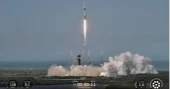
The mission, launched aboard a SpaceX rocket, is part of a growing effort to reduce costs by keeping satellites operating for longer instead of replacing them.
Northrop Grumman's Mission Robotic Vehicle (MRV), equipped with two robotic arms, will spend about a year travelling to geosynchronous orbit, around 36,000 kilometres above Earth. Satellites in this orbit move at the same speed as Earth's rotation, allowing them to remain fixed over the same location and provide continuous communications coverage.
By mid-2027, the robot is expected to attach a jet-powered propulsion unit to an aging communications satellite before moving on to service two more satellites.
The mission also carried three electric-powered propulsion units, each about the size of a washing machine. After separating from the launch vehicle, they will travel independently to the target orbit using xenon-powered thrusters. Once there, the robotic spacecraft will collect and install them on selected satellites.
These propulsion units are designed to give fuel-depleted satellites enough power to continue operating for several more years, potentially saving satellite operators millions of dollars by delaying the need for costly replacements.
The first customers for the service are Luxembourg-based satellite operator SES and Australia's Optus.
This is Northrop Grumman's latest satellite-servicing mission. In 2019 and 2020, the company successfully launched two servicing spacecraft that docked with aging communications satellites and extended their operational lives.
The company plans to expand the technology in the future so robotic spacecraft can repair, reposition and even remove inactive satellites from crowded orbital paths. The project is being developed in partnership with the US Naval Research Laboratory and the Defense Advanced Research Projects Agency (DARPA).
Meanwhile, another private company, Katalyst Space Technologies, is continuing to test its Link servicing spacecraft before attempting to raise NASA's Swift Observatory into a higher orbit.
Engineers have resolved early communication and navigation issues by sending software updates to the spacecraft.
Launched in 2004, NASA's Swift space telescope has been losing altitude faster than expected because of increased solar activity. If the planned orbit-raising mission succeeds in the coming weeks, the nearly $400 million observatory could continue studying powerful cosmic explosions for several more years.
NASA is paying Katalyst Space Technologies $30 million for the mission to return Swift to its original orbit of about 600 kilometres above Earth. Link was launched earlier this month aboard a Pegasus rocket provided by Northrop Grumman.
2 months ago

Zimbabwe, Uganda launch first satellites
Zimbabwe and Uganda recently launched their first homegrown satellites – a "milestone" for the efforts in space activities for the countries.
Zimbabwe's ZimSat-1 and Uganda's PearlAfricaSat-1 are part of the BIRDS-5 constellation, which is now on its way to the International Space Station, according to the United Nations Platform for Space-based Information for Disaster Management and Emergency Response (UN-SPIDER).
The satellites, launched into space Monday, are scheduled to be released from the Japanese Kibo module on November 21 this year, UN-SPIDER added.
Read more: Bangabandhu satellite-1 to be used to restore telecommunication in flood-hit areasOnce in orbit, the two satellites will collect images to help Zimbabwe and Uganda with mineral exploration, monitoring of environmental hazards and droughts, human settlement and disease outbreak mapping, and other potential fields of applications.
A project run by Japan's Graduate School of Engineering at the Kyushu Institute of Technology, BIRDS-5 is a constellation of CubeSats.
3 years ago

China launches 16 new satellites
China on Wednesday sent 16 new satellites into space from the Taiyuan Satellite Launch Center in the northern province of Shanxi.
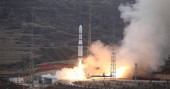
The satellites, including a Jilin-1 Gaofen 03D09 satellite and Yunyao-1 04-08 satellites, were launched by a Long March-6 carrier rocket at 12:50 p.m. Beijing Time and entered the planned orbit successfully.
Read: China reaffirms threat of military force to annex Taiwan
The new batch of satellites is mainly used in the fields such as commercial remote sensing and atmospheric imaging.
This launch marked the 432nd mission for the Long March series carrier rockets.
4 years ago

India successfully launches 10 satellites
Indian on Saturday evening successfully launched into space as many as 10 satellites in one go, including its latest earth observation satellite (EOS-01) and nine more satellites from foreign nations, the first such mission during the Covid pandemic.
5 years ago
Second satellite to be a hybrid, cost less: Shahjahan Mahmood
Chairman of Bangladesh Communication Satellite Company Limited (BCSCL) Dr Shahjahan Mahmood on Thursday said that a consultant will be appointed within the next 3-4 weeks for launching the country’s second satellite, following in the footsteps of Bangabandhu -1.
6 years ago
China sends five satellites into orbit via single rocket
Five new remote-sensing satellites were sent into planned orbit from the Taiyuan Satellite Launch Center in north China's Shanxi Province Wednesday.
6 years ago