Bangladesh-China cooperation
Teesta Project: Beijing says its cooperation with Dhaka should be free from 3rd party influence
Reiterating its support for the Teesta River Comprehensive Management and Restoration Project (TRCMRP), China on Friday said cooperation between Bangladesh and China should be free from third party influence.
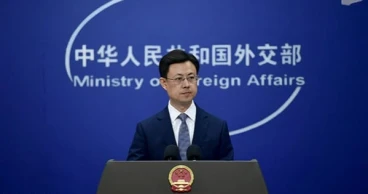
"I would like to stress that China-Bangladesh cooperation does not target any third party and should be free from third party influence," Chinese Foreign Ministry Spokesperson Guo Jiakun told reporters in Beijing while responding to a question.
The spokesperson stated China's position after a reporter flagged India's concerns over the Teesta cooperation between Bangladesh and China.
"The comprehensive treatment and restoration of the Teesta River is a livelihood project to which the Bangladeshi side attaches high importance. China is ready to do what it can to support this project," said Guo Jiakun.
Seeking deeper cooperation with Bangladesh in integrated water resources management, China has decided to provide support within its capacity to the TRCMRP.
The Chinese side will also support experts from both countries in expediting the feasibility study of the project and related work, according to a joint statement shared by the Ministry of Foreign Affairs on Friday.
The two sides agreed to deepen cooperation in areas such as integrated water resources management, water resources planning, hydrological forecasting, flood prevention and disaster reduction, river dredging, and related technology sharing.
They also agreed to strengthen cooperation in maritime affairs.
Guo Jiakun said Bangladesh Prime Minister Tarique Rahman paid an official visit to China and attended the 17th Summer Davos.
During his visit, Chinese President Xi Jinping, Premier Li Qiang, and Chairman of the NPC Standing Committee Zhao Leji respectively met with and held talks with him, exchanging in-depth views on bilateral relations as well as international and regional issues of mutual interest.
Broad-based common understandings and a series of practical cooperation outcomes were achieved, forming a new strategic blueprint for the development of China-Bangladesh relations, the Chinese Foreign Ministry spokesperson said.
The visit, he said, can be defined by three highlights:
First, rendering steadfast mutual support to each other. Leaders of the two countries agreed to build a China-Bangladesh community with a shared future in the new era.
The two sides will firmly support each other in safeguarding their core interests, step up exchanges on governance experience, deepen strategic communication, and enhance political mutual trust.
China supports the new government of Bangladesh in its governance. The Bangladeshi side reiterated its firm commitment to the one-China principle.
Second, deepening mutually beneficial cooperation. The two sides agreed to advance high-quality Belt and Road cooperation, further align their development strategies, steadily promote the implementation of major landmark projects, including ports and water conservancy, enhance cooperation in trade, industrial and supply chains, and finance, expand cooperation in emerging areas such as new energy, the digital economy, AI, and information and communications technology, and strengthen regional connectivity.
The two sides signed multiple cooperation documents.
Third, upholding international fairness and justice. The two sides will enhance communication and coordination within the UN and other multilateral frameworks, promote an equal and orderly multipolar world and a universally beneficial and inclusive economic globalization, and jointly uphold the outcomes of World War II as well as the UN-centered international system.
Through the visit, the spokesperson said, China stands ready to work with Bangladesh to further deepen strategic communication and political mutual trust, better align development strategies, expand result-oriented cooperation, promote closer people-to-people and cultural exchanges, strengthen multilateral coordination, and ensure that the fruits of China-Bangladesh relations bring greater benefits to the two countries and their peoples.
Prime Minister Tarique Rahman returned home from Beijing on Friday, wrapping up his first overseas trip to Malaysia and China.
3 months ago

Learning Bangla in China's Yunnan: Enhanced commercial ties drive growing interest
Five Chinese universities in Yunnan province have been teaching Bangla language and cultures to students that play a big role in promoting trade and business ties between China and Bangladesh.
According to teachers at the Chinese universities, interest in learning Bangla language is growing day-by-day among students, and Chinese people in general.
“Our students are really enjoying the Bangla language learning. We want more cooperation between Bangladesh and China in this academic field” said Prof Hu Jinming, vice president of Yunnan University, while meeting a group of Bangladeshi journalists who recently visited the university.
Prof Hu, who has visited Bangladesh a number of times to enhance cooperation between the University of Dhaka and Yunnan University, informed that he is now working to establish cooperation with other public and private universities in Bangladesh.
Read: Japan provides 500 million yen for 4th Primary Education Development Programme
He believes learning Bangla by Chinese students will enhance communications between the two nations and understand each other’s' culture.
Besides Yunnan University, the remaining other four universities in the province are Communication University, Peking University, Minzu University and Kunming University.
In addition, the teachers said, there are three universities in Wuhan, the capital of Hubei Province, that also teach Bangla language and culture.
Subarna Aktar, a Bangladeshi citizen who teaches Bangla in the School of Foreign Languages of Yunnan University, said many Chinese students are getting interested to learn Bangla because of the expanding trade relations between the two countries.
Read: Inadequate education budget hinders growth, students say; demand increase
Echoing Subarna, Mishkat Sharif, another Bangladeshi teacher at the Bangla Department in Minzu University, said those who learn the language have better job opportunities with different companies who have been doing businesses in Bangladesh.
"Some Chinese students after passing out of university are even setting up their own businesses and doing business with Bangladesh. It gives them an extra advantage to understand their customers' needs," Sharif added.
China has emerged as Bangladesh's biggest trade partner in recent years, with bilateral trade topping $27 billion in 2022, according to the United Nations COMTRADE database on international trade. Of that total, China's exports exceeded $26 billion, while Bangladesh's exports to China amount to less than $1 billion.
According to the teachers, Bangla Departments at the Chinese universities allow an intake of 20-25 students every other year to learn Bangla language and culture.
Read more: Budget 2023-24: Govt allocates Tk88,162 crore in education sector, up 8.2%
On the other hand, many Bangladeshi students are increasingly attending Chinese universities, especially in Yunnan, to study different subjects.
Currently, there are 121 Bangladeshi students studying at Yunnan University, Ahmed Moin Uddin, a graduate of the School of International Chinese Language Education, told UNB. In the last 10 years, more than 1000 Bangladesh students graduated from Yunnan University, he added.
3 years ago
.jpg)
Ready to bring China-Bangladesh ties to new heights: Xi Jinping
Chinese President Xi Jinping said on Sunday that he stands ready to work with his Bangladeshi counterpart, Md Abdul Hamid, to better align the two countries' strategies and jointly promote the construction of the Belt and Road, so as to take the China-Bangladesh strategic partnership of cooperation to new heights.
6 years ago