Bangladesh’s Agriculture
GK project redesigns pumping system to cope with falling Padma water levels
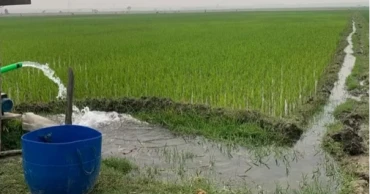
Bangladesh’s largest surface irrigation scheme, the Ganges-Kobadak (GK) Irrigation Project, has undertaken a major redesign of its pumping system to enable water withdrawal from the Padma River at lower water levels, amid concerns over dry-season flow reductions linked to upstream diversion.
Under the redesign, the project aims to reduce the minimum water level required at its intake channel from 3.9 metres to 2.5 metres, allowing pumps to remain operational even when river levels fall significantly during the lean season, Executive Engineer of the GK Project Pump House Mizanur Rahman told UNB.
The GK Project, which has a command area of 197,500 hectares and an irrigable area of about 95,500 hectares, was launched in 1962 and remains one of Bangladesh’s most important irrigation infrastructures supporting agricultural production in the southwest region.
Its coverage however over the years came down to 55,000 hectares as some pumps and canals became inoperable.
Dengue rings alarm amid measles crisis: Is Bangladesh prepared for another health emergency?
According to project officials, the pumping station faces operational disruptions whenever the water level in the Padma River falls below 4.5 metres.
The situation worsened after the commissioning of India’s Farakka Barrage in West Bengal in 1975, which significantly altered dry-season water flows in the river system.
Mizanur Rahman said the consequences became particularly evident in 2024 when irrigation activities under the project came to a complete halt because the pumping station could not lift water after the water level in the Padma River near Hardinge Bridge dropped below four metres.
“The pumps were unable to operate, leaving the project area without irrigation support,” he said.
The redesign project is scheduled for completion in 2029 at an estimated cost of Tk 1,200 crore.
The initiative is expected to enhance the project’s resilience to seasonal water shortages by enabling water extraction at lower river stages.
However, he cautioned that engineering solutions alone may not be sufficient if the flow of the river doesn't remain steady.
“Even if we succeed in lowering the minimum operating level by around 1.5 metres, the benefit could be limited if adequate water does not continue to flow from upstream,” he said.
Revenue shortfall, banking crisis to overshadow FY27 budget funding, creating big challenges: Experts
The GK Project occupies a unique place in Bangladesh’s agricultural history. Initial surveys for the scheme were conducted in 1951 and implementation began in the mid-1950s.
3 months ago

IFAD to provide US$18.07mn to Bangladesh for COVID-19 recovery activities
The International Fund for Agricultural Development (IFAD) will provide Bangladesh with an additional loan of US$ 18.07 million to rebuild microenterprises and support smallholders, who have been affected adversely by the COVID-19 pandemic.
5 years ago