Russian foreign minister
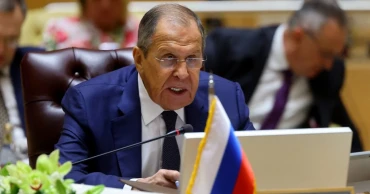
Russian FM Sergey Lavrov to speak at country’s top Foreign Policy Forum next week
Sergey Lavrov, Minister of Foreign Affairs of the Russian Federation, will take part in country’s premier global politics and the world economy international forum "Primakov Readings" themed “A World Without Rules: A Power Game?” on June 24.
This was announced by the Russian foreign ministry spokeswoman Maria Zakharova at a press briefing on Thursday.
"Everyone sees how a group of countries that have imagined themselves to be the arbiters of the fate of all mankind, with passion and perseverance worthy of better cause, is literally trying to dawn the system of written and unwritten international norms and rules built over the past decade," Maria Zakharova said.
The Russian foreign ministry spokeswoman also noted: "What is the current phase of this process, what the actions of the West lead to, and what the constructive agenda of the global majority can be – all these questions will be deal with by the participants of the Forum."
The 12th International Scientific and Expert Forum "Primakov Readings" will take place in Moscow on June 23-24 at the Radisson Blu Leninsky Prospect Hotel.
The event will bring together around 50 experts from 20 countries, including China, Iran, India, Turkey, Qatar, the USA, the United Kingdom, Switzerland, South Korea, and the CIS countries. In total, more than 400 representatives of Russian and foreign scientific and expert community, government agencies, political and business circles are expected to participate in the forum.
A number of high-ranking officials will take part in the event, including Aide to the Russian president Yuri Ushakov, Deputy Speaker of the Federation Council Konstantin Kosachev, Deputy Head of the Presidential Administration of Russia, Press Secretary of the President Dmitry Peskov, and leading Russian and foreign experts in the fields of international security, world politics and global economy.
The program of the two-day event includes discussions on the consequences of regional conflicts, the situation in the Middle East, global order scenarios, and barriers to global trade and investment.
Experts will cover issues of Eurasian security in light of Russia’s CSTO chairmanship and competition in the sphere of artificial intelligence.
The program of the Forum is centered around the discussion of the consequences of the New START Treaty termination, the risks of a further weakening of arms control, the impact of emerging military technologies on strategic stability, and the prospects for preventing conflict escalation in the context of an accelerating arms race.
The organizers of the annual event are the Primakov National Research Institute of World Economy and International Relations of the Russian Academy of Sciences (IMEMO) and the Evgeny Primakov Center for International Cooperation.
This year edition of the Forum is coinciding with the 70th anniversary of IMEMO.The Primakov Readings — an International Scientific and Expert Forum — is an annual gathering of leading experts in the field of international relations and world economy.
First held in 2015, it was named after the renowned scholar and statesman Evgeny Maksimovich Primakov.
Since its establishment, the Forum has gained recognition as a respected international platform where experts discuss the scenarios of international relations development, challenges in international security, and new models of interaction among global political actors.
At the Forum, leading scientists, politicians and diplomats from around the world engage in an open dialogue about global and regional challenges and threats.
Since its founding, the event has attracted many prominent scientists and experts from major international research centers and think tanks, political and public figures.The International Scientific and Expert Forum Primakov Readings opens on June 23, 2026, at 10:00.
Addressing the participants will be Yuri Ushakov, Aide to the President of Russia; Konstantin Kosachev, Deputy Speaker of the Federation Council, and Alexander Dynkin, President of IMEMO, Academician.
4 months ago
Russian FM Lavrov’s changed decision on Dhaka visit understandable: Momen
Foreign Minister AK Abdul Momen on Sunday (November 20, 2022) said the increased activities of Russia due to the situation in Ukraine might be the reason behind the revised decision taken by Russian Foreign Minister Sergei Lavrov, regarding his planned visit to Bangladesh.
"I can understand it. They are very busy. Their activities due to the war have increased to a large extent. Maybe for that reason he is unable to come," Momen told reporters after attending a programme in a Dhaka hotel.
The foreign minister said the Russian side in a diplomatic communication with the Ministry of Foreign Affairs conveyed that the Russian foreign minister is unable to come.
"He (Lavrov) wants to speak with me over the phone. And I agreed," Momen said, adding that the telephone conversation will be done at a mutually convenient time.
Read more: Russian Ambassador instead of FM to represent the country in IORA meeting
Earlier today, State Minister for Foreign Affairs Md Shahriar Alam told UNB that the two foreign ministers are likely to have a telephone conversation tomorrow or the day after.
Responding to a question, Momen said Bangladesh's position on Russia-Ukraine war is "very exposed" (very clear) and Bangladesh has been maintaining an independent and balanced decision.
"It is a consistent approach. We have maintained a balanced and consistent foreign policy," he said.
Russian Ambassador in Dhaka Alexander Mantytskiy instead of Russian Foreign Minister Sergei Lavrov will represent his country at the IORA meeting, scheduled for November 24.
Read more: Russia denies FM Lavrov was hospitalised, calling it “highest level of fakes”
The Russian Foreign Minister was scheduled to visit Bangladesh on November 23, mainly to attend the 22nd IORA Council of Ministers meeting, to be held in Dhaka on November 24.
Russia is a dialogue partner of the Indian Ocean Rim Association (IORA) while Bangladesh is the current chair of IORA.
Momen met his Russian counterpart last month in Astana, Kazakhstan on the sidelines of the CICA Summit.
Bangladesh to Host IORA Council Meeting
The IORA Council of Ministers meeting, to be hosted by Bangladesh, will be preceded by the 24th meeting of the Committee of Senior Officials, to be held on November 22-23.
Read more: Russian FM Lavrov’s Visit: Dhaka to focus on energy cooperation, Rohingya issue
The Indian Ocean Rim Association (IORA) is an inter-governmental organisation aimed at strengthening regional cooperation and sustainable development within the Indian Ocean region through its 23 member states and 10 dialogue partners.
IORA member states are Australia, Bangladesh, Union of Comoros, France, India, Indonesia, Iran, Kenya, Republic of Madagascar, Malaysia, Maldives, Mauritius, Mozambique, Oman, Seychelles, Singapore, Somalia, South Africa, Sri Lanka, Tanzania, Thailand, United Arab Emirates and Yemen.
The 23 member states of IORA and 10 dialogue partners are expected to join the ministerial and senior official meetings.
Bangladesh assumed the position of the IORA Chair at the 21st IORA COM meeting in Dhaka held on November 17, 2021 and adopted the theme of “Harnessing the opportunities of the Indian Ocean sustainably for inclusive development.”
Read More: Russia-Ukraine grain deal extended in win for food prices
3 years ago

Russia to expel 10 US diplomats in response to Washington
Russia on Friday responded in kind to a barrage of new U.S. sanctions, saying it would expel 10 U.S. diplomats and take other retaliatory moves in a tense showdown with Washington.
Russian Foreign Minister Sergey Lavrov also said Moscow will add eight U.S. officials to its sanctions list and move to restrict and stop the activities of U.S. nongovernment organizations from interfering in Russia’s politics.
He said the Kremlin suggested that U.S. Ambassador John Sullivan follow the example of his Russian counterpart and head home for consultations. Russia will also move to deny the U.S. Embassy the possibility to hire personnel from Russia and third countries as support staff.
The moves follow the sanctions on Russia announced this week by the Biden administration.
While the U.S. wields the power to cripple the Russian economy, Moscow lacks levers to respond in kind, although it potentially could hurt American interests in many other ways around the globe.
Lavrov noted that while Russia could take “painful measures” against American business interests in Russia, it wouldn’t immediately move to do that
Russia has denied interfering in the 2020 U.S. presidential election and involvement in the SolarWind hack of federal agencies — the activities punished by the latest U.S. sanctions. The Russian Foreign Ministry warned of an “inevitable” retaliation, charging that “Washington should realize that it will have to pay a price for the degradation of bilateral ties.”
The U.S. on Thursday ordered 10 Russian diplomats expelled, targeted dozens of companies and people, and imposed new curbs on Russia’s ability to borrow money. Pundits had predicted that while Moscow would respond in kind to the expulsions, it would refrain from any other significant moves to avoid a further escalation.
Russia’s economic potential and its global reach are limited compared with the Soviet Union that competed with the U.S for international influence during the Cold War. Still, Russia’s nuclear arsenal and its leverage in many parts of the world make it a power that Washington needs to reckon with.
Aware of that, President Joe Biden called for de-escalating tensions and held the door open for cooperation with Russia in certain areas. Biden said he told Putin in Tuesday’s call that he chose not to impose tougher sanctions for now and proposed to meet in a third country in the summer.
Lavrov said the summit offer was being analyzed.
Also read: Sanctioned Russian IT firm was partner with Microsoft, IBM
While the new U.S. sanctions further limited Russia’s ability to borrow money by banning U.S. financial institutions from buying Russian government bonds directly from state institutions, they didn’t target the secondary market.
“It’s very important that there’re no sanctions on secondary debt because that means that non-U.S. persons can buy the debt and sell it to the U.S. persons,” said Tom Adshead, director of research at Macro-Advisory Ltd, an analytics and advisory company.
Tougher restrictions would also hurt Western businesses, inflict significant economic pain on the Russian population and allow Putin to rally anti-U.S. sentiments to shore up his rule.
Ramping up sanctions could eventually drive Russia into a corner and provoke even more reckless Kremlin action, such as a potential escalation in Ukraine, which has recently faced a surge in clashes with Russia-backed separatists in the east and a massive Russian troops buildup across the border.
Ukrainian President Volodymyr Zelenskyy was in Paris on Friday to discuss the tensions with French President Emmanuel Macron. German Chancellor Angela Merkel was to join them in a call later.
Fyodor Lukyanov, a top foreign policy expert who leads the Moscow-based Council for Foreign and Defense Policies, predicted Putin would likely accept Biden’s invitation to join next week’s call on climate change but could drag his feet on accepting the summit offer.
“There is no way to make any deals,” Lukyanov said. “There is a mutual antipathy and a total lack of trust.”
He charged that the only practical outcome of the summit could be an agreement to launch long and difficult talks on a replacement to the New START nuclear reduction agreement that Russia and the U.S. extended in February for another five years.
Lukyanov noted that the growing U.S. pressure will push Russia and China closer together in the long run.
Also read: Months after hack, US poised to announce sanctions on Russia
“Closer cooperation with China on coordinating actions to contain the United States will develop more quickly now as the Chinese are interested in that,” he said. While Russia lacks tools for a symmetrical answer to the U.S. sanctions, “it has ample capabilities to stimulate changes in the world order,” he added.
Konstantin Kosachev, the Kremlin-connected deputy speaker of the upper house of parliament, said that by hitting Russia with sanctions and proposing a summit at the same time, the U.S. sought to take a commanding stance.
“Russia’s consent would be interpreted as a reflection of its desire to soften the sanctions, allowing the U.S. to secure a dominant position at the meeting, while our refusal to meet would be a convenient pretext for more punitive measures,” Kosachev wrote on Facebook.
He argued that Russia should not rush to accept Biden’s summit offer.
“Revenge is a dish best served cold,” Kosachev wrote. “I believe the saying is quite adaptable to a situation when we talk not about revenge but a due answer to aggressive action by an opponent.”
Some predicted the U.S. sanctions could discourage Russia from cooperating with the U.S. on international crises.
“The Russian position will grow tougher on Syria, the Iranian nuclear deal and other issues,” Ivan Timofeev, program director at Russian International Affairs Council, said in a commentary. Instead of acting as a deterrent, he warned, the sanctions would “only anger Russia and make its policy even tougher.”
However, any attempt by Russia to undermine American interests would dangerously escalate tensions with the U.S. and trigger even harder sanctions — something the Kremlin certainly wants to avoid.
Despite the soaring tensions, Russia and the U.S. have shared interests in many global hot spots. For example, Moscow fears that instability could spread from Afghanistan to former Soviet republics in Central Asia, and it is interested in a political settlement there.
As for Iran, Moscow also doesn’t want to see it with nuclear weapons, despite its friendly ties with Tehran.
Lukyanov said that Russia wouldn’t try to use global hot spots to hurt the U.S. and would wait patiently to see them erode U.S. domination.
“It’s not a matter of playing the spoiler here or there,” he said. “The ongoing developments will help accelerate the process of consolidation of leading powers against the U.S. domination.”
5 years ago
Russian foreign minister visits Venezuela, bolstering Maduro
Russia's foreign minister visited Venezuela on Friday in a show of support for President Nicolás Maduro as U.S. vows of more pressure threaten to cut off the socialist leader from a key financial ally in Moscow.
6 years ago
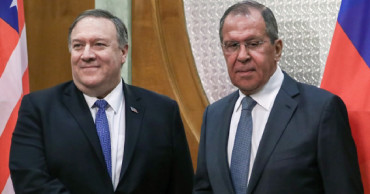
Russian foreign minister to meet with Pompeo in DC next week
Russia's foreign minister will visit Washington next week for talks with Secretary of State Mike Pompeo, U.S. officials said Friday.
6 years ago