Israeli parliament
Israeli parliament approves special court to try Oct. 7 attackers, with death penalty option
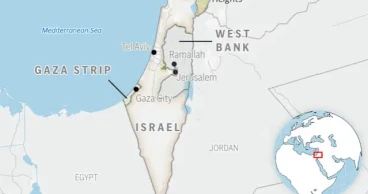
Israel’s parliament on Monday approved a bill to establish a special tribunal to try Palestinians accused of taking part in the Hamas-led attack on October 7, 2023, with the court empowered to impose the death penalty.
The bill passed by a vote of 93-0 in the 120-member Knesset, reflecting broad support among lawmakers for punishing those found responsible for the deadliest attack in Israel’s history. Twenty-seven lawmakers were absent or did not vote.
The proposed tribunal would allow a panel of judges to hand down death sentences by a majority decision. Convicted defendants would be able to appeal, but only through a separate special appeals court rather than Israel’s regular judicial system.
The bill also requires the trials to be broadcast live from a courtroom in Jerusalem, drawing comparisons to the 1962 trial of Nazi war criminal Adolf Eichmann, which was televised nationwide.
Eichmann was hanged after his conviction, the last time Israel carried out an execution. Capital punishment remains legal in Israel for genocide, wartime espionage and some terrorism-related crimes, but is rarely used.
Human rights groups criticised the bill, saying it weakens protections for fair trials and makes it easier to impose the death penalty.
Several Israeli rights organisations, including Adalah and the Public Committee Against Torture in Israel, said justice for the victims of October 7 is necessary, but warned that accountability must follow accepted legal standards.
Critics also said broadcasting the trials before guilt is established could turn them into a public spectacle. They raised concerns that some evidence may have been obtained through harsh interrogation methods.
The legislation is separate from another law passed in March allowing the death penalty for Palestinians convicted of killing Israelis. That law applies only to future cases and cannot be used for suspects linked to the October 2023 attack.
The war began when Hamas-led fighters entered southern Israel on October 7, 2023, killing about 1,200 people and taking 251 others hostage.
According to Gaza’s Health Ministry, more than 72,000 Palestinians have been killed in Israel’s military campaign in Gaza. The ministry does not distinguish between civilians and fighters, but says many of the dead are women and children.
Israeli authorities have detained thousands of Palestinians from Gaza since the war began. The Public Committee Against Torture in Israel says around 1,300 Gazans are still being held without charge, excluding those accused of involvement in the October 7 attack or hostage-taking.
4 months ago

Israeli parliament sanctions critic of PM Bennett, his party
An Israeli parliamentary committee has sanctioned a breakaway member of Prime Minister Naftali Bennett's party, handing a small political victory to the Israeli leader as he seeks to stabilize his fragile government and deter any other rebel lawmakers.
The Knesset committee voted 7-0 on Monday to declare Amichai Chikli a “defector,” a status that bars him from joining a rival party in the current parliament in the country's next election. Bennett had requested the vote.
Also read: Israel to reopen main crossing point with Gaza to boost economy
Chikli broke away from Bennett's Yamina party when the coalition was formed last year, accusing Bennett of betraying the party's hard-line ideology. He has been seen as a potential candidate for the opposition Likud party in the future.
Monday's vote by the House Committee bars Chikli from joining Likud or any other party in parliament when the country next heads to elections. He also is barred from serving as a Cabinet minister or deputy minister in the current parliament. Chikli vowed to challenge the decision in court.
Bennett's move was seen as a warning to Idit Silman, who resigned from Bennett's small Yamina party earlier this month and is also seen as a potential member of Likud in the future.
Other members of Yamina also have expressed misgivings over the coalition, a patchwork of eight parties spanning the political spectrum. The agreement has forced all parties, including Yamina, a hard-line nationalist party, to compromise on some of their core ideological positions.
Silman's exit deprived the coalition of its ruling majority, less than a year after it was sworn in.
The eight-party alliance, made up of ultranationalists, dovish parties and a small Islamist faction, is now deadlocked with the opposition with 60 seats each in the 120-member Knesset. That has greatly complicated the government's ability to pass legislation and raised the risk of plunging the country into snap elections.
Labor Party leader Merav Michaeli, Israel's transportation minister, said Monday that all party chiefs are working together to keep the government intact.
Also read: Israeli FM accuses Hamas of orchestrating Jerusalem violence
Local media reported that Chikli may form new party, though it is unclear whether he has enough popular support to get into parliament.
Bennett's unwieldy coalition also faces other challenges. Ongoing unrest surrounding a flashpoint Jerusalem holy site, known to Jews as the Temple Mount and to Muslims as the Al-Aqsa Mosque compound, has prompted the small Islamist party Ra'am — the first Arab party to serve in an Israeli coalition — to temporarily suspend its participation in protest.
4 years ago
Israeli parliament dissolved, signalling 3rd election in one year
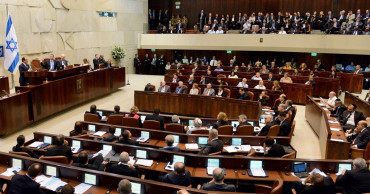
The Israeli parliament was dissolved on Wednesday night after long-time Prime Minister Benjamin Netanyahu and his centrist rival Benny Gantz failed to form a coalition government before a midnight deadline, signalling a third general election in one year.
6 years ago