US-Iran tension

US ‘wrapping up’ Iran operation, says House speaker
US House Speaker Mike Johnson said the United States is close to ending its military campaign against Iran, describing the operation as nearing completion.
Speaking to US media in Washington, Johnson said “Operation Epic Fury” is being wrapped up and could be completed soon as planned.
His remarks came after US President Donald Trump said his administration was in contact with Iranian officials who are interested in reaching a deal.
However, Iran has rejected a US-proposed peace plan, calling it excessive and denying any ongoing negotiations.
With inputs from BBC
6 months ago
Trump says Iran eager for talks despite denial from Tehran
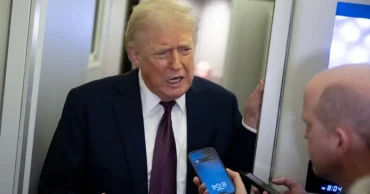
US President Donald Trump has claimed that Iran is keen to negotiate over the ongoing conflict, though he suggested Tehran is not yet ready to formally enter diplomatic talks.
Speaking to reporters aboard the presidential aircraft Air Force One, Trump said Washington had been communicating with Iranian officials but a breakthrough had not yet been reached.
“We’re talking to them but I don’t think they’re ready, but they’re getting pretty close,” Trump said, reiterating his belief that Iran strongly wants a deal.
However, Iran’s Foreign Minister Abbas Araghchi rejected the claim, stating that Tehran had “never asked for a ceasefire” and had not sought negotiations either.
Asked whether he was ready to declare victory over Iran, Trump said there was no reason to do so at the moment.
He claimed the United States had inflicted significant damage and argued that if the conflict stopped immediately, it could take Iran up to a decade to rebuild.
Trump also alleged that several reports circulating online were fabricated using artificial intelligence.
He claimed that images showing thousands of people gathering in support of Mojtaba Khamenei, along with reports about “kamikaze boats” and attacks on the aircraft carrier USS Abraham Lincoln, were AI-generated, though he did not present evidence to support the claims.
On relations with Israel, Trump dismissed suggestions of disagreements with Israeli Prime Minister Benjamin Netanyahu. He said the two leaders had not argued and described their relationship as “extraordinary.”
Trump also predicted that global oil prices would drop sharply once the conflict ends, adding that he believes the war will conclude relatively soon.
With inputs from BBC
6 months ago

US Navy fires warning shots in new tense encounter with Iran
An American warship fired warning shots when vessels of Iran’s paramilitary Revolutionary Guard came too close to a patrol in the Persian Gulf, the U.S. Navy said Wednesday.
The Navy released black-and-white footage of the encounter Monday night in international waters of the northern reaches of the Persian Gulf. In it, lights can be seen in the distance and what appears to be a single gunshot can be heard, with a tracer round racing across the top of the water.
Also Read: Iran, US warships in first tense Mideast encounter in a year
Iran did not immediately acknowledge the incident.
The Navy said the USS Firebolt fired the warning shots after three fast-attack Guard vessels came within 68 yards (62 meters) of it and the U.S. Coast Guard patrol boat USCGC Baranoff.
“The U.S. crews issued multiple warnings via bridge-to-bridge radio and loud-hailer devices, but the (Guard) vessels continued their close range maneuvers,” said Cmdr. Rebecca Rebarich, a spokeswoman for the Mideast-based 5th Fleet. “The crew of Firebolt then fired warning shots, and the (Guard) vessels moved away to a safe distance from the U.S. vessels.”
She called on the Guard to “operate with due regard for the safety of all vessels as required by international law.”
Also Read: Iran builds at underground nuclear facility amid US tensions
“U.S. naval forces continue to remain vigilant and are trained to act in a professional manner, while our commanding officers retain the inherent right to act in self-defense,” she said.
The incident Monday marked the second time the Navy accused the Guard of operating in an “unsafe and unprofessional” manner this month alone after tense encounters between the forces had dropped in recent years.
Footage released Tuesday by the Navy showed a ship commanded by the Guard cut in front of the USCGC Monomoy, causing the Coast Guard vessel to come to an abrupt stop with its engine smoking on April 2.
The Guard also did the same with another Coast Guard vessel, the USCGC Wrangell, Rebarich said. Such close passes risk collisions.
The interaction marked the first “unsafe and unprofessional” incident involving the Iranians since April 15, 2020, Rebarich said. However, Iran had largely stopped such incidents in 2018 and nearly in the entirety of 2019, she said.
In 2017, the Navy recorded 14 instances of what it describes as “unsafe and or unprofessional” interactions with Iranians forces. It recorded 35 in 2016, and 23 in 2015.
The incidents at sea almost always involve the Revolutionary Guard, which reports only to Supreme Leader Ayatollah Ali Khamenei. Typically, they involve Iranian speedboats armed with deck-mounted machine guns and rocket launchers test-firing weapons or shadowing American aircraft carriers passing through the Strait of Hormuz, the narrow mouth of the Persian Gulf through which 20% of all oil passes.
Some analysts believe the incidents are meant in part to squeeze President Hassan Rouhani’s administration after the 2015 nuclear deal. They include a 2016 incident in which Iranian forces captured and held overnight 10 U.S. sailors who strayed into the Islamic Republic’s territorial waters.
The incident comes as Iran negotiates with world powers in Vienna over Tehran and Washington returning to the 2015 nuclear deal. It also follows a series of incidents across the Mideast attributed to a shadow war between Iran and Israel, which includes attacks on regional shipping and sabotage at Iran’s Natanz nuclear facility.
5 years ago