East Jerusalem
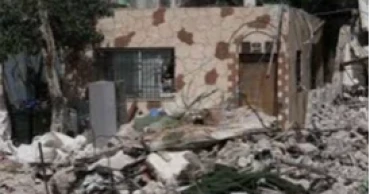
Israel steps up demolitions and evictions in east Jerusalem, activists say
Israel has intensified the demolition of Palestinian homes and the eviction of residents in east Jerusalem, according to rights groups and activists, who say the pace of such actions has increased significantly in recent years amid reduced international pressure and shifting global attention to conflicts in Gaza, Lebanon and Iran.
For Palestinian resident Fakhri Abu Diab, the issue is deeply personal. After years of legal battles to save his home in the al-Bustan neighborhood of Silwan, Israeli authorities demolished it in 2024. He and his wife now live in a mobile home placed on the site, which is also under threat of removal.
Abu Diab said the demolition erased much of his family's history, including the home where he grew up and the garden he cultivated as a child.
Rights group Ir Amim said more than 260 homes and structures in east Jerusalem have been demolished in 2025, marking a sharp rise from three years ago. The group reported at least 116 demolitions so far this year and described the current situation as unprecedented in scale.
Israel captured east Jerusalem, the West Bank and Gaza during the 1967 Middle East war. Palestinians seek these territories for a future independent state, while much of the international community regards them as occupied territories. Israel considers Jerusalem its unified capital.
Human rights groups say Israeli authorities continue to promote the expansion of Jewish settlements while restricting development in Palestinian neighborhoods, making it extremely difficult for Palestinians to obtain building permits.
According to Israeli rights organization Bimkom, nearly 9,000 building permits were approved for Jewish residents in Jerusalem last year, compared with fewer than 700 for Palestinians, who account for around 40% of the city's population.
Israeli officials argue that Palestinians submit relatively few permit applications, while many Palestinians say obtaining approval is nearly impossible.
Those who build without permits risk demolition orders. At the same time, settler organizations have used various legal mechanisms to acquire or take control of Palestinian properties.
The issue has become more prominent since President Donald Trump's first administration recognized Jerusalem as Israel's capital, departing from previous US policies that viewed settlement expansion as an obstacle to peace efforts.
The US State Department said policies in Jerusalem are determined by Israeli authorities but expressed an expectation that due process and the rule of law be respected.
In al-Bustan, located near the Old City and close to the Al-Aqsa Mosque compound, around 1,500 Palestinians face the possibility of losing their homes. The area is part of Silwan, a densely populated Palestinian district that is also of significant religious and archaeological interest.
The Jerusalem municipality said homes in al-Bustan are being removed because they were built without permits on land not designated for housing. Authorities say a public park and parking facilities will be developed in the area and that alternative housing plans had been proposed to residents.
Abu Diab said part of his home existed before 1967 but was later expanded without permits because obtaining authorization was not feasible.
Elsewhere in Silwan's Batan al-Hawah neighborhood, Palestinian families continue to face eviction orders. Resident Zuhair al-Rajabi said he and dozens of relatives were instructed to leave their property after Israel's Supreme Court ruled against them following years of legal proceedings.
He said his family possesses documents dating back to 1966 proving ownership but now faces relocation with few affordable housing options available in Jerusalem.
According to rights group B'Tselem, March saw the highest rate of state-backed evictions in the neighborhood in decades, with 15 families removed and hundreds more residents facing potential displacement.
Israeli law allows Jews to reclaim properties owned by Jewish families before the 1948 Arab-Israeli war. Palestinians who lost homes during that conflict, however, are generally unable to reclaim those properties.
B'Tselem said the evictions reflect cooperation between settler groups and state institutions under laws it considers discriminatory, with the result being increased Jewish settlement and reduced Palestinian presence in east Jerusalem.
Israel's judiciary rejected accusations of coordination with settler organizations, saying courts decide cases based on legal merits, evidence and established precedent.
Settler group Ateret Cohanim defended its activities, saying it seeks to restore Jewish communities that existed in parts of east Jerusalem before the early 20th century. The organization said dozens of Jewish families have moved into Batan al-Hawah since 2004 and more are expected to follow.
For many displaced Palestinians, however, the struggle remains deeply emotional. Khalil Basbous, who was evicted from his home in January, now lives with relatives nearby but passes his former house every day. He said he still hopes to return one day.
4 months ago
.jpg)
Heavy police raids leave east Jerusalem neighborhood on edge
Murad Mahmoud's 14-year-old son has been detained by Israeli police in his east Jerusalem neighborhood three times in the last two years. His 10-year-old has been interrogated by police in combat gear. These days, he keeps all six of his children inside most of the time, fearing even worse.
6 years ago
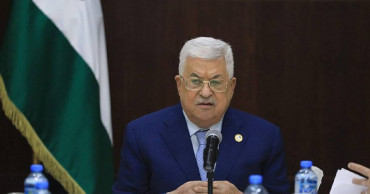
Abbas says no election unless Palestinians vote in East Jerusalem
Palestinian President Mahmoud Abbas insisted on Sunday that there will be no general Palestinian election unless Israel allows Palestinians to vote in the heart of East Jerusalem.
6 years ago