GK Project
GK project redesigns pumping system to cope with falling Padma water levels
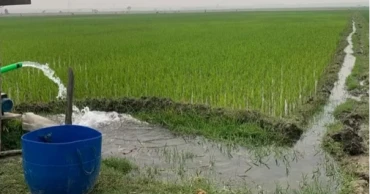
Bangladesh’s largest surface irrigation scheme, the Ganges-Kobadak (GK) Irrigation Project, has undertaken a major redesign of its pumping system to enable water withdrawal from the Padma River at lower water levels, amid concerns over dry-season flow reductions linked to upstream diversion.
Under the redesign, the project aims to reduce the minimum water level required at its intake channel from 3.9 metres to 2.5 metres, allowing pumps to remain operational even when river levels fall significantly during the lean season, Executive Engineer of the GK Project Pump House Mizanur Rahman told UNB.
The GK Project, which has a command area of 197,500 hectares and an irrigable area of about 95,500 hectares, was launched in 1962 and remains one of Bangladesh’s most important irrigation infrastructures supporting agricultural production in the southwest region.
Its coverage however over the years came down to 55,000 hectares as some pumps and canals became inoperable.
Dengue rings alarm amid measles crisis: Is Bangladesh prepared for another health emergency?
According to project officials, the pumping station faces operational disruptions whenever the water level in the Padma River falls below 4.5 metres.
The situation worsened after the commissioning of India’s Farakka Barrage in West Bengal in 1975, which significantly altered dry-season water flows in the river system.
Mizanur Rahman said the consequences became particularly evident in 2024 when irrigation activities under the project came to a complete halt because the pumping station could not lift water after the water level in the Padma River near Hardinge Bridge dropped below four metres.
“The pumps were unable to operate, leaving the project area without irrigation support,” he said.
The redesign project is scheduled for completion in 2029 at an estimated cost of Tk 1,200 crore.
The initiative is expected to enhance the project’s resilience to seasonal water shortages by enabling water extraction at lower river stages.
However, he cautioned that engineering solutions alone may not be sufficient if the flow of the river doesn't remain steady.
“Even if we succeed in lowering the minimum operating level by around 1.5 metres, the benefit could be limited if adequate water does not continue to flow from upstream,” he said.
Revenue shortfall, banking crisis to overshadow FY27 budget funding, creating big challenges: Experts
The GK Project occupies a unique place in Bangladesh’s agricultural history. Initial surveys for the scheme were conducted in 1951 and implementation began in the mid-1950s.
4 months ago

Light in the abyss: Local engineers turn on GK Project's third main pump
Irrigation is critical for crop production in Bangladesh and the heart of most irrigation systems are pumps.
There are 15 pumps – three main devices and 12 subsidiaries – in the Ganges-Kobadak Irrigation Project or GK Project – a large surface irrigation system set up by the Bangladesh Water Development Board (BWDB) on the right bank of the River Ganges – the River Padma in Bangladesh.
The pumps – with a total lifting capacity of 153 cumec – are used to draw water from the Padma through an intake channel to supply it to the fields by gravity canals.
GK, the first major step in Bangladesh to provide supplemental irrigation to traditional rice varieties, covers an area of 197,500 hectares in Kushtia, Chuadanga, Jhenaidaha and Magura districts.
Read: EGCB signs MoU with Marubeni to build 100 MW solar plant in Sonagazi
Thirteen upazilas – Kushtia Sadar, Kumarkhali, Khoksa, Mirpur, Bheramara, Chuadanga, Alamdanga, Jhenaidaha, Harinakunda, Shailkupa, Magura Sadar, Sreepur and Daulatpur – are served by the project in two seasons.
However, the project, the largest lift-cum-gravity irrigation system in the country, largely missed its targets – raising food production, cropping intensity; improving cropping patterns and the socio-economic conditions of the farmers.
It is facing multiple setbacks both at the implementation and operational stages like other irrigation projects in Bangladesh.
Hundreds of farmers in four districts of the Khulna division have been deprived of irrigation facilities from the project for years. GK is now in the grip of land grabbers, mismanagement, and negligence.
Read Bangladesh’s single largest rooftop solar power plant inaugurated in Korean EPZ
The area of the project is shrinking day by day as land sharks continue to fill up the irrigation canals. Now only 116,000 hectares of land of GK is net irrigable.
Also, as there is no proper drainage system, most of the water supplied from the project is wasted. The system needs to be improved to prevent waterlogging of low lands as well.
4 years ago