Searched by - rains
Total - 641

Food minister warns against negligence in testing imported food grains
Food Minister Afroza Khanam on Sunday stressed the need for strict quality control and accountability at every stage of the food supply chain, from import and transportation to storage, testing and distribution, to ensure food security in the country.
“Negligence in performing duties at any stage in assessing the quality of food grains will not be acceptable,” she said while inspecting the MV ‘Spring Sky’, a vessel carrying wheat imported from the United States, at the Patenga outer anchorage of Chattogram Port.
Emphasising the quality of imported wheat, the minister said all food grains must be tested against prescribed parameters and standards, with decisions taken strictly on the basis of test results.
She said there must be no scope for accepting or supplying substandard food grains under any circumstances.
Afroza said the government would work to ensure transparency, accountability and efficiency in food management while addressing longstanding problems through realistic and well-planned initiatives.
Addressing officials and employees of the Food Department, the minister said ensuring food security was a vital public service responsibility that required everyone to work with sincerity, integrity and dedication, keeping public interests at the forefront.
She said the professional competence, commitment and sense of responsibility of officials and employees would be duly evaluated.
Referring to the food needs of the general population and the challenges faced by marginalised communities, Afroza said all concerned must work collectively to ensure that no one in the country suffers from food shortages and that food reaches everyone in a timely manner.
The Director General of the Directorate General of Food, relevant officials of the Food Department and representatives of the district administration were present during the inspection.
10 days ago

Bangladesh Railway to run three pairs of special trains for Durga Puja
Bangladesh Railway will operate three pairs of special trains and withdraw weekly off-days for five regular trains to facilitate safe and convenient travel for passengers during the upcoming Durga Puja celebrations.
The decisions were taken at a preparatory meeting, chaired by Road Transport and Bridges, Shipping and Railways Minister Shaikh Robiul Alam, held at the conference room of the Road Transport and Bridges Ministry on Sunday.
According to the railway authorities, Dhaka Special-3 will operate on the Chattogram-Dhaka route on October 20.
Tourist Special-1 and Tourist Special-2 will run on the Dhaka-Cox’s Bazar-Dhaka route on October 20, 23 and 24, while Chattogram Special-4 will operate on the Dhaka-Chattogram route on October 24.
To accommodate the additional passenger rush, the weekly off-days of five regular trains will also be withdrawn on specific dates.
The off-days of Cox’s Bazar Express on October 19 and 20 have been withdrawn. The off-days of Jahanabad Express and Ruposhi Bangla Express will be cancelled on October 19, Padma Express on October 20 and Madhumati Express on October 24.
Bangladesh Railway has also planned to add 23 metre-gauge coaches to services in the eastern region and six broad-gauge coaches in the western region to meet the increased demand.
Necessary locomotives will be provided according to operational requirements.
To ensure punctuality and prevent schedule disruptions, officials and inspectors will closely monitor train operations at major junction stations and signal cabins.
Railway authorities have also arranged track patrols to ensure the safety of railway tracks and bridges. Signalling systems, coaches and locomotives will undergo intensive maintenance, while relief trains will remain ready around the clock to respond quickly to accidents and emergencies.
Security has been strengthened at major railway stations, including Dhaka, Dhaka Airport, Joydebpur, Chattogram, Mymensingh, Sylhet, Rajshahi and Khulna, with support from the Government Railway Police (GRP) and the Railway Nirapatta Bahini (RNB).
Magisterial duties will be ensured at Kamalapur Railway Station and Dhaka Airport Railway Station on October 19 and 20.
Surveillance by the RNB, GRP and railway employees has also been intensified to prevent sabotage and other disruptive activities on trains, at stations and along railway tracks.
State Minister for Road Transport and Highways and Railways Habibur Rashid, State Minister for Bridges Division and Shipping Rajib Ahsan, senior officials of the relevant ministries, commissioners of Dhaka and Gazipur metropolitan police, and representatives of transport owners’ and workers’ organisations attended the meeting.
10 days ago

Bangkok floods ease as heavy rains affect 700,000
Floodwaters in Bangkok slowly receded Monday after near-continuous weekend rainfall, though several neighborhoods and major roads remained submerged.
Intermittent rain continued, but city officials said improved conditions allowed drainage efforts to accelerate. Four major canals had reached levels too high to receive runoff from surrounding communities.
The flooding affected 329,000 households, or about 700,000 people, according to the Bangkok Flood Control Center, Deputy Gov. Tavida Kamolvej said. Thai media reported two flood-related deaths in Bangkok and at least 10 nationwide.
Gov. Chadchart Sittipunt declared a flood emergency across all 50 districts Saturday. Authorities prioritized older people and people with disabilities, while nearly 7,000 residents were staying in shelters. Eastern Bangkok was hardest hit, with Bang Kapi particularly affected. Prime Minister Anutin Charnvirakul inspected a flooded housing estate there Sunday night and distributed relief supplies.
The flooding also disrupted food supplies, caused panic buying and created staffing shortages. At Suvarnabhumi Airport, the Thai Air Force sent 69 personnel to help clear a luggage backlog caused largely by workers being unable to reach work. Some departures were delayed and passengers faced longer waits for baggage.
The government declared special holidays Monday and Tuesday for state offices. Thailand's meteorological agency warned of heavy to very heavy rain, flash floods, river overflows, runoff and landslides.
Myanmar reported at least 10 deaths and dozens missing after flooding and landslides in Tanintharyi. Dawei received a record 346 millimeters of rain Monday. Cambodia reported flash floods in 10 provinces, affecting 44,889 families and forcing nearly 4,000 people to evacuate. Authorities in Siem Reap operated water gates and diversion systems to protect the Angkor temple complex.
23 days ago

Bangladesh plans major railway expansion, faster Dhaka-Ctg connectivity, electric trains
Bangladesh is pursuing a broad-based programme to expand and modernise its railway network, with plans for new rail links, double-line corridors, modern signalling, improved passenger services, stronger freight connectivity and eventually electric and high-speed trains.
The initiatives are aimed at increasing railway capacity, reducing travel time, improving safety and reliability, and strengthening railways as a key component of the country’s passenger and logistics network.
According to the government’s 2026-27 budget documents, railway development will focus on constructing new railway lines and bridges, procuring modern locomotives, coaches and wagons, upgrading existing infrastructure, modernising signalling and expanding optical-fibre-based communication networks.
The government also plans to improve railway connectivity with seaports and land ports, expand regional and cross-border links and increase commuter train services.
Dhaka-Chattogram corridor gets major focus
One of the most significant components of the plan is a proposed chord line on the Dhaka-Cumilla section of the Dhaka-Chattogram railway corridor.
According to the budget speech, the proposed line would reduce the rail distance between Dhaka and Chattogram by around 80 kilometres, from approximately 320 km to 240 km.
The government expects the shorter route to reduce train travel time between the two cities from about five hours to around three hours.
Finance and Planning Minister Amir Khosru Mahmud Chowdhury said in the budget speech that a feasibility study for the chord line had been completed, with the Shyampur-Cumilla alignment preliminarily selected from three proposed routes.
The proposed shortcut would also have a major freight component.
Freight trains carrying goods from Chattogram Port, the planned Bay Terminal and Matarbari Deep Sea Port are expected to be able to connect directly with the proposed Dhirashram Inland Container Depot (ICD) through the existing Chattogram-Feni-Cumilla-Brahmanbaria-Bhairab-Narsingdi railway route.
The government sees the proposed connectivity as a way to strengthen the country’s logistics network and improve the movement of imported and exported goods.
Electric trains on Dhaka-Chattogram route
The government is also moving towards electrification of the Dhaka-Chattogram railway corridor.
Prime Minister Tarique Rahman told Parliament on Sept 9 that the feasibility study and detailed design for installing electric traction to operate electric trains on the corridor had been completed.
He said a detailed implementation plan and timeline would be prepared after securing the necessary financing, and the project would be implemented subject to availability of funds.
Once implemented, the electric traction system is expected to increase average train speeds and reduce journey times.
Double-line development
The government is simultaneously working to convert the Dhaka-Chattogram railway route into a dual-gauge double-line corridor.
The Prime Minister said feasibility studies and detailed designs for dual-gauge double lines on the Tongi-Akhaura and Laksam-Chattogram sections had already been completed.
The Laksam-Chattogram Dual Gauge Double Line Development Project is currently being processed for approval, while preparation of the Development Project Proforma (DPP) for the Tongi-Akhaura project is at the final stage, he said.
The two projects are expected to increase passenger-carrying capacity and train speeds once implemented.
Greater emphasis on freight transport
The government’s railway strategy is not limited to passenger services.
Greater emphasis is being placed on freight transportation to increase the commercial viability of Bangladesh Railway and strengthen rail’s role in the country’s supply chain.
The proposed connections involving Chattogram Port, Bay Terminal, Matarbari and Dhirashram ICD are particularly significant in this regard, as they would create a stronger rail-based link between seaports and inland logistics facilities.
The government also plans to encourage private investment in railway development and use Public-Private Partnership (PPP) arrangements for suitable infrastructure projects.
New trains, workshops and technology
The modernisation programme includes procurement of new locomotives, passenger coaches and freight wagons, along with construction and rehabilitation of railway bridges.
The government plans to strengthen the Saidpur and Pahartali railway workshops so that coaches and locomotives can increasingly be assembled locally, potentially reducing dependence on imported rolling stock.
Modern signalling systems and optical-fibre-based communication networks are also part of the planned upgrade to improve operational reliability and the quality of passenger and freight services.
Towards a wider rail network
The longer-term objective is to gradually bring all districts and major cities under railway connectivity and strengthen links with ports, economic centres and neighbouring countries.
Bangladesh Railway’s master-planning documents have also envisaged a wider network of new and upgraded corridors, including links towards the country’s ports and border areas and improved regional connectivity with neighbouring countries.
The government has proposed Tk 9,940 crore for the Ministry of Railways in the 2026-27 budget, reflecting the priority given to railway development in the current fiscal programme.
Taken together, the planned projects represent a shift towards a more integrated railway system combining infrastructure expansion with technological modernisation, faster passenger services and greater freight-carrying capacity.
Bangladesh Railway's revenue increased by Tk 221 crore in the 2025-26 fiscal year, but it continued to spend significantly more than it earned despite a modest improvement in its operating ratio.
According to a Bangladesh Railway , it earned Tk 2,066.38 crore in FY26, up from Tk 1,845 crore in the previous fiscal year.
Its total operating expenditure, including salaries, allowances, pensions and maintenance of tracks and rolling stock, stood at Tk 3,955 crore, resulting in an expenditure-to-income ratio of 1.91, an improvement from 2.09 in FY25.
1 month ago

Scientists develop mice with partly human brains in research breakthrough
US neuroscientists have developed mice with functioning human cells integrated into their brains, in a breakthrough that could help researchers study human brain disorders.
The researchers hope the new model will allow potential treatments for psychiatric and neurodevelopmental diseases that occur only in humans to be tested in laboratory mice.
Although the idea of mice with partly human brains may sound unsettling, the scientists stressed that the animals are not “mice that think like humans.”
Instead, the mice were genetically modified and surgically treated so that part of their brain tissue consists of human cells.
The research, published in the journal Nature, was conducted under independent ethical review, the scientists said.
The goal of the ethically complex experiment is to better understand the biology of brain disorders for which effective treatments are currently unavailable.
Some human conditions cannot be properly studied in mice because the animals do not naturally develop certain brain disorders.
Prof Sergiu Pașca of Stanford University, the study's lead researcher, said psychiatry has “one of the lowest success rates for clinical trials.”
“Even drugs that actually make it to clinical trial - that seem to be working really well in animal models - fail dramatically in clinic,” he said at a press conference. “That tells us we're missing a lot of information about human biology and capturing that will be essential.”
The Stanford team said the approach could potentially transform research into complex conditions including epilepsy, autism and cerebral palsy.
“Here we have a new model that allows us to actually capture aspects of human brain function in a way that has not been possible before,” Pașca said.
Mice without their ‘grey matter’
The human brain contains billions of cells linked through millions of circuits, making it difficult for scientists to understand how the brain develops and what happens at the cellular level when disorders occur.
Although researchers have previously implanted human neurons into laboratory rodents, the Stanford scientists said their study takes the technique considerably further.
Source: BBC
1 month ago

Mudslide death toll in China rises to 3 after Typhoon Saudel rains
The death toll from a mudslide in eastern China rose to three on Sunday after days of torrential rain triggered by Typhoon Saudel, while nine people remained missing.
The mudslide struck part of a village in Suichuan County of Jiangxi province early Saturday, damaging around a dozen houses. Rescue workers recovered the bodies of two more victims on Sunday, according to state broadcaster CCTV.
More than 5,300 people were moved to safer locations as heavy rain continued to affect parts of the region.
Meanwhile, two people were killed in Hunan province in south-central China following heavy downpours linked to the typhoon, CCTV said. The report did not specify how they died but said the intense rainfall had triggered landslides and other disasters.
Typhoon Saudel first made landfall twice in Zhejiang province on Aug. 28 before making a third landfall as a tropical storm in neighboring Fujian province on Sept. 3, according to China's official Xinhua news agency. Both Zhejiang and Fujian border Jiangxi province.
1 month ago
Rains likely across country: BMD
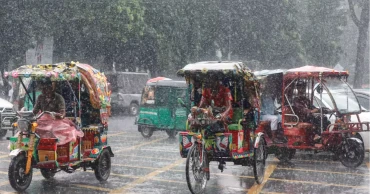
Bangladesh Meteorological Department (BMD) has forecast light to moderate rain across the country in the next 24 hours commencing 9am on Wednesday.
According to the BMD forecast light to moderate rain or thunder showers accompanied by temporary gusty wind is likely to occur at many places over Rangpur, Rajshahi, Dhaka, Mymensingh, Khulna, Barishal, Chattogram and Sylhet divisions.
The Met Office also predicted moderately heavy to heavy falls at places over the country.
Day and night temperatures may remain nearly unchanged across the country, the forecast said.
1 month ago

CPD sees inflation tamed, exports improving but deeper fiscal strains undercut govt in first 6 months
The government has managed to tame inflation and post a turnaround in exports over its first six months in office, but these gains have been outweighed by a deepening fiscal squeeze, a weakening external account and a stalling industrial base, leading think tank Centre for Policy Dialogue (CPD) said on Monday.Presenting a scorecard-based assessment styled "Six Months of the Government: A Commentary on its Performance" at a media dialogue, CPD Distinguished Fellow Debapriya Bhattacharya said the government inherited "fragile banks, weak revenue mobilisation, fiscal constraints and subdued investment," a situation made worse by a global slowdown and the fallout of the US-Iran conflict on energy prices.He noted that no formal baseline of the inherited economy was ever documented, as a promised second White Paper never materialised, leaving the state of the economy addressed only "perfunctorily" in the finance minister's April parliamentary statement.CPD's research team tracked 31 key economic indicators across six areas by comparing performance before and after the government took office in late February. Of these, 12 improved while 19 deteriorated.Monetary indicators showed the clearest gains, with headline inflation easing from 9.1 percent to 8.3 percent and food inflation falling from 9.3 percent to 7.2 percent between February and July. Export growth turned positive, rising from a negative 3.2 percent to 3.5 percent, and gross forex reserves climbed from $30.1 billion to $32.3 billion.However, the external sector recorded the sharpest deterioration, with six of its 10 indicators worsening. Remittance growth nearly halved, from 21.4 percent to 11.8 percent, while average monthly overseas employment collapsed from 95,521 to 51,235 as the Middle East job market was hit by war.The trade deficit widened from $6.7 billion to $10.4 billion, and the current account balance swung from a $1.3 billion surplus to a $0.6 billion deficit.Public finance management also weakened, with total tax growth falling sharply from 12.3 percent to 4.9 percent and NBR revenue growth slipping from 12.4 percent to 11.1 percent, resulting in what CPD called a "large shortfall."Bank borrowing rose to 53.8 percent of the annual target from 48 percent, while net foreign aid inflow declined.Industrial output showed no improvement at all, with both general and manufacturing production indices falling to near-zero growth, while investment indicators were dominated by deterioration, including a drop in FDI net inflow from $662 million to $594 million and private-sector credit growth slowing from 6 percent to 4.5 percent.Debapriya pointed to Bangladesh Bureau of Statistics data showing GDP growth fell for three consecutive quarters, from 4.96 percent in Q1 FY26 to 3.03 percent in Q2 and 2.22 percent in Q3 - the latter being the government's first quarter in office and FY26's weakest, with all major sectors slowing and industry slipping into negative territory."Q4 is the first full quarter under this government - and its real testing time," he said, cautioning that three consecutive quarterly declines had "set a pattern."Reviewing 362 policy actions across nine governance areas, CPD flagged both positive and troubling trends. On the positive side, it cited the withdrawal of MPs' duty-free vehicle entitlement, austerity measures including capped PMO meal costs and suspended vehicle purchases, record-fast disposal of violence-against-women cases, and reforms at the Bangladesh Public Service Commission to strengthen merit-based recruitment.On the concerning side, CPD pointed to the appointment of politically affiliated individuals to senior public posts, continued mob killings and violence against women, children and religious minorities despite government assurances, arrests of journalists following critical reporting, and disciplinary action against teachers over social media posts.In the banking sector, the abrupt removal of the former Bangladesh Bank governor and the crisis at Islami Bank Bangladesh PLC, which saw major deposit withdrawals before the central bank dissolved its board - were cited as serious concerns, even as the government moved to consolidate five troubled Islamic banks and place ailing NBFIs under resolution.CPD projected that the total revenue shortfall for FY2026 could approach BDT 1 lakh crore, or about 17 percent of the annual target.Against an FY2027 revenue target of BDT 6.95 lakh crore, which implies roughly 42 percent growth, CPD said even the most optimistic historical growth trends point to a shortfall of BDT 1.30-1.40 lakh crore, or almost 20 percent of the target.With the government unlikely to breach the budget deficit limit of 3.6 percent of GDP, and only around BDT 40,000 crore typically available for cuts from non-ADP spending, Debapriya said the Annual Development Programme would again have to absorb the bulk of the adjustment. He urged the government to ringfence ADP allocations for education, health and social protection.The CPD assessment attributed the slow recovery to the absence of a coordinated and integrated reform package, a fiscal framework that was "never reset" for recovery, the external shock from the Middle East war, political economy pressures from vested groups, persistent law and order issues such as extortion and intimidation, and a lack of step-change in institutional capacity.CPD called on the government to prepare a "core budget" for October 2026-June 2027 built on real-time data, aligned with its own Fiscal Strategic Framework Plan 2026, alongside a credible, time-bound energy-security package covering domestic exploration, fuel stockpiling and diversified sourcing.It also urged the finance minister to use his September parliamentary statement, mandated under a 1991 Act, to place reform plans on pay scale, banking and power-sector restructuring before lawmakers."The change required is structural, not about people only," Debapriya said, adding that the government's cabinet architecture, appointment practices and coordination machinery needed to be assessed going forward, alongside its "freedom from capture" by inherited vested interests in banking, energy contracting and appointments.The CPD research team included Distinguished Fellow Prof Mustafizur Rahman, Additional Research Director Towfiqul Islam Khan, and other researchers of the organisation.
1 month ago
Rains likely across country: BMD
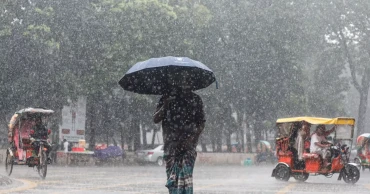
Bangladesh Meteorological Department (BMD) has forecast rain across all eight divisions in 24 hours commencing 9 am on Tuesday.
According to the BMD forecast light to moderate rain or thunder showers accompanied by temporary gusty wind is likely to occur at most places over Rajshahi, Khulna, Barishal, Chattogram & Sylhet divisions and at many places over Rangpur, Mymensingh and Dhaka divisions.
The Met Office also predicted moderately heavy to heavy falls at places across the country.
Day and night temperatures may remain nearly unchanged across the country, the forecast said.
2 months ago
Low pressure formed over North Bay, rains likely across country
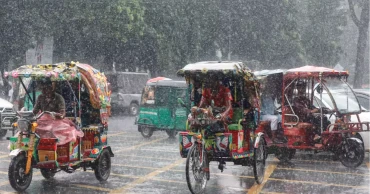
A low-pressure area has formed over the North Bay and adjoining coastal areas of West Bengal and Bangladesh and it is likely to intensify, according to the Bangladesh Meteorological Department .
It forecast rains across all eight divisions in 24 hours commencing 9 am on Wednesday.
Light to moderate rain and thundershowers, accompanied by temporary gusty winds, are likely to occur at many places over Khulna, Barishal and Chattogram divisions and at a few places over Rangpur, Rajshahi, Dhaka, Mymensingh and Sylhet divisions.
Moderately heavy to heavy rainfall is also likely at places across the country, said a BMD bulletin.
Daytime temperatures may remain nearly unchanged, while nighttime temperatures could fall slightly across the country.
The axis of the monsoon trough extends through Rajasthan, Madhya Pradesh, Uttar Pradesh, Bihar, Gangetic West Bengal and the centre of the low-pressure area to Assam, crossing the southern parts of Bangladesh.
The monsoon is currently fairly active over Bangladesh and strong over the North Bay, the bulletin said.
2 months ago