Education

Higher education sector passing tough time: UGC Chairman
The higher education sector in the country is passing the most challenging period, University Grants Commission (UGC) Chairman (Additional ) Professor Dr Muhammad Alamgir said on Sunday.
"And there is no alternative to improve the quality of higher education in the ever-changing education system," he said.
UGC to train teachers of 20 public universities countrywide
He made the remarks while speaking as the chief guest at a views exchange program with the newly appointed teachers and officials of Bangabandhu Sheikh Mujibur Rahman Maritime University (BSMRMU), Bangladesh.
Twenty-one newly appointed teachers and officers of BSMRMU participated in the meeting.
Professor Alamgir said, “In the era of artificial intelligence, 50 percent of the traditional work will be done with artificial intelligence in the next 5 to 10 years. Unless a highly skilled workforce is created, the unemployment rate will increase.”
So, realizing the demand, changes need to be brought in the current higher education curriculum to develop manpower suitable for the future labor market, he added.
UGC probe body finds evidence of corruption, irregularities against IU VC
“The work of building a teachers training academy is going on and the training program will start very soon to make teachers skilled,” he stated.
Professor Alamgir said the field of higher education in Bangladesh is very large. Now, there are more than 48 lakh students studying in 61 public and 115 private universities. “This number of students is more than the total population of many countries. So ensuring quality education is a big challenge for us now.”
UGC directs National University not to admit new students to its main campus
He mentioned that the 'Higher Education Acceleration and Transformation (HIT)' project is under implementation to improve the quality of higher education.
2 years ago

Medical colleges seek solution to ongoing student crisis in the admission process
State Minister for Health Affairs Dr. Rokeya Sultana has said the government will not compromise with quality thriving in the medical education sector and would take timely measures to address the challenges of the ongoing student crisis in the admission process.
"No one or organisation should do any work if quality is not maintained," Sultana said
She said this in a discussion programme titled "Improving the quality of private health education and dealing with the challenges of the ongoing student crisis in the admission process" where eminent persons from the Ministry of Health and principals and experts of private medical colleges were present.
Bangladesh Private Medical College Association (BPMCA) organized the programme in CIRDAP Auditorium of the capital.
Addressing the challenges of the ongoing student crisis in the admission process, she said "Automation is not a new system, it was there during the Pakistan period as well. Due to this method, many people are facing problems in admission. I am a victim of it myself. Due to this automation I could not get admission in Dhaka Medical College."
She also sought the quality in teaching methods and hospital management to serve the country in the larger picture.
Former Foreign minister and chairman of Standing Committee on Ministry of Foreign Affairs Dr. A. K.M Abdul Momen said the quality of doctors in our hospital is good. People's trust should be brought to the hospital, competition should be increased. People will reciprocate if the quality of treatment increases.
BPMCA president Mubin Khan said, "The blueprint has been laid to destroy the private medical college sector. Remember—it's hard to build an institution, it's easy to destroy it. Students will be admitted according to their choice.
In the academic year 2022-2023 where the number of applications was 15, 1 person was absent for interview and there were no empty seats. But on the other hand, 4 seats are found vacant for academic year 2023 to 2024. Similarly, according to the data of Zahurul Medical College, a private educational institution in Kishoreganj, in the academic year 2023-2024, the number of applications was 14, but only one participated in the interview. In the academic year 2022-2023, there were 2 students who were admitted under the irregular quota in the previous year, but this year the number is zero.
They said this picture is not only of the private medical college in the capital Dhaka but also the medical college of all the districts in Bangladesh.
The discussion also stressed that a road map has been prepared and steps have been taken to quickly implement it by discussing what needs to be done to meet the challenges of the ongoing student crisis in the quality improvement and admission process of private medical education in Bangladesh.
2 years ago
PM Hasina’s skill-based education agenda praised at Commonwealth
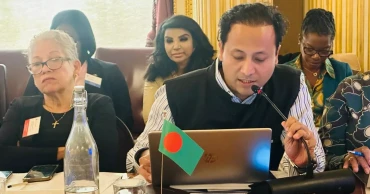
Prime Minister Sheikh Hasina’s leadership in Bangladesh’s "extraordinary education sector success" was praised at the 22nd Conference of Commonwealth Education Ministers held in London last week.
Bangladesh was commended for its recent achievements and transformations in the education sector, in particular for a stronger emphasis on Technical and Vocational Education and Training (TVET) over the past decade, leading to higher employment of young people in the private industry, greater access to IT education and lifelong learning on digital platforms as well as ensuring gender parity in primary, secondary and tertiary education.
Students should focus on professional skills: Education Minister
Education Minister Mohibul Hassan Chowdhury, who led the Bangladesh delegation at the 22nd CCEM, has recommended that it is time for the global south to make greater financial investments in both hard and soft infrastructure in the education sector.
He also emphasized the need to build robust innovative partnerships with the private sector, international financial institutions, and global funds, said the Bangladesh High Commission in London on Monday.
In his country statement, the Education Minister also briefed the Conference on the significant progress of Bangladesh in improving access to education, with efforts focused on enhancing quality and inclusivity across all levels of education.
He said, “SDG 4 on ensuring inclusive and equitable quality education for our 60 million girls and boys and skill-based higher education for another 30 million has been at the heart of our Head of the Government Sheikh Hasina’s aspirations for an educated, healthy, inclusive and resilient Smart Bangladesh by 2041.”
Nobel Peace laureate Kailash Satyarthi addressed the event as the keynote speaker while the Education Minister provided an update of the SDG 4 progress on behalf of the Asian Commonwealth. He also co-chaired the ministerial roundtable on “Rethinking Education for Skills, Youth Employability, and Decent Work” with Gambia’s Higher Education, Research, Science and Technology Minister Professor Pierre Gomez.
No plan to change new education system: Education Minister
He also met the Commonwealth Secretary-General Patricia Scotland KC during the conference at the Commonwealth Secretariat.
Bangladesh High Commissioner to the UK Saida Muna Tasneem accompanied the Education Minister at the Conference.
2 years ago

Dr Yusuf Mahbubul Islam appointed new VC of Southeast University
Professor Dr Yusuf Mahbubul Islam joined Southeast University (SEU) as its newest Vice Chancellor on Sunday.
President Mohammed Shahabuddin, Chancellor of SEU, appointed him as the new VC of the university for a four-year term.
Professor Dr Yusuf Mahbubul Islam has more than 46 years of teaching, research, and administrative experience at different institutions in Bangladesh, the United Kingdom, and Malaysia.
He performed significant roles in different universities, such as the Vice Chancellor at Daffodil International University and Dean of Engineering at Independent University of Bangladesh.
He also worked as an adjunct professor at Open University Malaysia (OUM) and Associate Professor and chair of Computer Science and Engineering at BRAC University.
SEU authority, upon his appointment, mentions that he contributed to the development of each of the institutions he worked for; and as a team player, Professor Islam seeks cooperation and support of all colleagues towards development of the University.
2 years ago
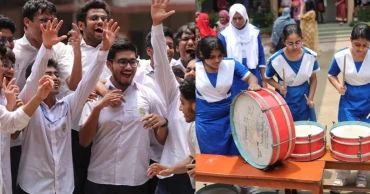
Educationists say these are the reasons why boys lag behind girls in SSC, HSC
Boys are increasingly lagging behind in secondary and higher secondary education, as the recent SSC 2024 results have demonstrated. This trend has led many including the Prime Minister to wonder why boys are underperforming in schools.
Educationists have pointed out that many boys are glued to their mobile phones and social media platforms even when at home, resulting in inattentiveness and lack of focus. In contrast, girls tend to be more attentive and diligent in their studies. As a result, male students in schools are falling behind their female peers.
Experts believe that boys' addiction to technology, coupled with inattentiveness in class and a tendency to disobey their parents contribute significantly to their educational lag. Conversely, girls benefit from stronger parental control and are more focused on their studies.
Government initiatives such as promoting social awareness about girls’ education, preventing child marriage, and offering scholarships have also boosted girls' participation and success in education.
SSC, equivalent exams 2024: Significant gains for Madrasa Education Board
Girls ahead in SSC and HSC
Recent results from the Secondary School Certificate (SSC) examinations underscore this trend. Girls have outperformed boys with an 84.47% pass rate compared to 81.57% for boys. Additionally, more girls achieved the top GPA-5 score, with 98,776 girls attaining this grade against 83,353 boys.
PM calls for investigation into boys' underperformance
Prime Minister Sheikh Hasina, during the release of the 2024 SSC examination results on May 12, highlighted the need to investigate the reasons behind boys' declining performance. She emphasised that while the higher pass rates for girls are positive, it is crucial to understand and address why boys are falling behind.
The Prime Minister also raised concerns about teenagers forming gangs, noting that this trend is unacceptable. She stressed the importance of guiding youth towards productive activities and away from delinquency.
Education Ministry's response
Education Minister Mohibul Hasan Chowdhury Nowfel acknowledged the Prime Minister's directives, stating that while scholarships are provided equally to both genders, additional measures may be needed to support boys' educational progress. The ministry is committed to investigating the underlying reasons for boys' underperformance.
Insights from Experts
Dhaka University Emeritus Professor Serajul Islam Choudhury attributed boys' lagging behind to excessive use of social media and a lack of discipline. He noted that boys are more likely to be distracted and less attentive in their studies compared to girls, who are often under stricter parental supervision.
Rasheda K Chowdhury, educationist and a former caretaker government adviser, echoed these sentiments, pointing to boys' misuse of the internet and time-consuming gaming habits as significant factors. She emphasised the need for boys to adopt the same values and responsibilities instilled in girls to achieve educational parity.
SSC, equivalent exams 2024: Pass rate 83%, 2.65% higher compared to 2023
Educational institutions' observations
Heads of various educational institutions reported that many boys are becoming involved in gangs and antisocial activities at a young age, which detracts from their academic focus.
Distinguished educationist and Emeritus Professor of BRAC University, Manzoor Ahmed, noted the absence of research on boys' educational lag and highlighted the visible involvement of young boys in non-academic activities, such as teenage gangs, as a growing concern.
While girls continue to excel in the educational sphere, boys' addiction to social media and other distractions necessitates urgent attention from parents, educators, and policymakers to ensure balanced academic success for all students.
2 years ago
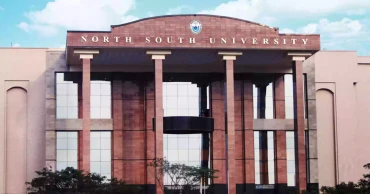
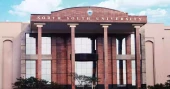
NSU top in Bangladesh in Times' Young University Rankings 2024
North South University (NSU) has achieved the highest position among Bangladeshi universities in the Times Higher Education (THE) Young University Rankings 2024, placing in the 301-350 range. BRAC University (BRACU) follows, ranking second in Bangladesh within the 351-400 range.
Following these two are Khulna University, positioned in the 401-500 bracket, and Shahjalal University of Science and Technology, in the 501-600 bracket, ranking third and fourth respectively in the country.
The Times Higher Education Young University Rankings evaluate the world's leading universities that are 50 years old or younger, using the same performance indicators as the main THE World University Rankings but with adjusted weightings to reduce the emphasis on reputation. The 2024 rankings feature 673 universities globally, including 15 from Bangladesh.
However, only four of these Bangladeshi institutions received a rank, while the others were given "reporter" status, indicating they provided data but did not qualify for a rank.
The Times Higher Education Young University Rankings highlight the best universities worldwide that are 50 years old or younger. These rankings use the same performance indicators as the main THE World University Rankings, but with adjusted weightings that place less emphasis on reputation. The 2024 rankings feature significant methodological updates.
The 2024 ranking includes 673 universities, up from 605 in 2023.
For the second consecutive year, Nanyang Technological University in Singapore tops the list with Paris Sciences et Lettres – PSL Research University Paris moving up to second place while The Hong Kong University of Science and Technology dropped from second to third place.
The number of territories represented in the rankings increased to 79, up by one from 2023, with Ghana and Peru making their first appearances.
2 years ago
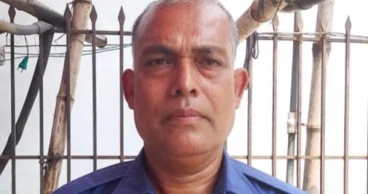
Constable, 57, surprises all by passing SSC exam
In a remarkable achievement, Constable Abdus Samad of Bogura Sadar Traffic Police has defied expectations by passing the SSC exam at the age of 57.
Abdus Samad achieved an impressive GPA of 4.25 from Mahera Koya Nutanpara Technical Vocational Institute in Natore district. District Police Superintendent Sudip Kumar Chakraborty and other senior officials expressed their congratulations and presented him with flowers, extending their best wishes for his success.
Determined Rabbi overcomes disability to ace SSC exams with feet
Born in 1968 in Ashrafpur village of Bagha upazila, Rajshahi district, Abdus Samad joined Bangladesh Police as a constable in Chattogram Metropolitan Police after completing class eight in 1987.
Throughout his tenure, he has served in various capacities across Sherpur, Sadar, Nandigram DSB, Sadar Court, and currently in Bogura Traffic. He is a dedicated father to two sons and a daughter, ensuring their education and success.
Looking forward to his future, Abdus Samad aspires to pursue homeopathic medicine upon retirement, a lifelong passion. To realize this dream, he needed an SSC certificate, prompting him to undertake the SSC exam. Determined, he enrolled in Mahera Koya Nutanpara Technical Vocational Institute in Natore in 2022 for this purpose and successfully passed the exam this year.
Reflecting on his journey, Constable Abdus Samad shared, "I joined the police force after completing class eight due to family circumstances. My childhood fascination with homeopathic medicine persisted, driving me to study this field alongside my job. To pursue formal studies in homeopathic medicine after retirement, I required an SSC certificate. Therefore, I made the decision to sit for the SSC exam in 2022 and subsequently enrolled in a technical institute."
He added, "With 2 years and 10 months left in service, I aim to secure admission in a homeopathic medical college for a DHMS course. My ultimate goal is to serve the community through homeopathic practice."
SSC, equivalent exams 2024: Significant gains for Madrasa Education Board
Acknowledging the support from his family and the police department, Abdus Samad expressed gratitude, saying, "Despite facing skepticism from some quarters when I resumed studies, I persevered with the encouragement of my loved ones and colleagues. This accomplishment reaffirms that determination leads to success. I am deeply thankful to my family and the police department for their unwavering support and seek everyone's blessings for my future endeavors in medicine."
2 years ago
Determined Rabbi overcomes disability to ace SSC exams with feet
Rafiqul Islam Rabbi, a physically challenged student from Haji Tobarak Ali High School in Bhatiari, Sitakunda upazila in Chattogram has triumphed over adversity by securing GPA-5 in his SSC exams, using his toes to write after losing both hands to an electrocution accident in 2016.
Rabbi, whose resilience shines as a beacon for others, faced a life-altering challenge when he was electrocuted while returning home from school, resulting in the amputation of both his hands.
Despite this setback, his indomitable spirit has not only led him to academic success but also inspired his community.
Robi Chandra Das, president of the school's managing committee, praised Rabbi's willpower: “His indomitable willpower brought him success akin to any other student.”
Rabbi’s achievement has brought pride to his family, teachers, and locals. His father, Bazlur Rahman, expressed profound gratitude for his son’s mental strength and dedication: “My son’s strong mind and hard work have earned him success, and he continues to receive the blessings and love of everyone.”
Speaking about his future aspirations, Rabbi shared, “I do not see myself as physically challenged. My willpower is my strength, which is why I have achieved good results.” He expressed his ambition to become a teacher.
Kanti Lal Acharya, the headmaster of the school, remarked on Rabbi's performance: “Rabbi performed better than other students despite his challenges. I hope that he can continue to shine in life.” He also called on the affluent members of the community to support Rabbi’s continued education and development.
2 years ago
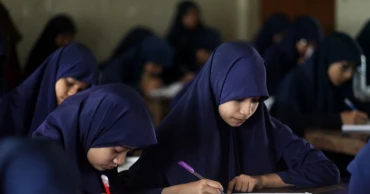
SSC, equivalent exams 2024: Significant gains for Madrasa Education Board
The Bangladesh Madrasa Education Board has shown substantial improvement in its performance for this year’s Secondary School Certificate (SSC) and equivalent exams, with an increase in both pass rates and top scorers compared to last year.
This year, the Madrasa board achieved a 79.66% pass rate, a notable rise from last year’s 74.70%. Additionally, the number of students securing the highest grade, GPA-5, more than doubled to 14,206 from 6,213 in the previous year.
SSC, equivalent exams 2024: Jashore Board secures highest pass rate among 11 boards
The Technical Education Board experienced a slight decline in success. It reported an 81.38% pass rate this year, down from 86.35% last year, with 4,078 students achieving a GPA-5, a significant drop from the 18,145 students who earned the top grade last year.
Overall, the SSC exams were conducted at 3,799 centres, involving students from 29,861 institutions under 11 education boards, including nine general education boards.
2 years ago

High success rate for overseas students in SSC exams 2024
Students from eight international centres participating in this year’s Secondary School Certificate (SSC) exams demonstrated a commendable performance, with an average pass rate of 85.88%. Out of the 347 students who sat for the exams, 298 successfully passed, marking a significant achievement for the overseas candidates.
The overall success stories include two educational institutions abroad where every participating student passed, achieving a 100% pass rate.
According to the latest statistics released, none of the students were expelled during the exam sessions, pointing to a smoothly conducted examination process across these international centres.
2 years ago